 2026 Platinum
Table of Contents
- Sakura and the philosophy of fleeting perfection
- Tokyo: the world’s most advanced golf retail
- The journey to Kawana
- The Fuji Course and the spa ritual
- Yokohama Country Club: a Porsche tournament under cherry blossom
- The Japanese standard
- What to wear if you’re going
- A closing thought
Sakura and the philosophy of fleeting perfection
This spring, I set out with my family to travel Japan’s Golden Route, moving from Tokyo to Hakone, continuing on to Kyoto and Osaka. It was meant to be a cultural journey: temples, food, and the famous Sakura season. But very quickly, it turned into something else entirely. Japan, if you are even remotely passionate about golf, pulls you in.
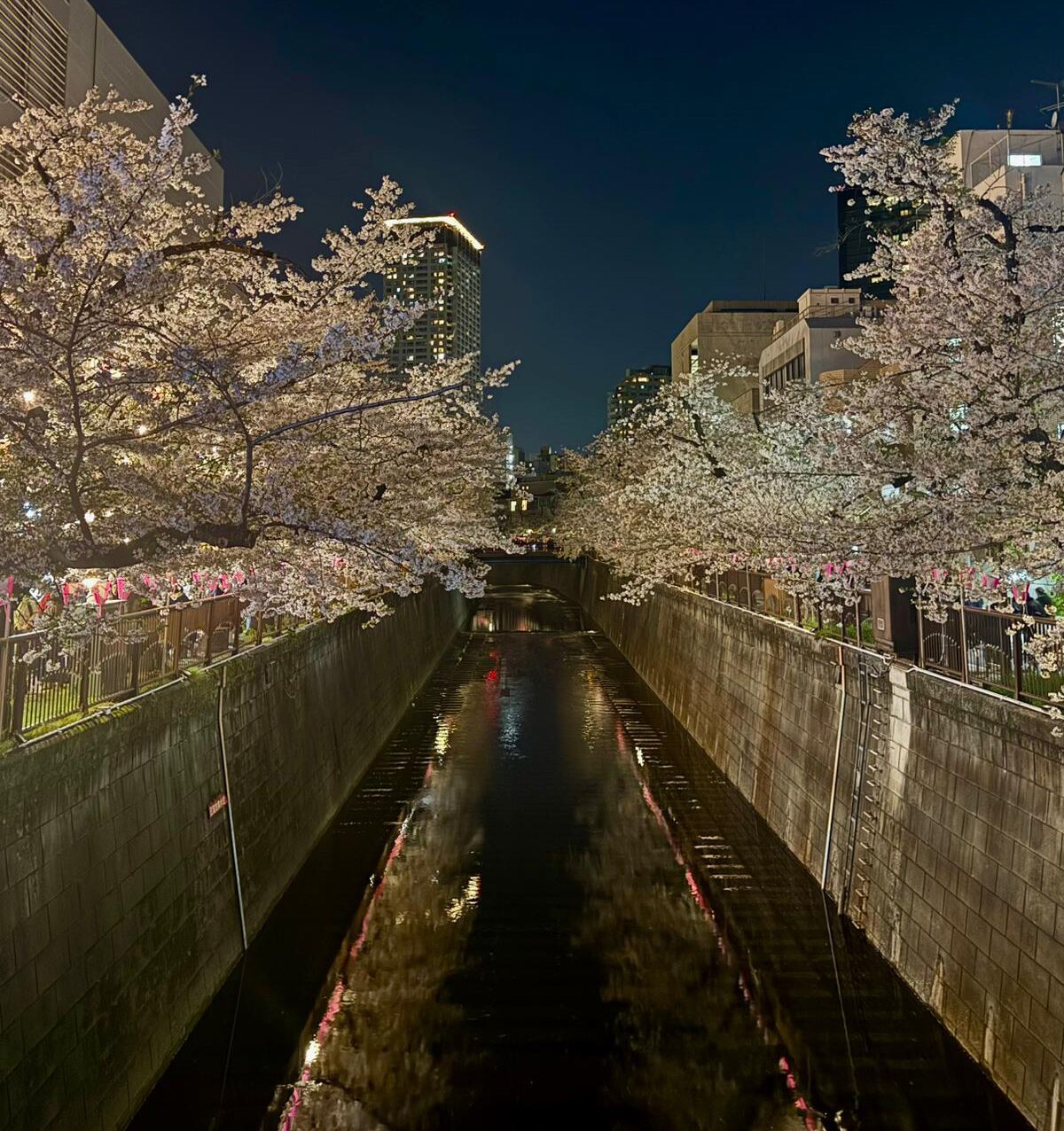
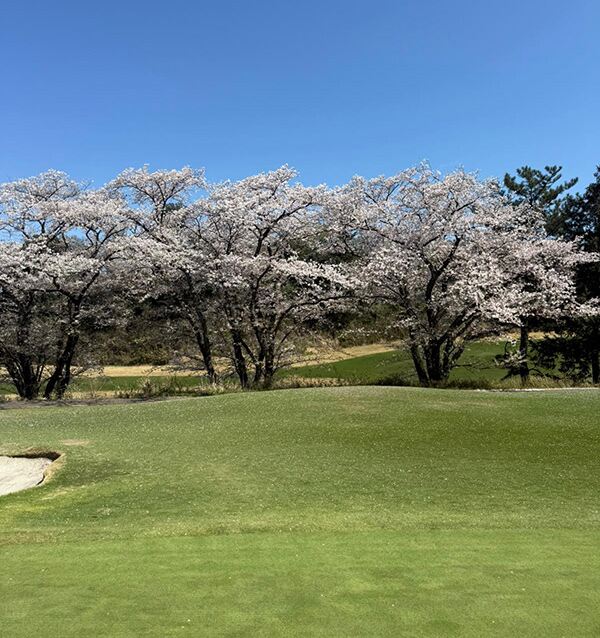
Sakura season is unlike anything I have experienced before. The cherry blossoms, which the Japanese call Sakura, cover the country in soft pink tones and create a backdrop that feels almost unreal. It is not just beautiful, it is philosophical. The idea that something so perfect only lasts for a short time changes the way you look at everything around you. Standing on a golf course surrounded by cherry blossoms, you realise how closely this mindset aligns with golf itself: precision, patience and the acceptance that perfection is always fleeting.
While my family was more focused on temples and culture, I found myself spending most of my time in golf shops.
 |
 |
Tokyo: the world’s most advanced golf retail
Tokyo is, without question, the most advanced golf retail environment in the world. I stayed at the Shangri-La Tokyo, which also became the starting point for one of the most efficient systems I have ever experienced: luggage forwarding. From there, I sent both suitcases and my golf bags ahead to Kawana without a single issue. It is a small detail, but one that makes travelling with golf equipment completely painless.
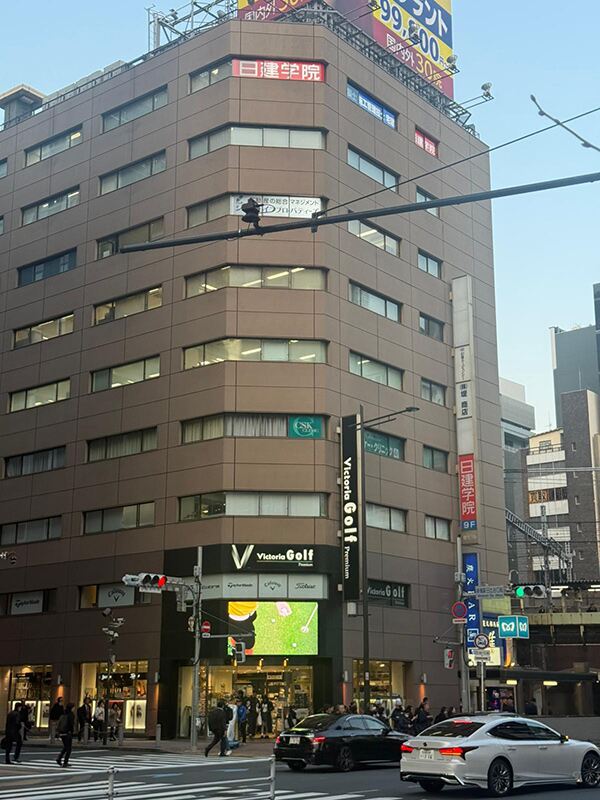
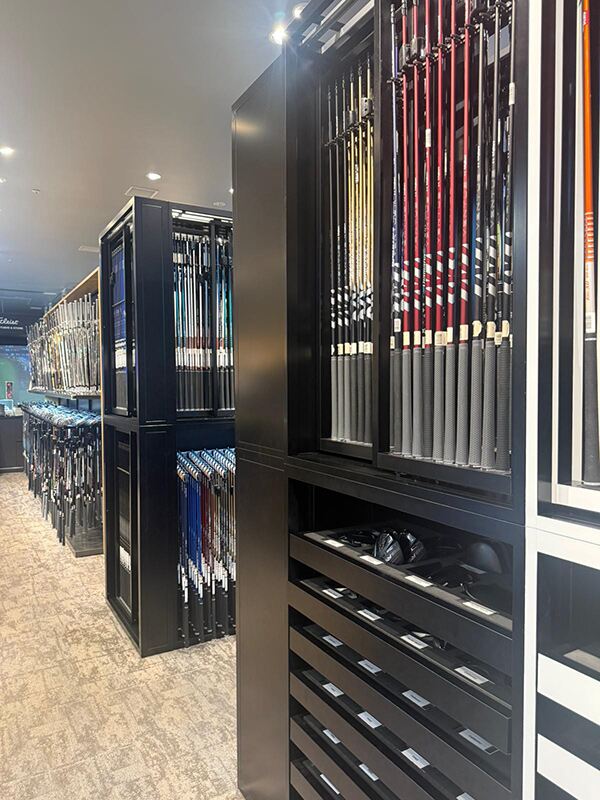
In Shimbashi, I came across Victoria Golf, and directly opposite it, Victoria Prestige. The latter felt more like a laboratory than a shop. At one point, I had my hands scanned by a machine that recommended the exact glove size for me. That level of precision defines Japan. The selection of shafts is something you simply do not see in Europe: depth, variety and technical nuance everywhere you look. I was particularly interested in the Japanese forged wedges from Titleist, but in the end decided to stay with the European SM11. I also visited the TaylorMade flagship store in Ginza, which was exceptional. The Mizuno store, surprisingly, did not leave the same impression. Everything is tax-free, which inevitably leads to buying more than planned. In my case, that meant leaving with a large collection of Japanese Titleist gloves, balls and accessories.

What also stood out was the Japanese approach to golf fashion. There are countless local brands, many pushing a more modern and relaxed look. Non-collar shirts seem to be a clear trend. However, I struggled with the materials, which often felt light and slightly synthetic, almost like a thin shower-curtain type texture. Sizing was another challenge. At 190 cm and 94 kg, even XXL was sometimes too small for me, which made finding the right pieces surprisingly difficult.
The journey to Kawana
Despite everything Japan had to offer culturally, there was one stop I had been looking forward to the most, and it required a deliberate detour. From Osaka, we took a three-hour train journey to Kawana to play the famous Fuji Course at the Kawana Hotel Golf Course. The train itself is part of the experience. Travelling at 300 km/h, it is incredibly efficient, and I would always recommend booking the Green Car. It is their version of first class: more space, more comfort, and importantly, enough room for luggage, all at a very reasonable price.
Arriving at the Kawana Hotel feels like stepping back in time. The hotel has a charm that takes you straight into the 1930s. While it is part of the Small Luxury Hotels group, it feels more like a well-maintained four-star property than a modern luxury resort. But that is not why you come here. You come for the golf.
The Fuji Course and the spa ritual
The Fuji Course, opened in 1936 and designed by Englishman Charles Hugh Alison, is one of the most spectacular courses I have ever played. The fairways are tight and hilly, the greens small and demanding, and the entire course sits dramatically along the coastline. Every hole feels exposed to nature and the ocean is never far away. We decided to take a cart, with a female caddie driving for the three of us. My son and wife rented their clubs and were offered a wide selection of brands and shafts to choose from, which again reflects the attention to detail you find everywhere in Japan. I had brought my own clubs from Vienna.
One of the most memorable moments came on the 15th hole, the signature par 5 running along the coastline at around 480 yards. After a 300-yard drive and a 7-iron into the green, I found myself putting for eagle with the ocean behind me. It is one of those moments that stays with you. The 16th hole, a 172-yard par 3 with a small green set above the tee, was equally stunning and framed perfectly by the landscape. The closing stretch of the 15th, 16th and 17th is sometimes referred to as Kawana’s Amen Corner, and it is easy to see why.
We had arrived late the night before and I decided to visit the spa. What I experienced there was something entirely different from what you would expect in a Western hotel. It felt like stepping into an old Japanese film. The space was dark, minimal and filled only with local guests. Tattoos are not allowed and the entire process follows a strict ritual. You sit on a small stool, wash yourself thoroughly and only then enter the hot pool. Sitting outside under the stars, with the sound of the ocean in the background, was one of the most unique and relaxing experiences of the entire trip.

Yokohama Country Club: a Porsche tournament under cherry blossom
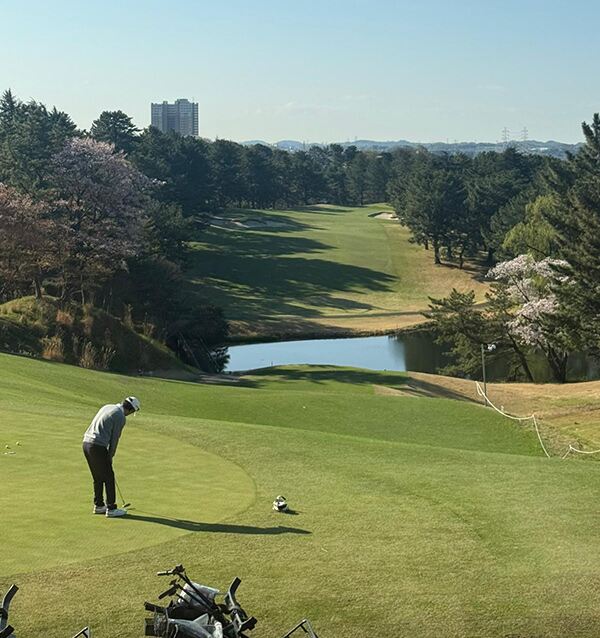
Another highlight was playing a Porsche tournament at Yokohama Country Club. The course is very different from Kawana: much tighter, more technical and less forgiving. It was in immaculate condition and demanded precision on every shot. What stood out here was the format. You walk the course, while the caddie manages multiple bags using an electric scooter. After nine holes, you stop for a proper lunch before continuing with the back nine. It creates a rhythm to the round that feels more structured and, in a way, more enjoyable. There was also an escalator on the course which takes you to the next hole so you do not have to walk up the hill.
Playing during Sakura made the experience even more special. The fairways were lined with cherry blossoms, adding a softness to an otherwise demanding course.
 |
 |
The Japanese standard
Beyond golf, what impressed me most about Japan was the culture. There is no tipping, yet the level of service exceeds what you experience in most five-star hotels in the United States. People take pride in their work, regardless of what they do. Taxi drivers, shop assistants, caddies, everyone operates with professionalism and respect. Even in the busiest streets, people speak quietly. There is a sense of order and awareness that is hard to describe but impossible to ignore.
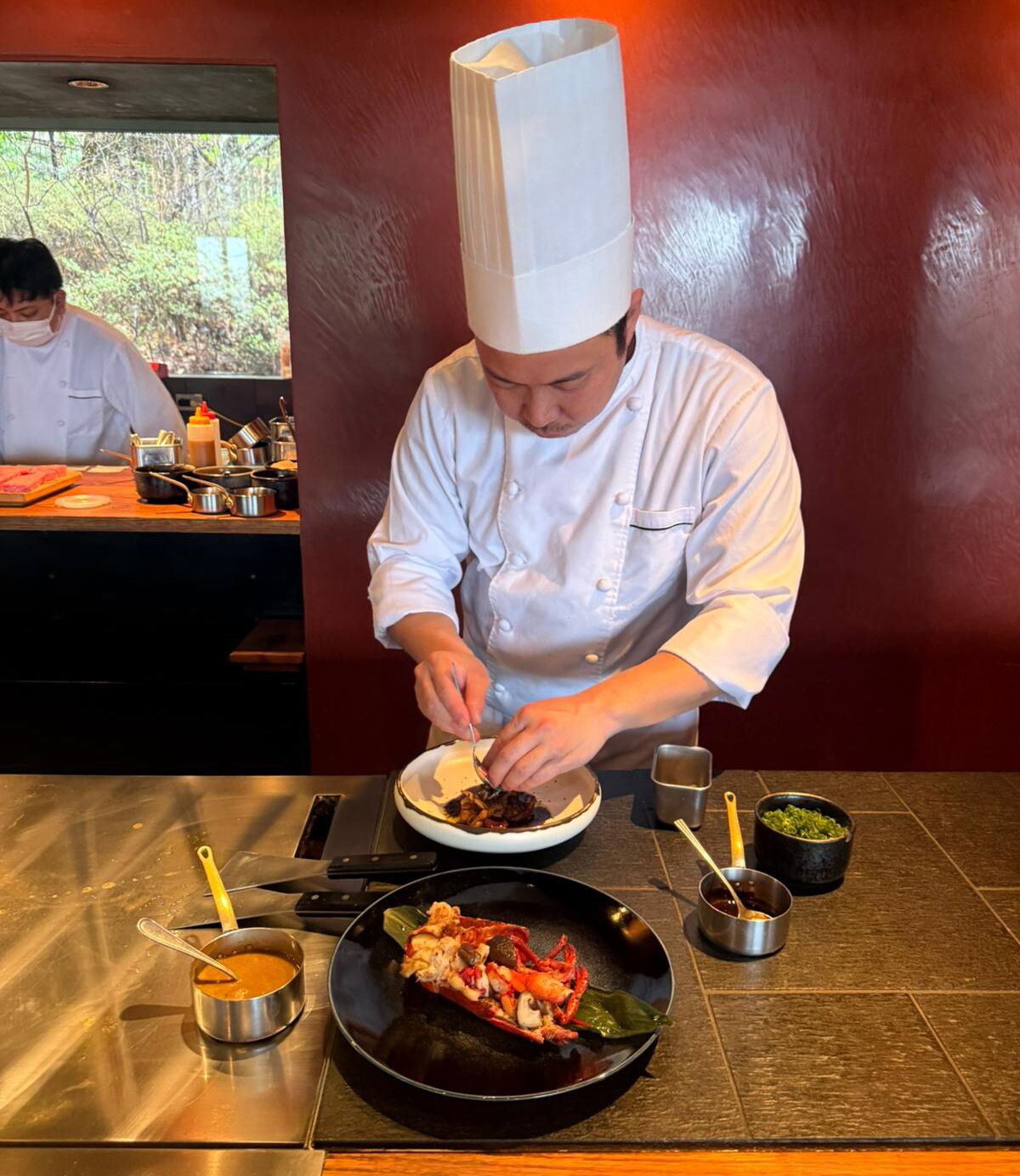
The food is equally remarkable. Not only is Japanese cuisine outstanding, but you will also find some of the best Italian and French food anywhere in the world. What surprised me most was the consistency. Whether in a high-end restaurant or a simple railway station, the quality is exceptional. At the same time, prices for food are very reasonable, especially given the current strength of the euro against the yen.
Hotels, however, are a different story during Sakura season. The Aman Tokyo reaches around €3,000 per night, while the Four Seasons Hotel Tokyo at Otemachi sits closer to €2,000. Outside of Sakura, these prices drop significantly.
What to wear if you’re going
A practical note for anyone planning a similar trip. Spring in Japan, particularly during Sakura, can be deceptive. Mornings are cool, afternoons can be warm, and coastal courses like Kawana carry a sea breeze that lasts most of the day. The Japanese non-collar polos I encountered are stylish but, to my touch, often lacked the natural-fibre weight that makes a golf shirt feel like clothing rather than performance kit. A lightweight cotton polo, a fine merino knitwear piece for the cool tee time, and a packable jacket for the changing conditions is the wardrobe a Glenmuir customer would already pack. It is what I wore at Kawana and at Yokohama, and what I would recommend for anyone making the trip.





A closing thought
Looking back, Japan offers something very few destinations can. It is not just about great golf courses. It is about an entire ecosystem built around precision, respect and excellence. From retail to culture, from service to design, everything feels intentional. For me, it was the perfect combination of family travel, golf and cultural immersion. And while Sakura only lasts a few weeks, the impression Japan leaves stays with you far longer.