 2026 Platinum
Table of Contents
- A practice round that got out of hand
- Tradition against technology
- What five hickory clubs do to your golf
- Royal St George's
- Royal Cinque Ports
- Prince's
- The parts between the golf
- What to wear for a sixteen hour day
- Making a couple of days of it
- Entering the 2027 Hagen 54
A practice round that got out of hand
Hagen came to Kent for the 1920 Open at Royal Cinque Ports as a two-time US Open champion who had never played links golf in his life. His solution was to arrive early and walk into it. With Jim Barnes for company he set off one morning from Deal, played eleven holes, climbed the fence into Royal St George's, played ten more, crossed again into Prince's and worked his way back. Fifty four holes. Writing about it later he admitted he had forgotten the scores altogether. They did it, he said, “for fun.”
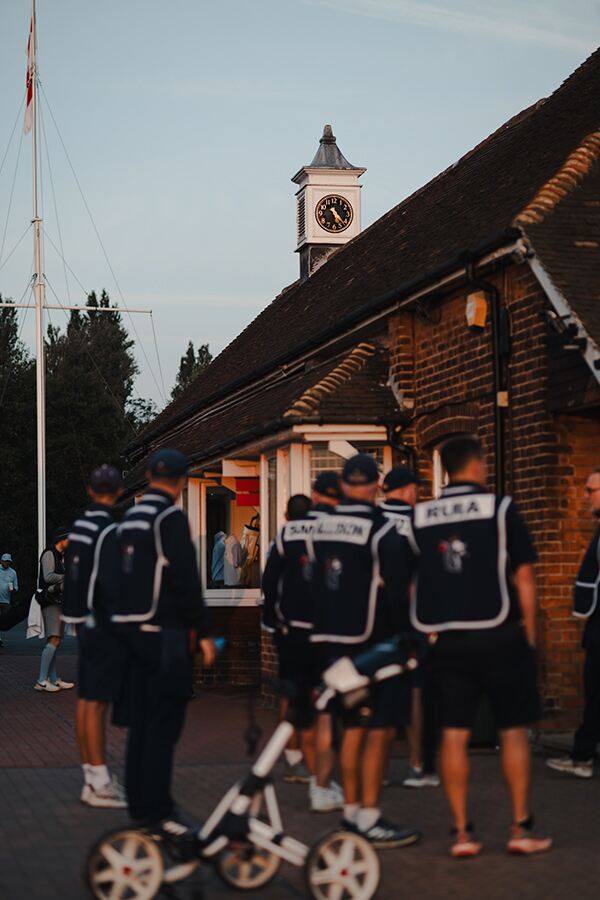
The three clubs turned that line into an event in 2025. Same route, same three links, same absurd distance, with the addition of caddies, feed stations and a 5.40am shotgun start that nods at the number. Everything else is essentially unchanged since Hagen and Barnes went fence-hopping.
Tradition against technology
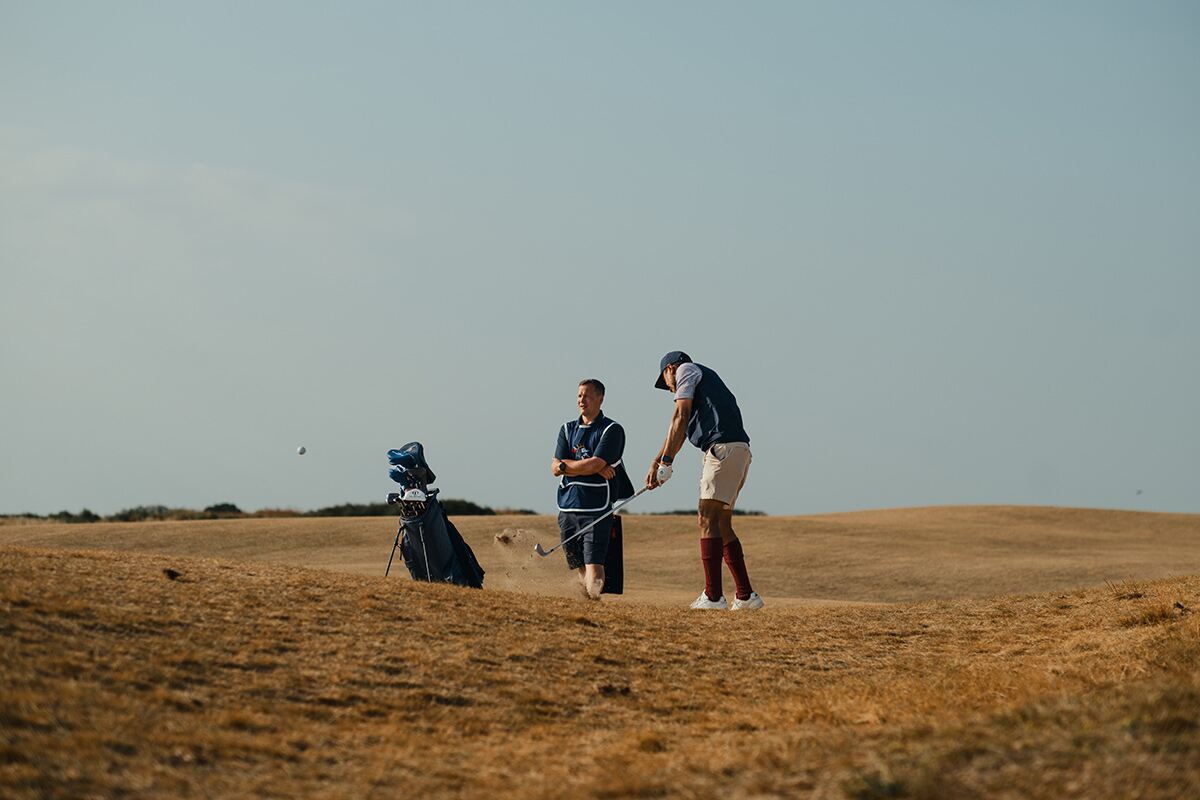
Our fourball decided to make a match of it. Two of us played hickories the whole way, woods through to the putter, five clubs in a pencil bag. The other two played a set of Titleist T150 irons and a TaylorMade Qi4D. Everyone used a Pro V1x so the ball was not a variable.
Technology won, 7 and 6. In fairness the hickories had been eleven down at one stage, so the closing stretch flattered them considerably. They were never once in front.
The caddies, it should be said, were entirely happy about the arrangement. Five clubs in a canvas pencil bag over 54 holes is a rather different day's work.
What five hickory clubs do to your golf
Struck out of the middle, a hickory feels like nothing else in golf. Pure and solid. The whole club moves as one piece, with very little of the lag you feel in a modern shaft, and the feedback through the hands is remarkable. Catch one wrong and the ball departs at an angle you did not previously know was available to you.
The clubs came from Boris Lietzow, who runs Jack White Hickory Golf in Gullane, the only bespoke hickory shop in Scotland, named after the 1904 Open Champion and clubmaker who remains the only East Lothian golfer to have won the championship. Lietzow restores clubs made before 1935 and, importantly, tests every one of them for play rather than for display. His point is that each club has its own speed and the first job is finding out what that is. The method is to start slowly and build the tempo until it begins to feel unsafe, then stay short of that. A modern shaft forgives you for arriving early at the ball. Hickory does not, and it tells you about it through your hands.
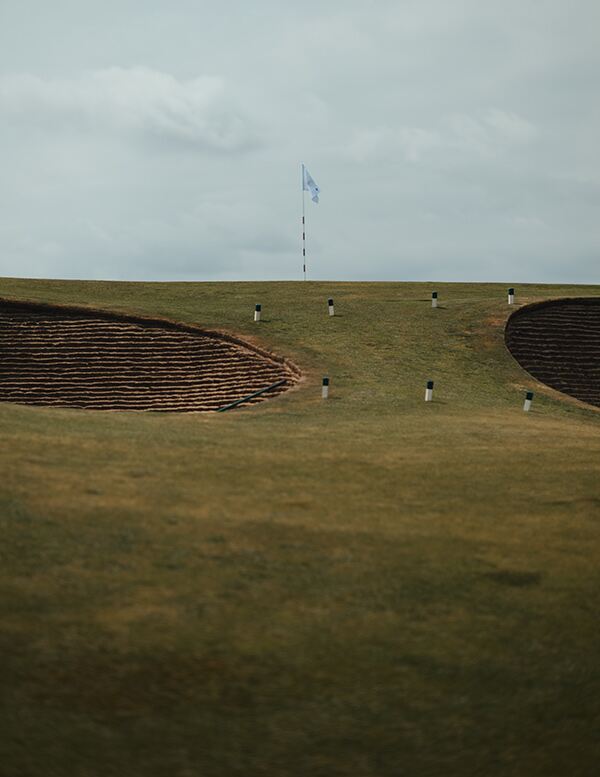
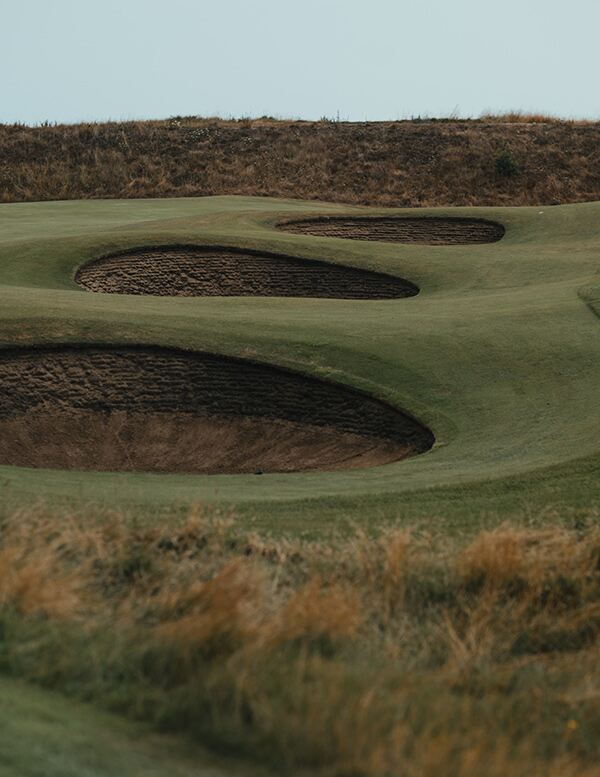
The rough is where it falls apart. There is almost no mass behind the head, so thick links grass simply wins the argument. Bunkers were worse. The niblick behaves like a spoon with a sharpened edge, and unless the strike is perfect the leading edge just buries itself and stays there.
 |
 |
Off the tee, when both were properly struck, the two balls finished closer together than anyone expected. Spin on the par threes was achievable, though the ball probably deserves most of the credit for that.
There is a genuine case for hickories beyond the novelty. Five clubs means fewer decisions, which means a faster round and a bag that weighs nothing. They ask more of you in return, since a dried-out shaft can crack on impact and needs oiling. That the sets came through 54 holes of enthusiastic striking without a single head leaving a shaft is the real result of the day.
Royal St George's
Sandwich began in 1887, when Dr Laidlaw Purves climbed the tower of St Clement's church, looked out over the duneland below and decided what should be done with it. It became Royal in 1902 and has now staged fifteen Open Championships.
The routing is not out and back. Each nine is broadly circular, a loose figure of eight in the manner of Muirfield, which means the wind arrives from a new direction on nearly every tee. Sandwich is also the blindest of the three. You aim at a marker post, a shoulder of dune or the roof of a distant building and trust that the fairway is where you were told it was.
The 1st asks for a drive between the hut and the tree. The 2nd needs less club than you think and rewards staying well away from the bunkers down the left. The 4th is the one everybody remembers: 491 yards, with the tallest and deepest bunker in Britain built into the face of the dune. Favour the right side and the shot stops being blind. Carry the sand and the fairway beyond is called the Elysian Fields, which tells you how the members feel about getting there.
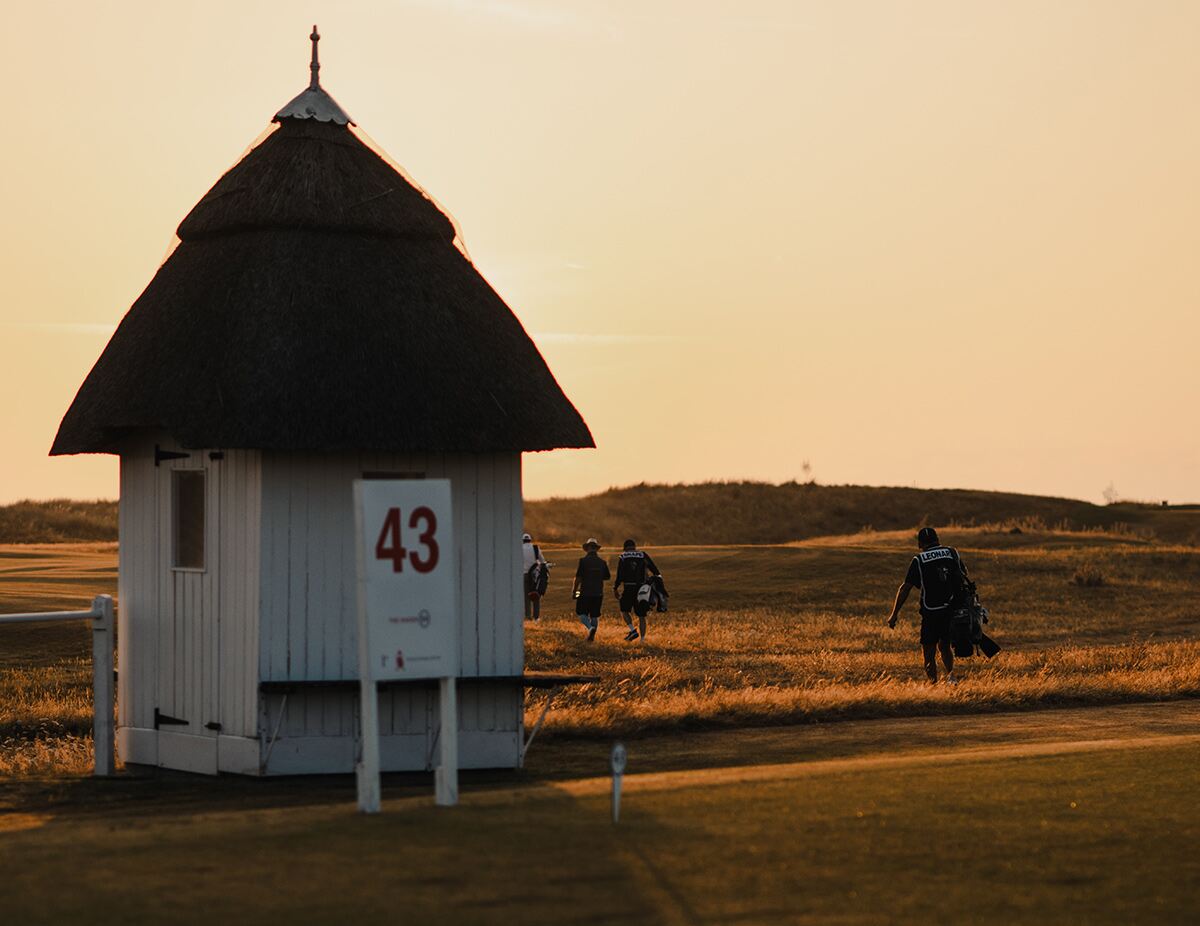
The 3rd deserves a mention for its oddities. A 239-yard par three with no bunker at all, and the only tree on the entire property sitting to the right of the green. Obviously one of our team found it.
The 14th, Suez, is the hole that decides cards. A ditch crosses the fairway roughly 330 yards from the tee and out of bounds runs the full length of the right side. This is where Dustin Johnson put his second out of bounds with a 2-iron in the final round of 2011. Stay well left off the tee and take the medicine.
The 15th is a 496-yard par four that normally plays into the breeze, which is a fairly brutal thing to meet at that stage of a round. The 16th is only 162 yards but is ringed with bunkers, and carrying them is the whole job. It is also where Tony Jacklin holed a seven-iron in the 1967 Dunlop Masters for the first televised hole-in-one in Britain. On the 18th, stay down the left and mind the three bunkers.
A general note on the sand at Sandwich, learned the hard way. It is exceptionally fine. Dig too steeply and the club stops dead in it. Try to skim the ball off the top and you will thin it into something worse. And if a ball ends up in a rabbit scrape, take the free drop. Relief from an animal hole comes under the Rules of Golf, not the goodwill of the committee.
Royal Cinque Ports
Pronunciation first, because it catches people out. It is “sink”, not the French. The name comes from the medieval confederation of ports that handled the defence of the Kent and Sussex coast, and the town of Deal was part of it.
The club dates from 1892, with the second nine following in 1896. James Braid worked on it in 1919, and Sir Guy Campbell and Henry Cotton restored it after the war. Deal staged the Open in 1909 and 1920, and was awarded it twice more, in 1938 and 1949, only to lose both when abnormally high tides flooded the links and the championship moved down the road to Sandwich.
 |
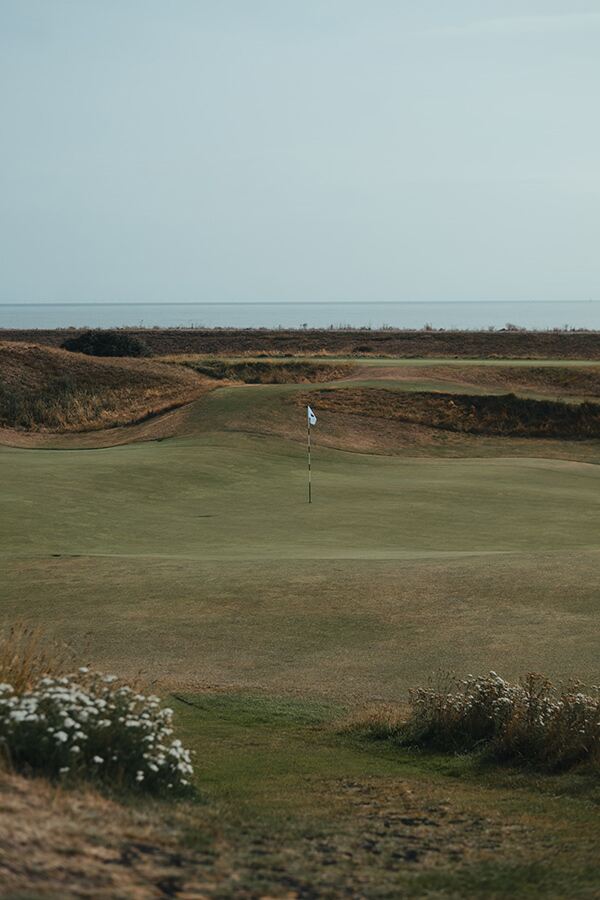 |
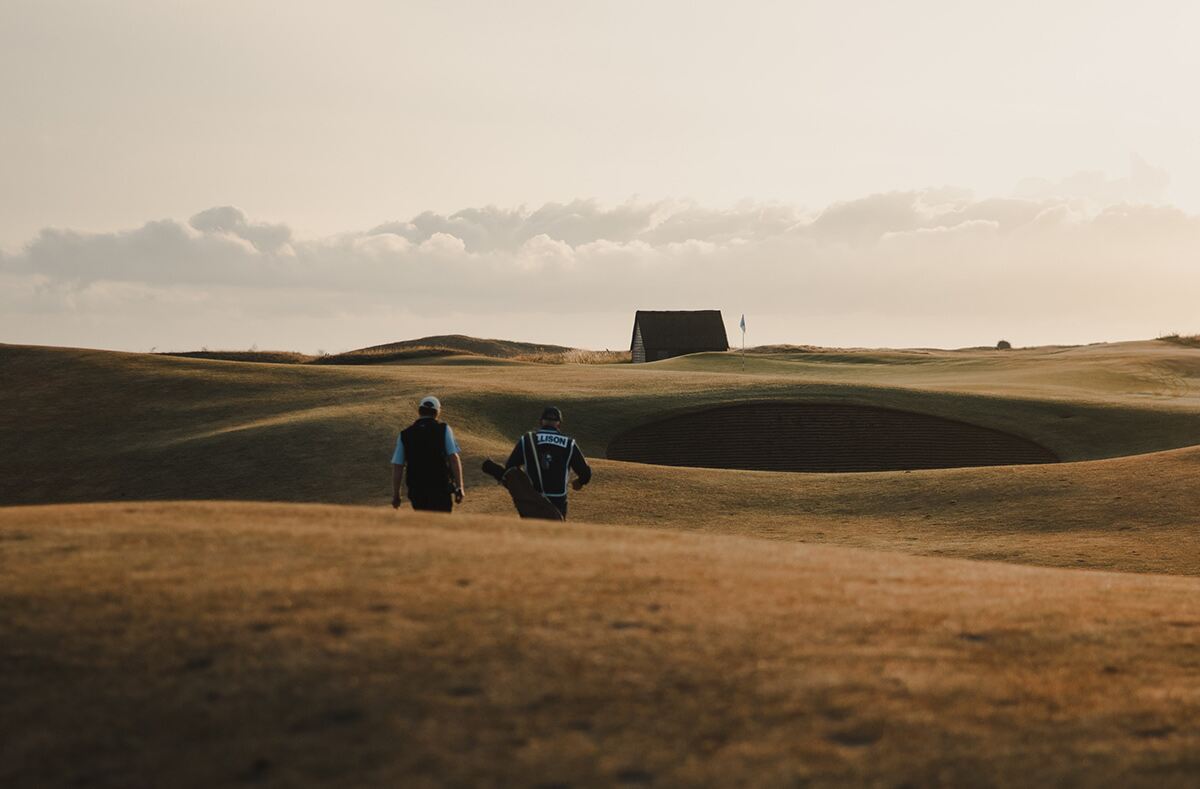
Where Sandwich loops, Deal is a classic out and back. Holes two to ten run down the shore, usually with the wind at your back. Then you turn at the eleventh and the last seven come home into the prevailing south-westerly, past the edge of the town, and there is nothing subtle about what happens next.
Two things about the clubhouse. Shovril was invented at the halfway hut here and is now poured at halfway houses across the country. And there is a hot sauce collection behind the bar, built up by members bringing one back from wherever they have travelled. Carol has been there long enough to know exactly who needs warning about which bottle. A bacon roll at six in the morning with a drop of the wrong one is a fast way to wake up.
Prince's
Prince's was founded by Sir Harry Mallaby-Deeley with a deliberately different idea to its two neighbours, opening its membership to women, juniors and families at a time when that was not the norm on this coast. Charles Hutchings laid out the original course and A.J. Balfour, the former Prime Minister and the club's first captain, drove the opening ball in 1907.
In 1932 Prince's staged the Open, and Gene Sarazen led from the first round to the last, finishing on 283, five clear of Macdonald Smith, for a winner's cheque of £100. He arrived that week with a club he had designed himself, the sand iron, and used it to considerable effect. The bunker to the left of the 9th green on the Himalayas is one he played from on the way to that win, and it was renamed in his honour and unveiled by Pádraig Harrington in 2011. Prince's remains the only club to have hosted the Open exactly once.
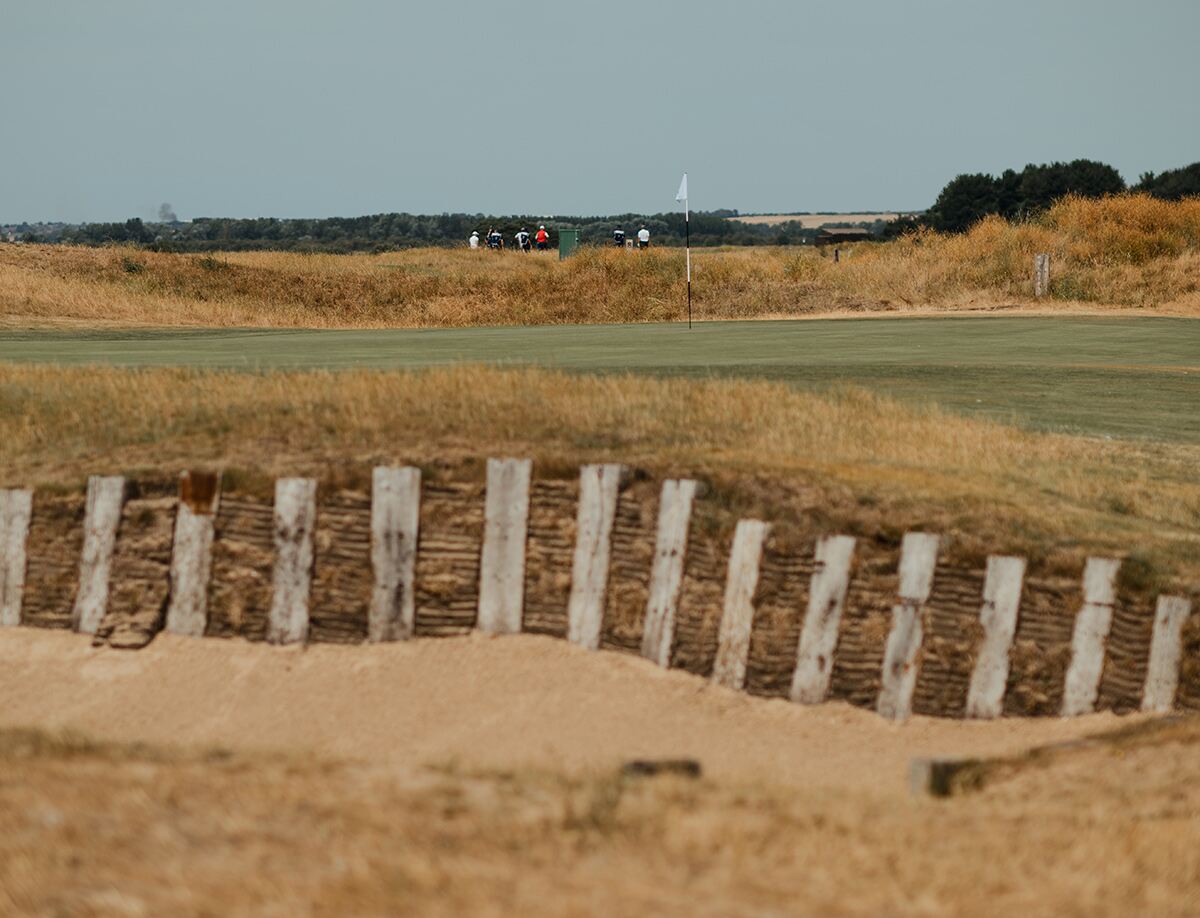
The military requisitioned it in both wars and left it badly damaged after the second, and it took Guy Campbell and John Morrison to rebuild it. The ammunition boxes still standing as tee markers are a reminder of that period.
There are 27 holes here, Shore, Dunes and Himalayas, always played clockwise. We had Shore and Himalayas as our third and final loop. It plays tighter off the tee than Sandwich, partly because of the marsh land, which is red staked. What it gives back is sight. You can see the hole in front of you and you can see where the ball finishes, and after ten hours of golf that is worth far more than you would imagine.
The McGuirk family have owned Prince's since 1977 and have spent seriously on it in recent years. It shows.
The parts between the golf
We had the 1st at Sandwich for the shotgun, thanks to a kind friend who happens to be a member who hosted us for the day.
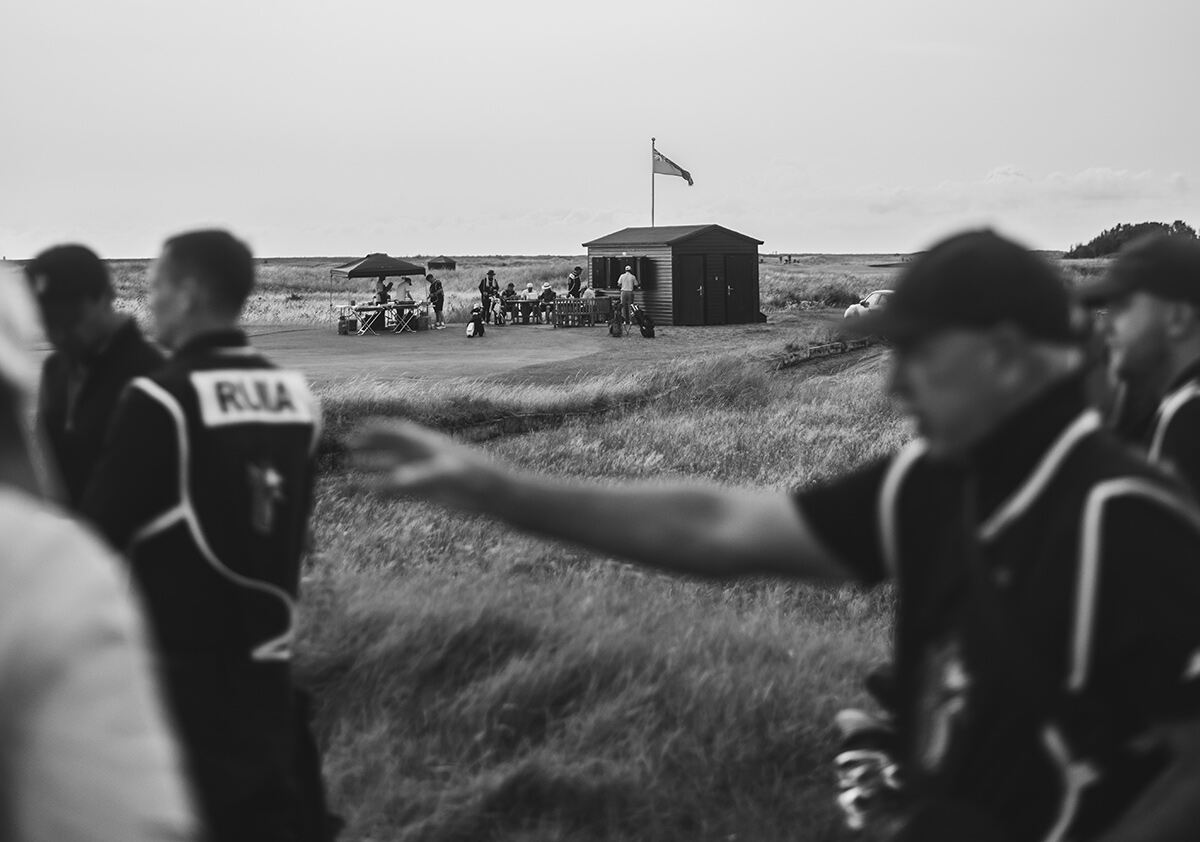
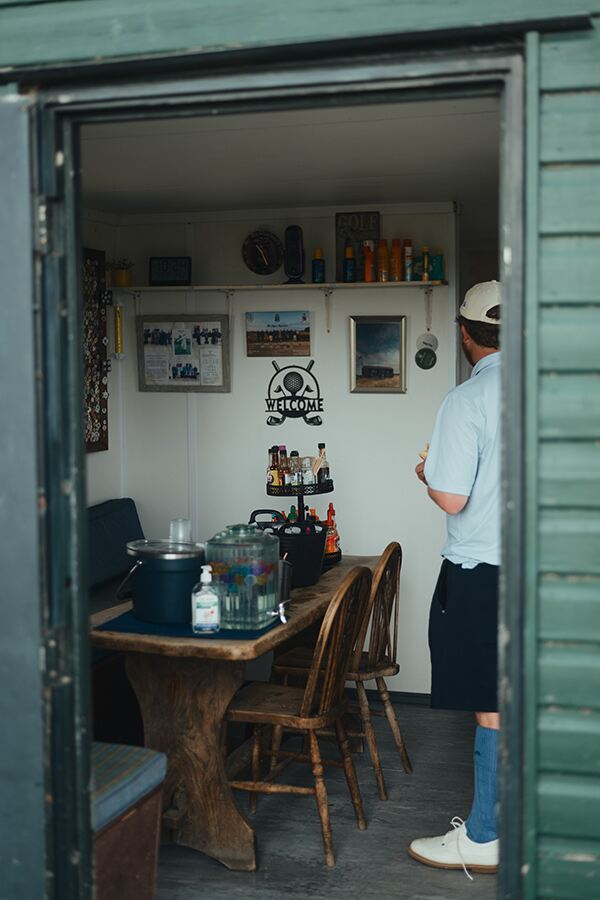
Feed stations appear every four holes and are genuinely well run. Bacon rolls throughout, bao buns with pulled beef at Sandwich which is grander than anyone anticipated, chicken thighs, an endless supply of wraps and sandwiches, and chocolate at Prince's. Between clubs there are buses, though there is also a hole cut in the fence for anyone who wants the Hagen experience unabridged.
 |
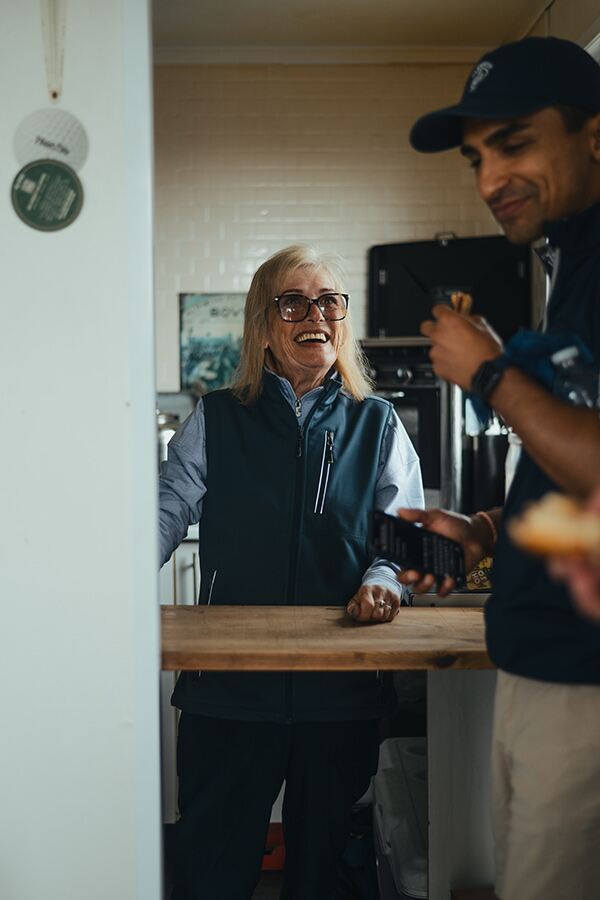 |
One piece of insider advice. The showers at Sandwich are excellent, and the first on the left is the best of them. This came from Rob, who caddied for us and does the plumbing for the club. He was right.
The day ends back at Deal with a buffet in the marquee, heavy on seafood given where you are. Nothing about any of it is hurried or corporate. It is a large group of people who like golf, walking roughly 30km together and comparing notes at the end of it.
What to wear for a sixteen hour day
Dawn on this coast in late July is colder than the forecast lets on, and by eleven you are in shirtsleeves and wishing you had fewer sleeves than that. The whole exercise is about layers you can shed without breaking stride. A performance polo, a quarter zip that packs into the bag once the sun arrives, and a slipover for the wind that adds no real warmth is about right.
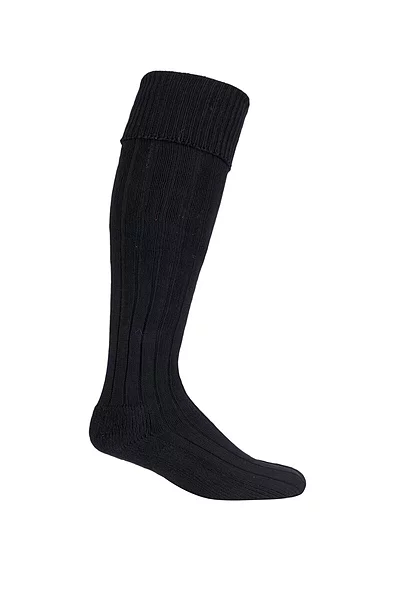
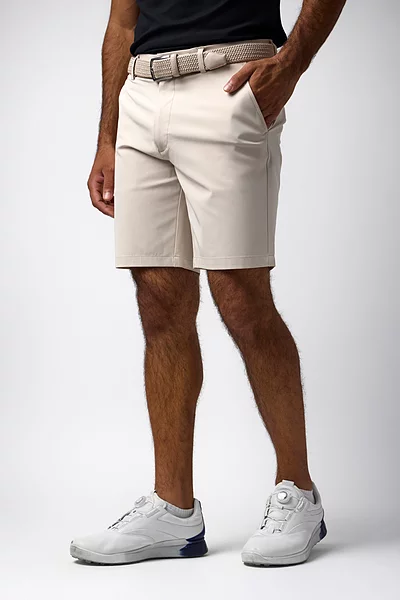

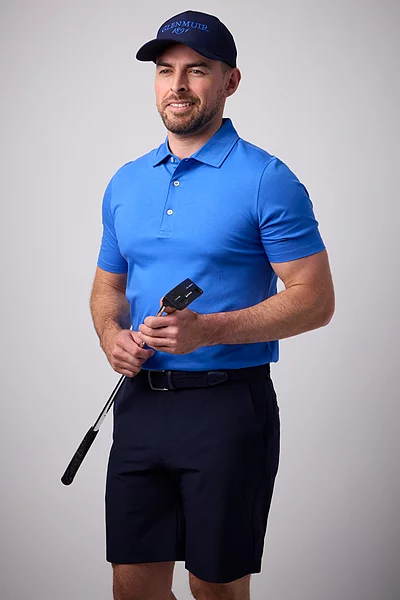
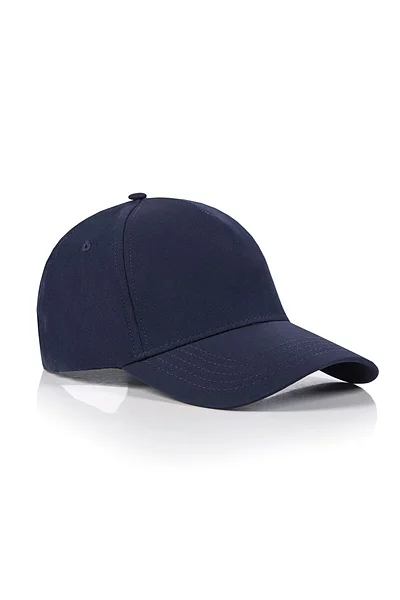
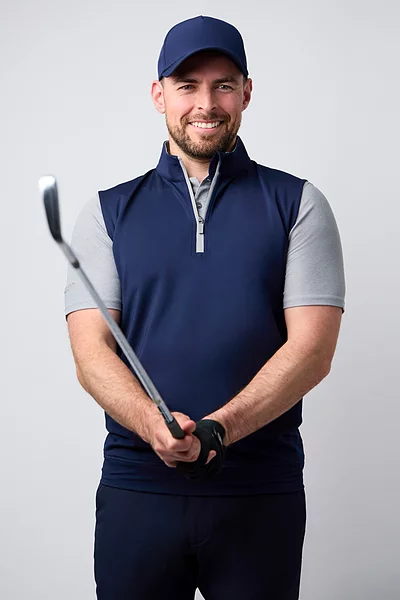
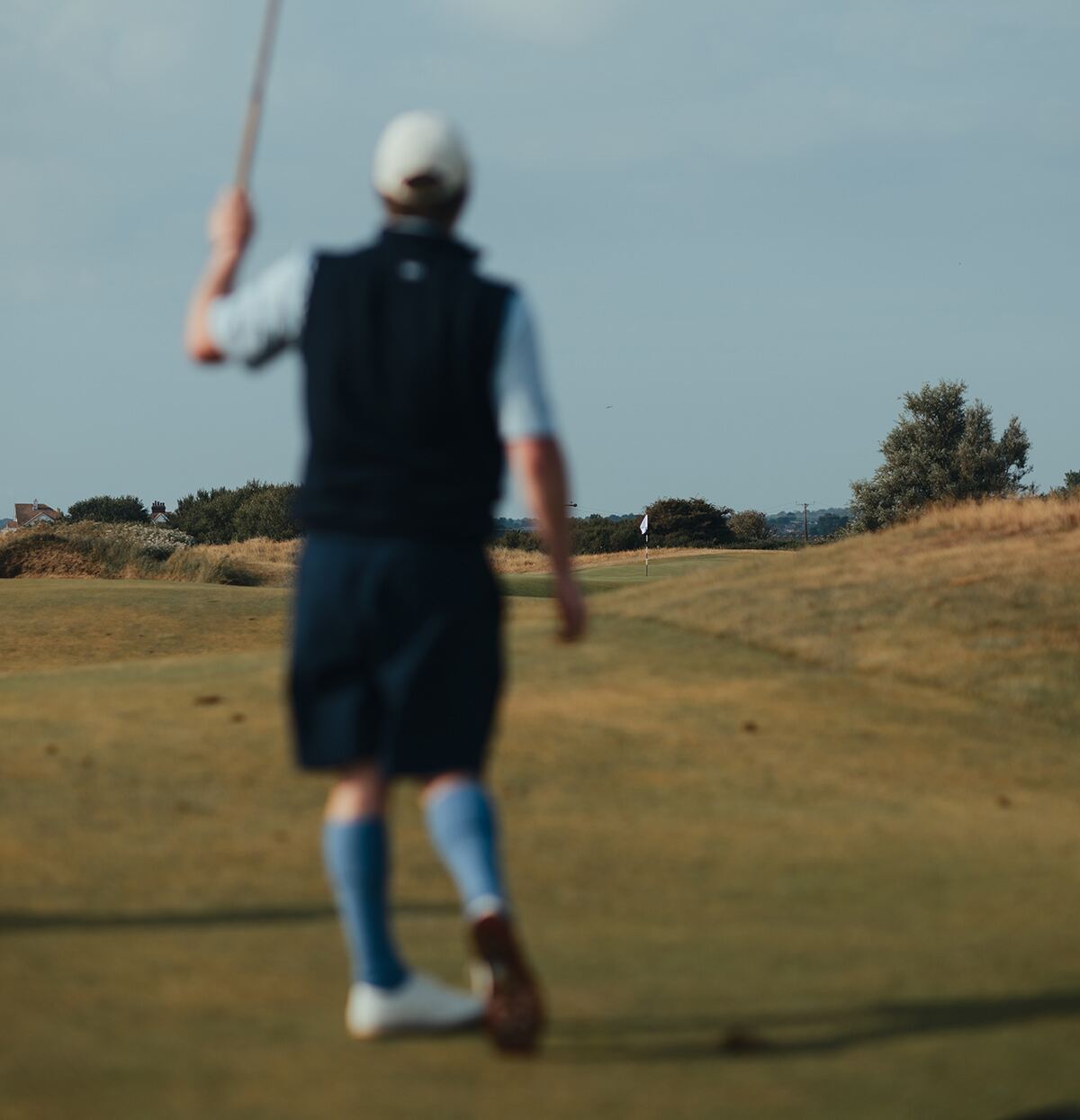
Remember, gentlemen require long knee high socks if wearing shorts.
Glenmuir and Sunderland of Scotland supply all three of these clubhouses, which made the day a pleasure for reasons beyond the golf. Thanks to Colin Sinclair, Harry Bond, Sam Smitherman, Robert and Ali McGuirk for enabled my playing partners and I to create some outstanding golfing memories.
Making a couple of days of it
Updown Farmhouse at Betteshanger is ten minutes inland from Deal. A 17th century farmstead with ten rooms and a conservatory restaurant built around a wood fire and the original bread oven, and worth the detour on its own.
The day before, the white cliffs at Dover are a short drive away. The walk out to South Foreland Lighthouse, all maintained beautifully by the National Trust, takes roughly one and a half hours there and back, with the Channel and the ferry crossings below you and a scone waiting at the tea room. Whether a 10km walk is a sensible preparation for a 30km one is a matter for the individual. When in Rome/Dover.
Entering the 2027 Hagen 54
The 2026 event sold out well before it was played. The 2027 edition runs on 21 and 22 July, with optional golf at Prince's or Royal Cinque Ports on the Wednesday, the reception and barbecue at Deal that evening, and the 5.40am shotgun on the Thursday. Entry is £1,125 per person or £4,500 for a fourball, and registration is already open at https://thehagen54.com.