 2026 Platinum
Ever wondered if submitting every acceptable golf round is worth the hassle, especially after a duffed shot ruins your card? Many club golfers fret that off days will inflate their handicap index. This guide unpacks the World Handicap System rules, benefits and pitfalls of submitting your card in the UK, revealing how consistent submissions stabilise handicaps up to 25% faster according to R&A data.
Introduction
There is a familiar conversation that echoes through clubhouses throughout the UK and the four corners of the world to be frank. It usually happens over a post-round drink, just as the scorecards are being tallied. The question is simple, yet it divides opinion amongst even the most seasoned golfers: "Are you putting your card in?"
For over 25 years, I have walked fairways across Scotland and beyond, and I have seen how the approach to handicapping has shifted. Some players treat every round as a qualifying examination, while others prefer to keep their casual games strictly casual. With the recent changes to the World Handicap System, the pressure to submit General Play scores has increased. But does recording every single round actually help your game, or does it just add unnecessary stress to a pleasant walk?
Some interesting statistics from 2025 vs. 2024 in Scotland
- Competition scores totalled 1,422,435 (up 86,922 or 7%)
- General Play scores totalled 616,684 (up 166,632 or 37%)
- 18-hole rounds accounted for 1,878,986 of all scores (a rise of 222,323 or 13%)
- 9-hole rounds accounted for 160,133 of all scores (a rise of 31,231 or 24%)
- May was the busiest month for play with 353,667 rounds submitted
- Saturday 3 May was the busiest single day with 27,795 scores submitted
What is Golf Handicap Scoring?
At its heart, the golf handicap is the game’s great equaliser. It is the mechanism that allows a 24-handicapper to compete fairly against a scratch golfer, or for a husband and wife with different abilities to enjoy a competitive match on equal footing. Unlike other sports where you simply play against an opponent, in golf, you are largely playing against the course and yourself.
The system rates players based on their average performance rather than their absolute best day, allowing for fair competition between different abilities. It is a measure of potential, not just history. For the Glenmuir golfer, who values the integrity and tradition of the sport, maintaining an accurate handicap is part of the etiquette of the game. It ensures that when we stand on the first tee no matter where you are, the match is played in the true spirit of fairness and the game.
|
How the World Handicap System (WHS) Works In the early days, handicapping could feel a bit like a dark art, varying wildly depending on where you played and the mentality and mood of the handicap committee or secretary. That changed significantly with the introduction of the World Handicap System (WHS). Implemented in early 2020 by the USGA and R&A, this system unified six different handicapping bodies globally into one consistent standard. The goal was to make the game more portable. Whether you are playing your home course in Scotland or enjoying a holiday round in Spain, your handicap travels with you seamlessly. The system uses specific metrics to adjust your score based on the difficulty of the course you are playing that day. Here is a breakdown of the key components you will see on your card:
|
Calculating Your Handicap Index
The calculation method is perhaps the most significant change for long-time golfers accustomed to the old buffer zones. Your Handicap Index is now calculated by averaging the best 8 Score Differentials from your most recent 20 rounds.
This moving average is designed to be responsive. As you submit a new score, the oldest one drops off (once you have 20 recorded). This means your handicap reflects your current form rather than what you achieved three years ago. It prevents a player from sitting on a high handicap they no longer deserve, but it also means a run of poor form won’t drastically balloon your index overnight.
Acceptable Scores and Submission Rules
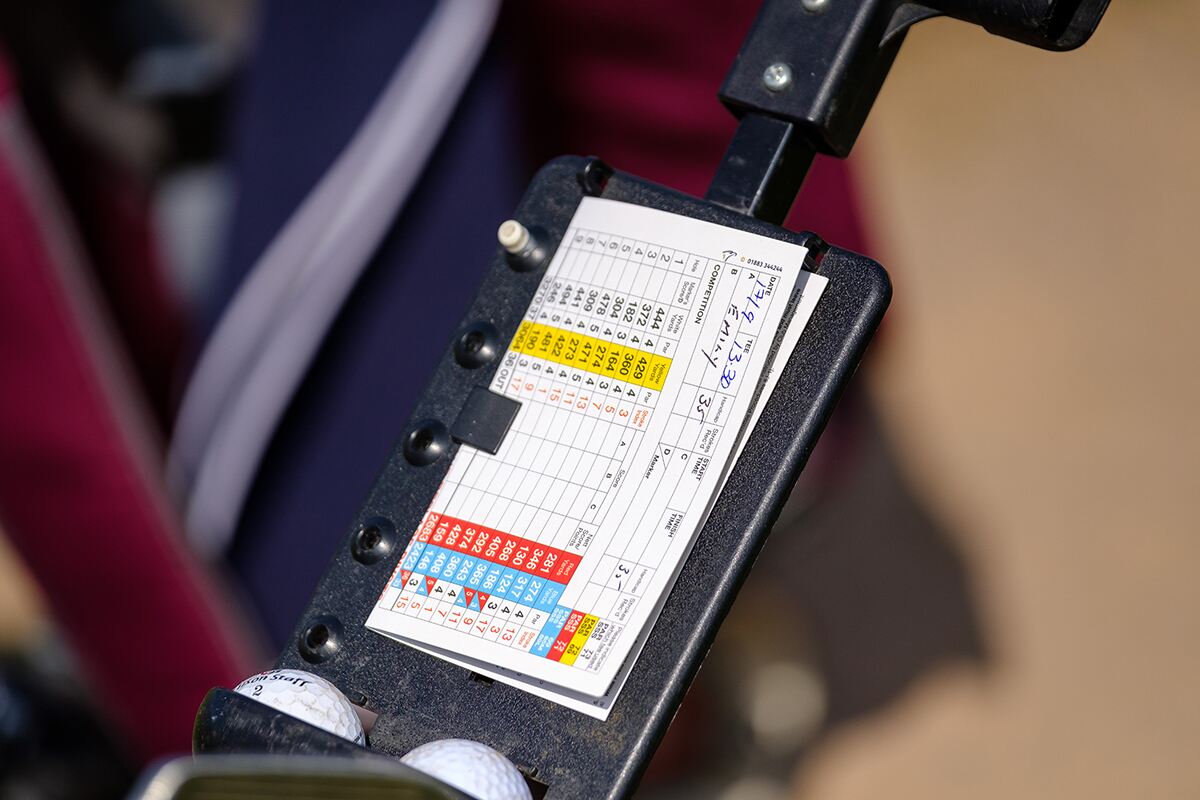
To get started, you need to build a scoring record. An initial Handicap Index requires 54 holes of scorecards, which is typically submitted as three 18-hole scores.
Once you have an index, not every shot counts towards it. The system has safeguards to prevent one disastrous hole from ruining your round. The maximum score you can take on any hole for handicap purposes is a Net Double Bogey. This keeps the focus on your general play rather than punishing you for getting stuck in a links pot bunker.
- Singles Competition Rounds: Always acceptable.
- General Play: Acceptable if pre-registered.
- Match Play: Increasingly acceptable in many jurisdictions.
The Benefits of Submitting Every Acceptable Round
There is a strong argument for submitting every card you play. The primary benefit is accuracy. Submitting every acceptable round ensures an accurate, current Handicap Index that truly reflects your recent form.
When you submit scores regularly:
- You eliminate “Vanity Handicaps”: You aren’t playing off a number you can’t justify.
- You avoid “Sandbagging”: Your handicap naturally drops as you improve, ensuring fair competitions.
- You track real progress: You can see trends in your game over the season.
For those of us who appreciate the quality of the game, having a handicap that mirrors our actual ability makes winning a competition or a friendly wager feel much more rewarding. It removes the doubt that you were playing off the wrong number.
Potential Drawbacks of Submitting All Scores
However, there is a flip side. Golf is meant to be joyful, and for some, the constant pressure of a scorecard can dampen that joy. If you are out for a casual knock with friends, or perhaps testing out a new set of irons, knowing that a bad round will go on your permanent record can add unwanted tension and slow up play.
Furthermore, we all know the Scottish weather can be unforgiving. While the Playing Conditions Calculation (PCC) tries to adjust for this, playing in a gale can still destroy a scorecard. Thankfully, the WHS has a "soft cap" which limits handicap increases by 50% if you go over 3.0 strokes above your lowest index in 12 months. This prevents your handicap from skyrocketing just because you had a bad winter.
Best Practices for Handicap Score Submission
If you decide to embrace the system fully, it is important to do it right. As with wearing the correct golf clothing on course, following the proper procedure shows respect and honour for the etiquette of the game.
Pre-Registering Intent to Play for Handicap
You cannot simply wait until you finish your round to decide if it counts. In the UK, you must pre-register your intent to submit a General Play score before you tee off. This preserves the integrity of the handicap. You can’t pick and choose only your best days; you must commit to the round before a ball is struck.
Accurate Scoring and Prompt Submission
Honesty is the cornerstone of golf. Ensure you are marking your card correctly, recording the gross score for each hole. If you pick up on a hole (in Stableford or General Play), record your likely score for handicap purposes (usually Net Double Bogey). Submit your score as soon as possible, ideally the same day, so the PCC adjustment can be calculated correctly for everyone playing that day.
Using Apps Like the Scottish Golf App
Technology has made this process far easier, even for those of us who aren’t glued to our mobile phones. Apps like the Scottish Golf App and My EG allow you to register your round, input scores hole-by-hole, and submit them instantly.
"The app handles the complex maths, so you can focus on your swing."
It removes the need for paper cards and manual calculations. Just ensure your phone is charged but ideally on silent.
Common Mistakes in Handicap Management
Even experienced golfers can fall foul of the details. Here are common errors to avoid:
Forgetting to sign: Even digital cards need verification (attestation) from a playing partner. Ensure you do so ideally at the golf club as many apps have a geographical location check to ensure both player and attester are actually at the course.
Ignoring the Course Handicap: Your Index is not your playing handicap. You must adjust it based on the Slope Rating of the specific tees you are playing which the apps above generally do for you.
Playing alone: Generally, scores from playing alone are not acceptable for handicap purposes as they cannot be attested.
Gimmies: In a handicap round, you generally must hole out, unless the format (like Stableford) allows you to pick up once you can no longer score points. And no mulligans of course.
Is Submitting Every Round Worth It? A Verdict for UK Golfers
Recent reports and discussions within the industry suggest a growing trend toward “General Play” submissions (up 37% in Scotland alone for 2025 vs 2024), yet the debate persists. From my perspective as a golfer with over two decades of experience, the answer leans towards yes, but with a caveat.
Submitting scores regularly provides the most honest picture of your game. It liberates you from the fear of protecting a low handicap or the guilt of a high one. It allows the WHS to work as intended, smoothing out the peaks and troughs of your performance.
However, do not become a slave to the index. If you are playing a quick 9 holes in the fading light, or playing a scramble format for fun, leave the handicap out of it. Golf is meant to be a pleasure. If measuring every shot reduces that pleasure and slows play, it is perfectly acceptable to play a "social" round, provided you declare it as such (or simply don’t register it) beforehand.
Conclusion
Ultimately, the World Handicap System is a tool designed to make golf fairer and more enjoyable for everyone across the globe. Whether you choose to submit every card or save it for competitions, the most important thing is that you play with integrity, good pace and enjoyment.
At Glenmuir, we believe that looking the part is the first step to playing well. So, put on your favourite merino sweater, head to the first tee, and play your game. Whether the score counts for your index or just for pride, the time spent on the course is what truly matters.