 2026 Platinum
Table of Contents
- The Line That Changed Everything
- How Glasgow Built the Ayrshire Golf Coast
- Holes Named After the Tracks
- Lanark: The Casting Vote That Changed History
- Why Train Travel Still Works for Golf in Scotland
- The Romance of It
Train tracks splitting Dundonald Links and Western Gailes
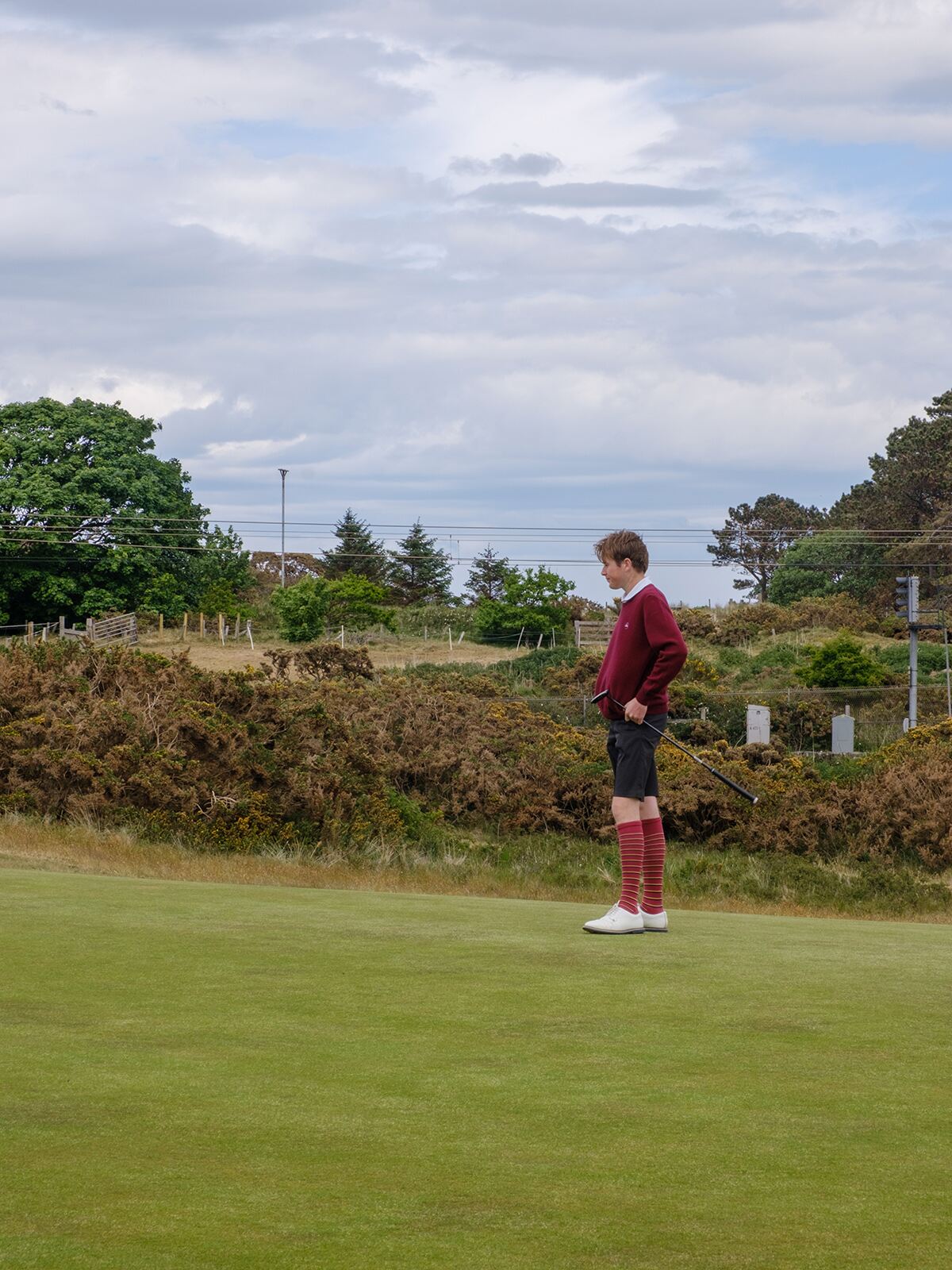
The Line That Changed EverythingIt is impossible to understand Scottish golf without understanding the railway. The two grew up together, fed off each other, and in many places are still physically tangled. Stand on the first tee at Prestwick and the railway wall is close enough to touch. Play the 11th at Royal Troon and the Glasgow to Ayr line runs the entire length of the hole, close enough that a wayward drive will bounce off the tracks and onto the 14:32 to Kilmarnock. At Kilmarnock Barassie, the station is practically on the first tee. You can step off the train, lace up your shoes and be hitting your opening drive within minutes. This is not a coincidence. It is the whole point. |
How Glasgow Built the Ayrshire Golf Coast
In the 1840s and 1850s, the arrival of the railway transformed the west coast of Scotland from a collection of quiet coastal towns into what is arguably the most concentrated stretch of quality golf on earth. The Glasgow, Paisley, Kilmarnock and Ayr Railway opened in stages from 1839, and suddenly thousands of Glaswegians had access to the fresh air and firm turf of the Ayrshire coast.
Golf clubs sprang up along the line like wildflowers after rain. Prestwick was founded in 1851, the same year Old Tom Morris arrived as Keeper of the Green. The Earl of Eglinton, who provided the land for the course, had also granted right of way for the railway to cross his estate. In return, he was allowed to stop any train he wished to ferry himself and his friends to the links. It is a level of membership benefit that even the most exclusive modern clubs have yet to match. The connection between Prestwick and the railway runs even deeper than that. The club’s very first clubhouse was a converted railway carriage, a detail confirmed by Ken Goodwin, Prestwick’s long-serving Club Secretary. So the railway did not just bring golfers to Prestwick. It quite literally housed them when they got there.
From Prestwick, you can walk along the coast to Royal Troon, through the Portland course, past the three municipal courses at Troon, and onwards to Barassie and Dundonald. There are something approaching 99 holes of golf playable by simply taking the train from one station to the next. The courses exist because the railway exists. The railway exists because someone decided that Glaswegians needed somewhere to play golf on a Saturday afternoon and then have their drink before jumping on the train home.
 |
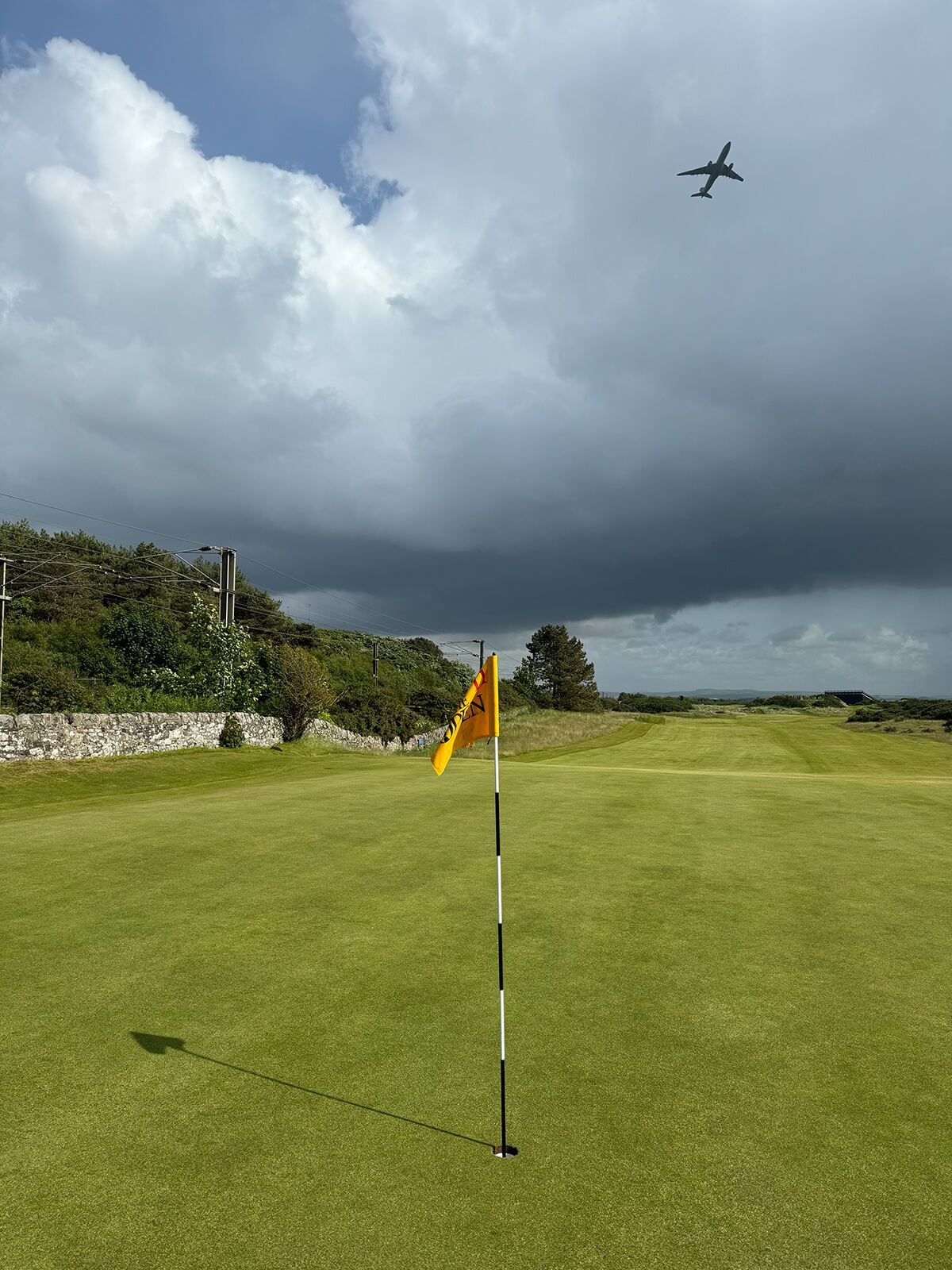 |
Royal Troon’s 11th Railway Hole
Holes Named After the Tracks
Two of the most famous holes in championship golf take their names directly from the railway.
Prestwick's 1st hole, "Railway," is one of the most nerve-shredding opening tee shots in the game. The red brick boundary wall separating the course from the Glasgow line runs hard up the right side from tee to green. There is no practice ground at Prestwick, so this is likely your first swing of the day. A stiff, cramped effort aimed left of the wall, praying the ball does not drift right. Arnold Palmer once called it proof that golf was never meant to be comfortable.
Royal Troon's 11th, also called "The Railway," is worse. Far worse. A 490-yard par four that plays directly into the prevailing wind, with the Glasgow to Ayr line running the entire length of the right side and impenetrable gorse lining the left. Arnold Palmer called it the most dangerous hole he had ever seen. Jack Nicklaus made a 10 on it during his first Open Championship appearance. During the 2024 Open, it was rated the most difficult hole on the course, with even the world's best regularly carding double and triple bogeys. The railway that created Scottish golf does not give anything away cheaply.
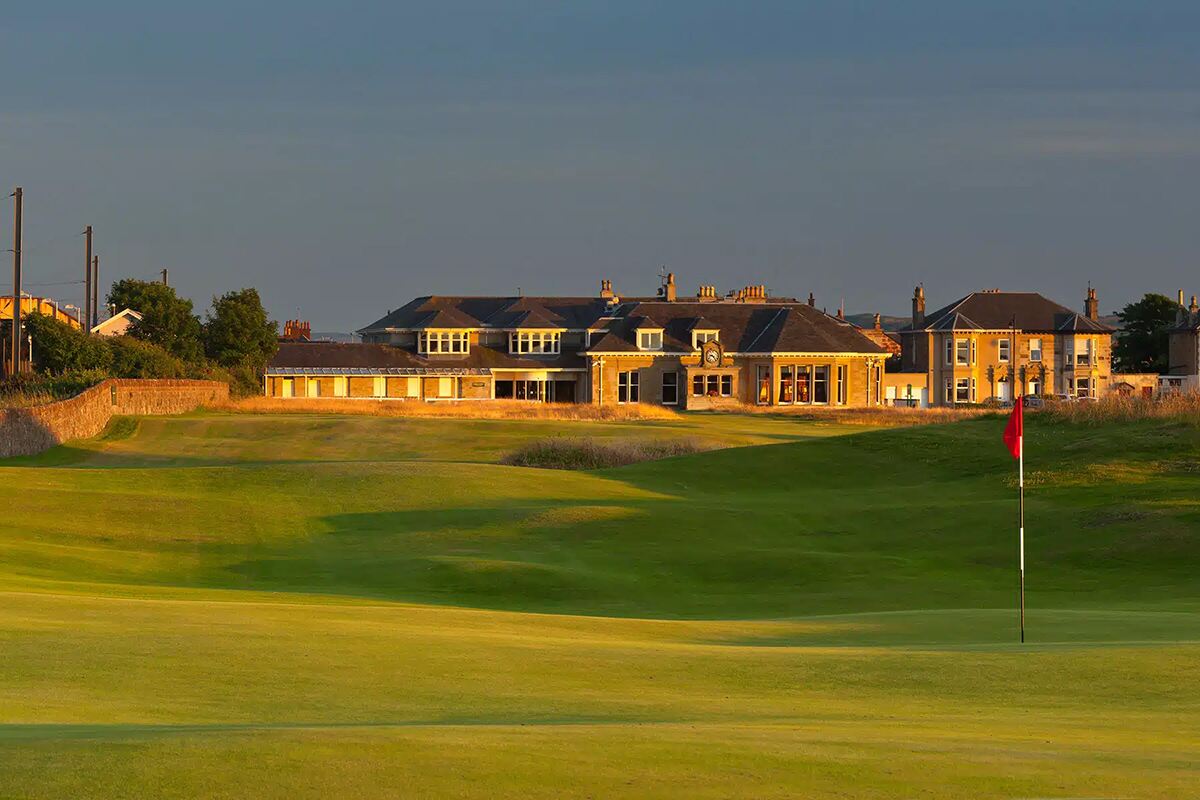
Prestwick's nerve racking 1st Hole
Lanark: The Casting Vote That Changed History
Our home town of Lanark has its own remarkable railway story, one that shaped the course of Scottish golf in ways few people realise.
Lanark Golf Club was established on the 4th of October 1851, making it the oldest inland golf course in the world. In those earliest days, there were just four members and four holes. When a new member joined, they added an extra hole. They hung their spare clothing on the branches of trees because there was no clubhouse. In 1897, Tom Morris was brought in to lay out 18 holes for the princely sum of three pounds and ten shillings. James Braid later supervised the construction of several new holes to produce the layout that, with the exception of longer tees and modern bunkering, remains largely unchanged today.
The course is often compared to the Kings Course at Gleneagles, and for good reason. Both are moorland courses shaped by Braid, both offer a similar challenge across rolling heather-clad terrain, and both share the same quality of turf and scenery. But here is the part that most golfers do not know: Gleneagles very nearly did not happen at Gleneagles at all.
In the early 1900s, the Caledonian Railway Company was planning to build a grand hotel and golf resort to attract the London smart set northward. The decision came down to two locations: Gleneagles and Lanark. It was decided by a single casting vote of the company's chairman. Had that vote gone the other way, the world-famous hotel, the Kings and Queens courses, the Ryder Cup and the Solheim Cup would all have taken place in Lanark, and the history of Scottish golf would read very differently.
Gleneagles station, purpose-built to serve the hotel, still operates today. ScotRail services on the main line stop less than two minutes from the front door, and the hotel offers complimentary transfers for guests. Lanark, meanwhile, is served by hourly ScotRail trains from Glasgow Central, with the course a short taxi ride from the town centre station. Both courses owe their existence, directly or indirectly, to the railway.
Why Train Travel Still Works for Golf in Scotland
One of the things that strikes visiting golfers, particularly from overseas, is just how practical it still is to travel between Scottish golf courses by train. Edinburgh to North Berwick is a 30-minute ride that drops you within walking distance of some of the finest links in East Lothian. Glasgow to Troon takes roughly 40 minutes. You can reach St Andrews from Edinburgh in under two hours with a change at Leuchars.
A group playing Barassie recently demonstrated the smartest piece of golf trip logistics one could wish for. While the rest of the fourball piled into a car for the drive back to Edinburgh, one player walked out of the clubhouse, through the gate, and straight onto the platform. He had showered in the changing rooms, golf clubs over one shoulder, and was on a train within five minutes of holing his final putt. No traffic, no designated driver, no compromise on the post-round pint. It was, by all accounts, the smartest exit strategy in Scottish golf.
For visiting golfers planning a trip, this is worth considering seriously. Base yourself in Edinburgh or Glasgow, travel by train to the coast, and you unlock a network of championship courses without needing a hire car. You also get to enjoy the journey, watching the Scottish countryside roll past the window with the pleasant anticipation of the round ahead.
The Romance of It
There is something about the sound of a train passing a golf course that connects you to the history of the game in a way that nothing else quite manages. You hear it at Prestwick as you stand over your approach to the first green. You hear it at Troon as you walk down the 11th fairway trying not to think about Jack Nicklaus's 10. You hear it at Lanark as it rattles through the course, especially when putting on the 5th or teeing off on the 6th, on its way to Glasgow.
It is the same sound that the founders of these clubs heard 170 years ago. The same line, the same journey, the same purpose: getting golfers to the course and home again with a smile on their face and a story to tell.