 2026 Platinum
Table of Contents
- Open Licensee Day at Birkdale
- Thirty-eight miles per hour
- The opening: statistically the hardest on the rota
- Through the front nine
- The new 14th and the new 15th
- The closing stretch and the Palmer plaque
- The art deco clubhouse and the halfway house
- Andy from Hillside
- What The Open will find here
- What to wear
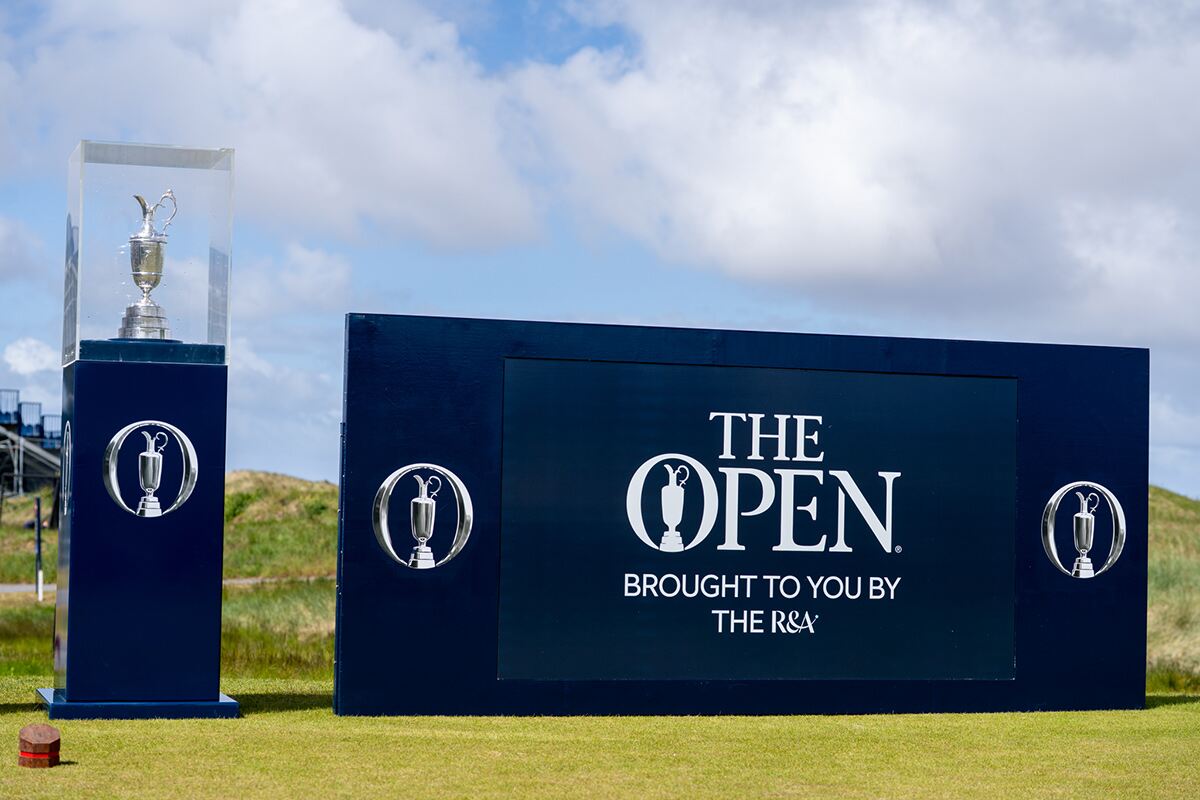
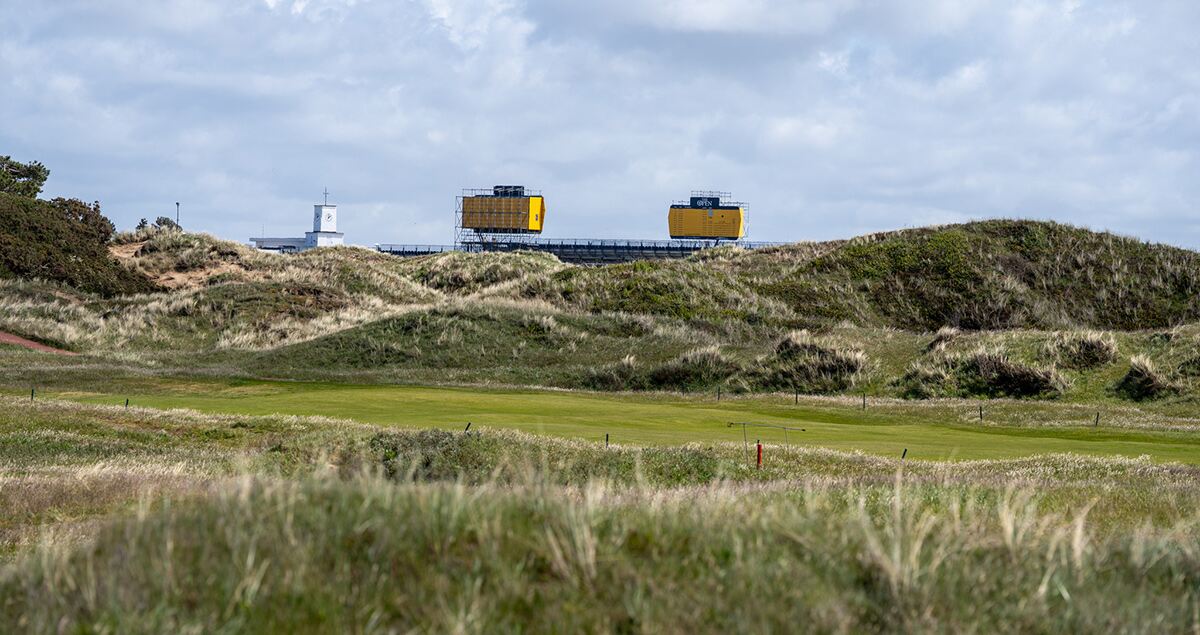
Open Licensee Day at BirkdaleOpen Licensee Day at Royal Birkdale is one of the small privileges of being part of The Open. With the championship returning to Southport in July 2026, the privilege felt especially weighted this year. My brother Abhishek and I were among those invited to play the course, alongside the team from Manors Golf and the R&A and Fanatics hospitality teams. Glenmuir and Sunderland of Scotland have just been entrusted with a further five years as an Official Licensee of The Open, which we do not take for granted and which made the day feel more like a homecoming than a fixture. Walking out of the white art deco clubhouse at Birkdale and seeing the championship grandstands already in place at the closing holes is a particular sort of moment. The course is a few weeks from being handed over to the R&A. It is the last short window during which a member or a licensee can play these holes before the championship build closes them off. We were fortunate to be there. |
Thirty-eight miles per hour
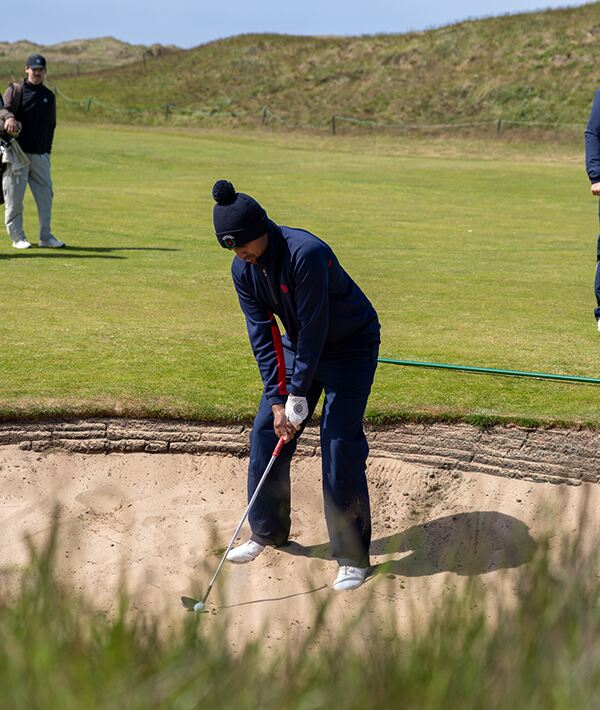
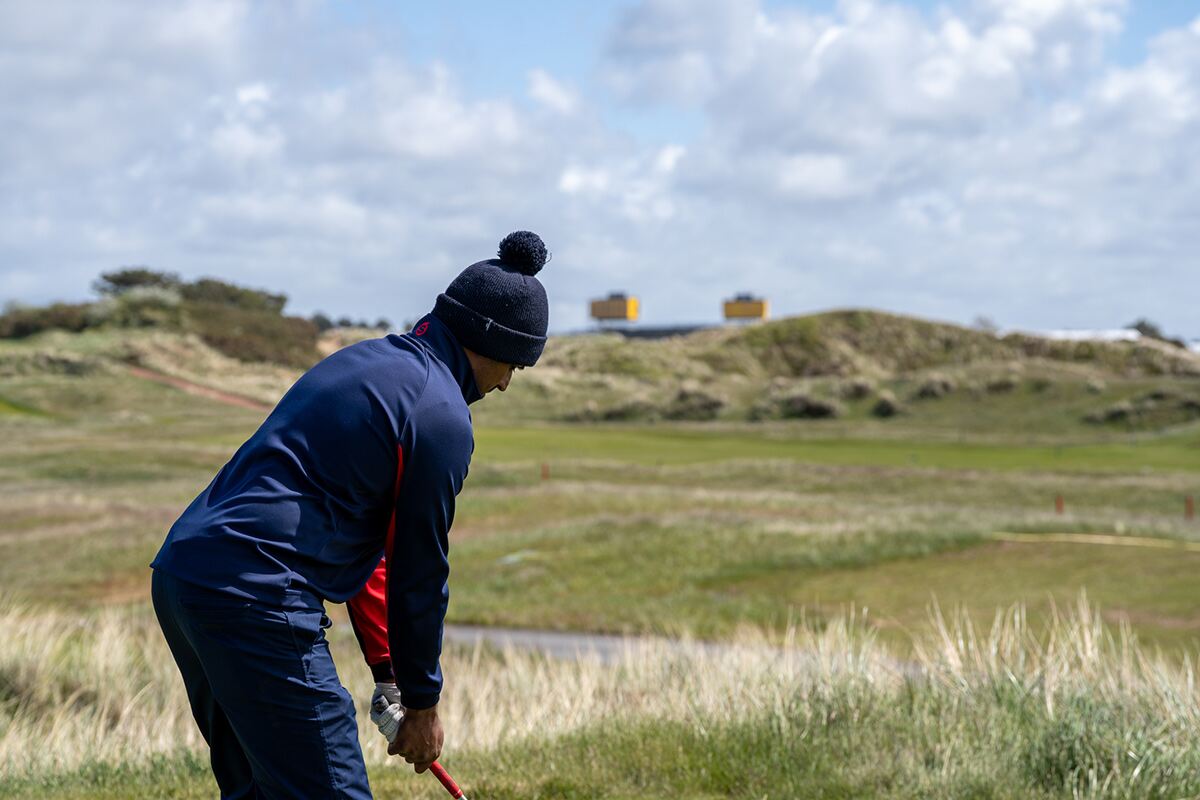
The wind was the winner at Royal Birkdale this week. Thirty-eight miles per hour off the Irish Sea, the kind of breeze that lays the marram grass flat against the dunes and makes a five iron behave like a sand wedge. My caddie Andy, a member at neighbouring Hillside, was firm on one point throughout the day. If a shot is struck perfectly, the ball does not move in the wind. I tested this theory across eighteen holes. I cannot report that I disproved it. I cannot honestly report that I proved it either.
Royal Birkdale sits in a stretch of duneland between Southport and the coast, and the wind here has form. In the 2008 Open, played in similarly raw conditions, the conditions were severe enough that some pros could not reach the 11th fairway from the back tee. Forward tees have since been built to give the championship setup more flexibility when the weather turns. On the day we played, the wind was the only flexibility we had.
 |
 |
The opening: statistically the hardest on the rota
The first hole at Royal Birkdale is, by the statistics kept across the Open rota, the hardest opening hole in Open Championship golf. The single rule is do not go right. Bunkers down the entire right side, and beyond them, the rough that links courses keep for their disobedient guests. Into a stiff opening-hole breeze, into a sand-bagged right side, a smart play stays left and accepts whatever the line gives back.
One of the most thoughtful changes from the recent course work, by the McKenzie and Ebert architectural team, is the way the surrounds at the first have been opened up. Where the right side of the green was once thick scrub and dune, much of it is now mown grass. The ball that drifts right on a long second is still a difficult ball to play, but it is now a playable ball rather than a lost one. The same philosophy has been carried right through the course. The bunker count has come down from 147 to closer to 110. Greens have been raised in places, surrounds widened, swales mown into the run-offs. The course is harder when it wants to be and kinder when it can afford to be.
Through the front nine
The second is into the wind, the third runs short and a little behind it, and by the fourth you arrive at the first of the par threes. The small white hut to the right of the fourth tee is the original Birkdale clubhouse, dating from when the course finished where the fourth green sits now. It is still in use, as the home of the artisans. The fourth itself is stroke index 18, which is generous of the card. With a true Birkdale wind, no par three here is index 18 on the day.
The fifth is one of the most visible changes from the recent work. The old hole had a dogleg right and a screen of dunes that hid the landing area from the tee. In the 2017 Open, Sergio Garcia found himself in those dunes with his hands raised, unable to see where he was going. The change has cleared out the right-hand dune and opened the sightline. From the tee you can now see the whole hole laid out, which makes the decision more interesting rather than less. Three of the bunkers that appear to be guarding the green are in fact thirty to forty yards short, a sandy waste designed to deceive the eye. With a fair wind, some of the world’s longest hitters may go for the green. The expectation is that those decisions will be the better Saturday-and-Sunday theatre.
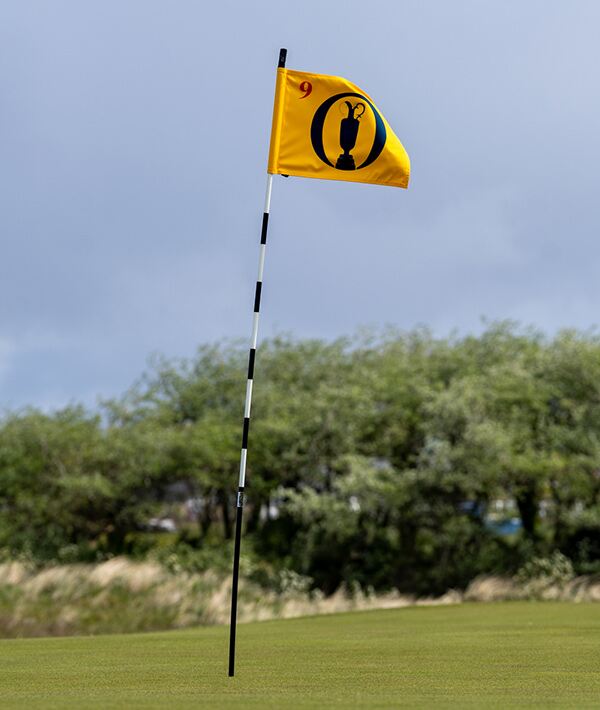
The sixth, which we played as a par five, is a par four for the professionals at over five hundred yards from the back, framed by tall pines. The seventh is the deepest par three on the course, with two penal bunkers down the right side and a green seven feet lower than the surrounding ground. Anything that finds the surface here counts as a result. The eighth and ninth bring the front nine home. A note on the ninth: the green is thin, the approach is awkward, and the houses behind it are closer than they look. A ball over the green can find a roof. Aiming for the middle of the green is, on this hole, a respectable ambition.
 |
 |
The new 14th and the new 15th
The most talked-about changes at Royal Birkdale are the two new holes in the middle of the back nine. The 14th and the 15th. They are connected. The story of one explains the other.
Before the work, the four par threes at Birkdale played in the same direction, with only the fourth pointing the opposite way. With a south-westerly wind, a player might find themselves hitting the same club at every par three of the day. That was considered a slight architectural weakness, and the master plan from McKenzie and Ebert addressed it. By introducing a new par three at the 15th, running back towards the clubhouse, the wind directions across the four threes are now varied. The new 15th sits where the old 14th green was once approached, and the old 14th is now the short game area.
The new 15th can play anything from 130 yards to 230 yards depending on which tee is in use. The green is roughly 40 yards deep and just 15 wide, raised to a slight upslope, designed so a ball can be flown short and run on. To the right of the green is a long swale, a deep mown area that gives a missed shot the option of putt, chip or pitch back to the surface. The clubhouse sits behind the green, framing the hole in a way few par threes manage. By the back tee on a championship Sunday, with the wind off the sea, this is going to be a hole the leaders remember.
The new 14th, the par five, is the brand new hole. It plays straight from a higher tee, runs over duneland and through generous fairway bunkering, and rises into a raised green that is difficult to see from the second-shot landing zone. From the back tees it stretches to nearly 600 yards. Into a Birkdale south-westerly it is a brute. Played downwind it is reachable in two for the longest hitters, but only with two shots that are well struck and well struck twice. The old 14th, which used to release a tee shot down a friendly camber towards the green, was a favourite of some members and one of the lower-scoring holes on the card. The new 14th is, by most accounts, the hardest hole on the course. The trade is honest. A weakness in the par threes has been corrected, and a quietly forgiving par five has been replaced with one of championship standard.
The closing stretch and the Palmer plaque
The 16th at Royal Birkdale carries the only plaque on the course. It sits to the right of the fairway, marking the spot from which Arnold Palmer, in the 1961 Open, struck a 6-iron from a blackberry bush onto the green. Palmer was playing in gale force conditions that week, the kind of weather that cancelled an entire day of play. He won the championship by a single shot from the Welshman Dai Rees, his first of two consecutive Open titles. Palmer had qualified for that Open at Hillside, the course next door. Hillside is also where the players will be hitting balls during The Open in July 2026, since their practice ground will be hosting the championship hospitality village.
Plenty of other moments at Birkdale could justify a plaque. Jordan Spieth’s recovery from the practice area on the 13th in 2017, the shot that turned the Open his way, has been suggested more than once. The club has declined. One plaque. One man. One shot. That is enough.
The 17th is a generous par five with the right wind. Downwind, the temptation is to take on the second shot. Two large dunes guard the line, and the second has to be threaded between them. The advice from the locals is to take the lay-up if you cannot certainly carry the dunes. The card forgives most things at the 17th, but only most. The 18th has been gently softened. The original championship tee, set higher and aimed through a corridor of gorse, has gone. The new tee is more visible, less severely doglegged, and the green is in sight from the moment one steps up to the ball. Walking up the 18th towards the white clubhouse with the new championship grandstands already in position is, even on a practice day, the kind of moment a golfer remembers.
The art deco clubhouse and the halfway house
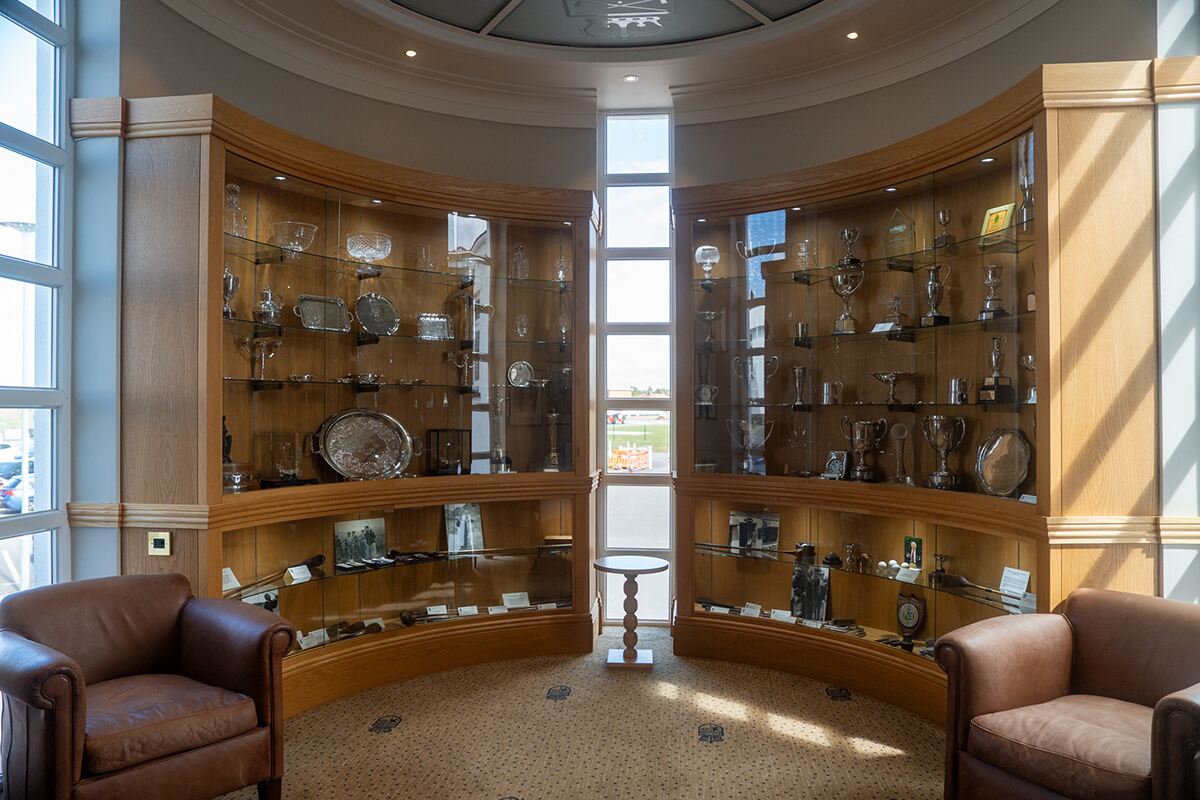
Birkdale’s clubhouse is one of the most distinctive in championship golf. White, art deco, more cruise liner than country club, with the memorabilia on the walls drawing the eye in every direction. There is a quiet pleasure in losing twenty minutes to the framed scorecards, the championship photographs, the small details that link the room to the long history of the place.
The welcome at Birkdale on Open Licensee Day was warm and unfussy. Attendants drove guests to the practice range, which sits at Hillside next door, ahead of the championship build. The locker rooms are generous, with navy towels stacked at the showers. The food was strong. Soup. Duck. A sticky toffee pudding with a small stewed apple on top, which is not a combination one expects, and which turns out to be better than it sounds.
The halfway house, in particular, did its job in the kind of way the halfway house should. Sausage rolls of properly serious construction. A broccoli and Stilton soup that tasted as if the kitchen meant it. A ham and cheese toastie, plain enough on its own but excellent dipped in the soup. With the wind cutting across the practice green as we passed back through the turn, this counted as restoration in the truest sense.
Andy from Hillside
Andy was the caddie of the day. A Hillside member, the same club where Arnold Palmer qualified in 1961, with the calm of a man who has watched many golfers attempt his home stretch in many conditions. He was patient with my decisions. He was generous with his reads. He gave me the wind on every shot and the right club for it, which I then tended to over-correct. Throughout the day he returned to one principle. If a shot is struck perfectly, the ball will not move in the wind.
I came to feel this was less a piece of swing advice than a small philosophical position about the game. The wind is not the enemy. The wind is the diagnosis. Whatever it does to the ball is a measurement of what one did to the shot. Andy did not say it that way. He said it more economically. But the meaning was there, and on a thirty-eight mile per hour day at Birkdale it was the right thing to be told.
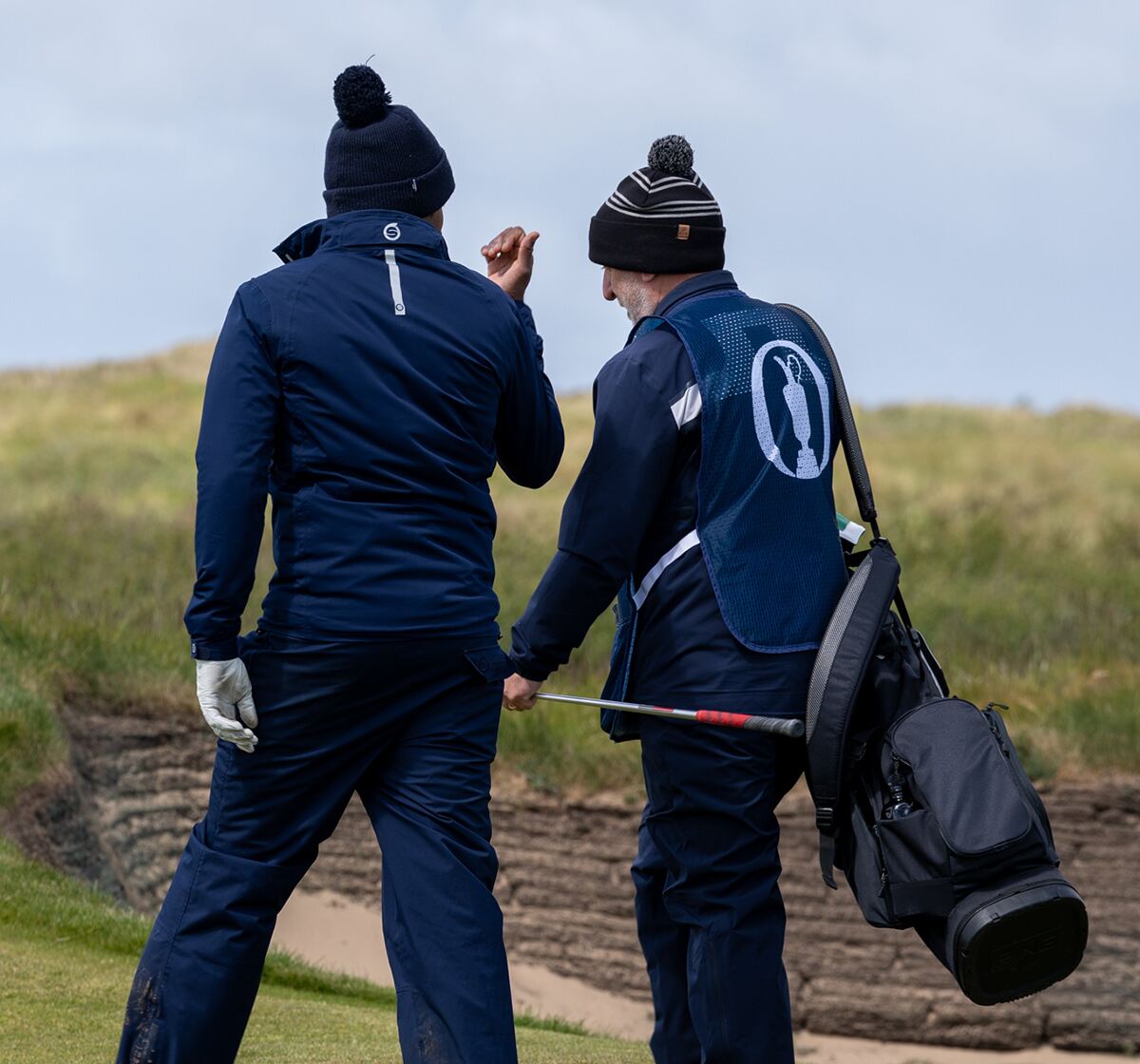
Andy with my brother Abhishek
What The Open will find here
The Open returns to Royal Birkdale on a course that has been measurably improved for the championship and, more importantly, for its members. The bunkering is sharper and less random. The par threes vary in wind. The 14th is now one of the hardest holes on the rota. The 15th gives the leaders a clear theatrical moment within sight of the clubhouse. The forward tees give the setup flexibility for whatever the Lancashire weather decides to do in mid-July.
From a player’s point of view, Birkdale has always been kind to the swing. The dunes frame each hole into something close to its own arena, while the fairways themselves run flat between them. Lies tend to be even. The course rewards a ball-striker more than it rewards a scrambler, and the recent work has not changed that. From a spectator’s point of view, the natural amphitheatres around the holes mean that even a casual viewer ends up with a good seat. From a champion’s point of view, the list of Birkdale winners reads as a roll call of the players that the game has most respected over the past sixty years.
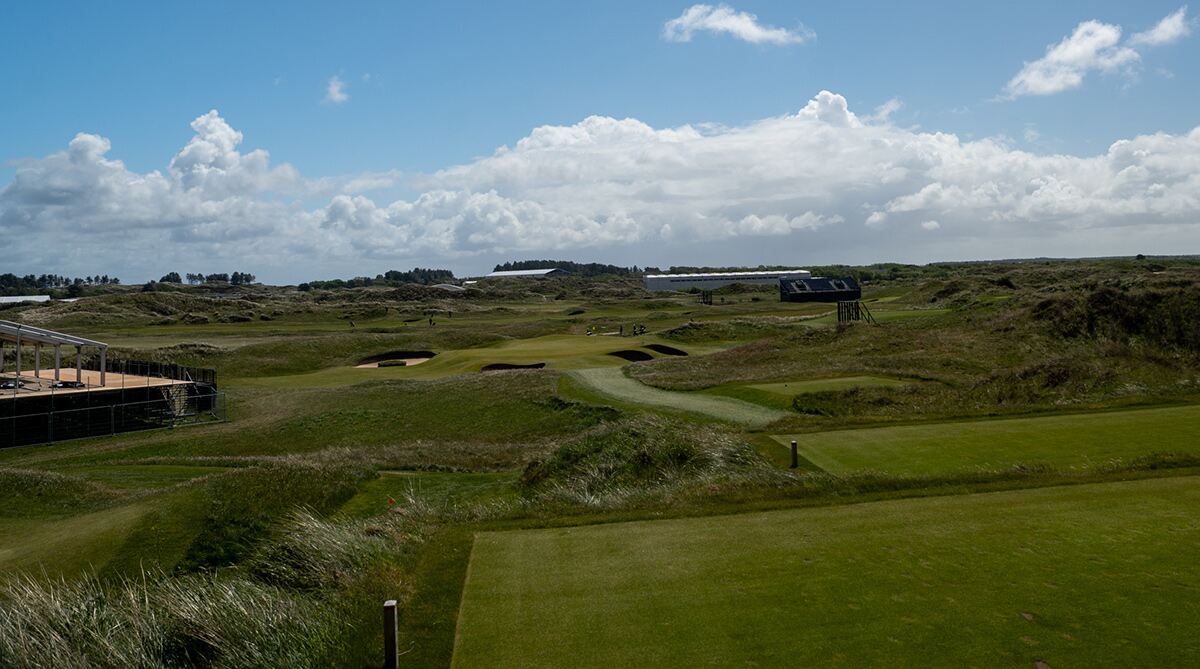
As we drove out of the car park the wind dropped and the sun came out, the way it does in golf, exactly when the round is over. The Open will be here in July. The Glenmuir team will be there with it. We will not soon forget the day we played the course on the way to it. Haste ye back, as the Scots say, though Birkdale will receive us in Lancashire colours.
What to wear
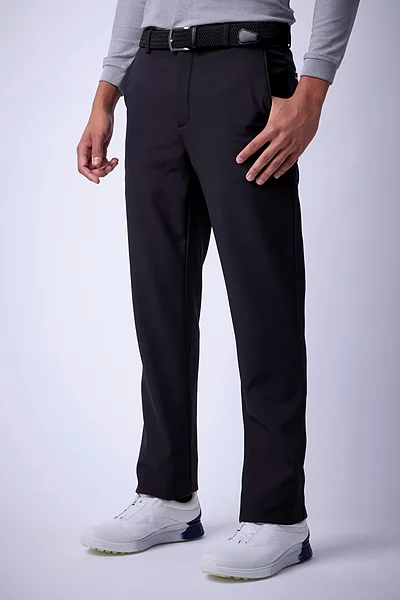
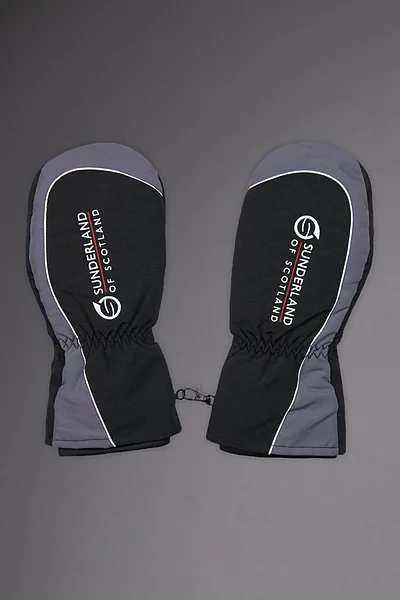
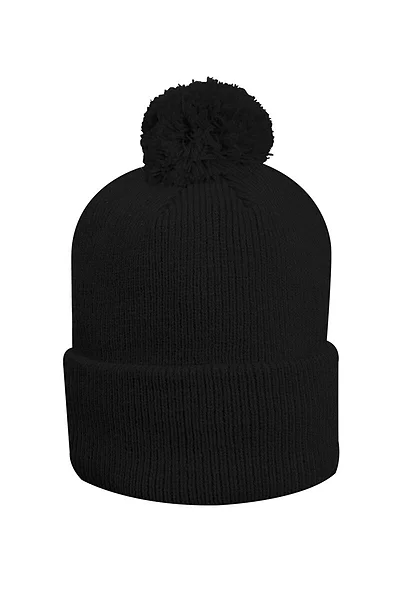
There is a phrase, often attributed to either Alfred Wainwright or Billy Connolly, that there is no such thing as bad weather, only incorrect clothing. Birkdale tested it. With the 38 mph wind to contend with, your ears and head need to be covered with a good quality beanie hat like g.Malabar and even a neck warmer to keep the wind off your ears anc neck. A pair of mittens are useful also, my brother had his, I did not have mine. You want to ensure you have a good base layer on like the g.Kelso cotton roll neck, and then layer with a g.Wick, or g.Morar lambswool sweater, g.Carlton thermal padded gilet, topped off with a g.Kyle jacket. On the bottom I had a pair of g.Ashurst winter trousers and I even chucked on my s.Quebec waterproof trousers to keep the wind further deflected. The wind really gets to you on a links course, with your body and the ball quite literally pulsating in the wind when standing over the ball. It's quite unnerving all around and required that little bit extra concentration.