 2026 Platinum
Table of Contents
- How quickly you say yes
- The journey from Dublin
- Arriving at the Slieve Donard
- What makes Royal County Down different
- A sleepless night
- The round
- One more round, at Ardglass
- Final thoughts
- What to wear
How quickly you say yes
It took four minutes to book the flight. A friend rang to say he had secured a tee time at Royal County Down. By the end of the call the Dublin flight was in my inbox. When someone offers you a round at a course consistently ranked the best in the world, you do not check your calendar. You go.
In the weeks that followed I watched the usual run of YouTube reviews, drone flyovers and best-of lists. None of it quite convinced me. The dunes looked impressive. The setting looked dramatic. The greatest golf course in the world, though, is a heavy claim, and I arrived sceptical.
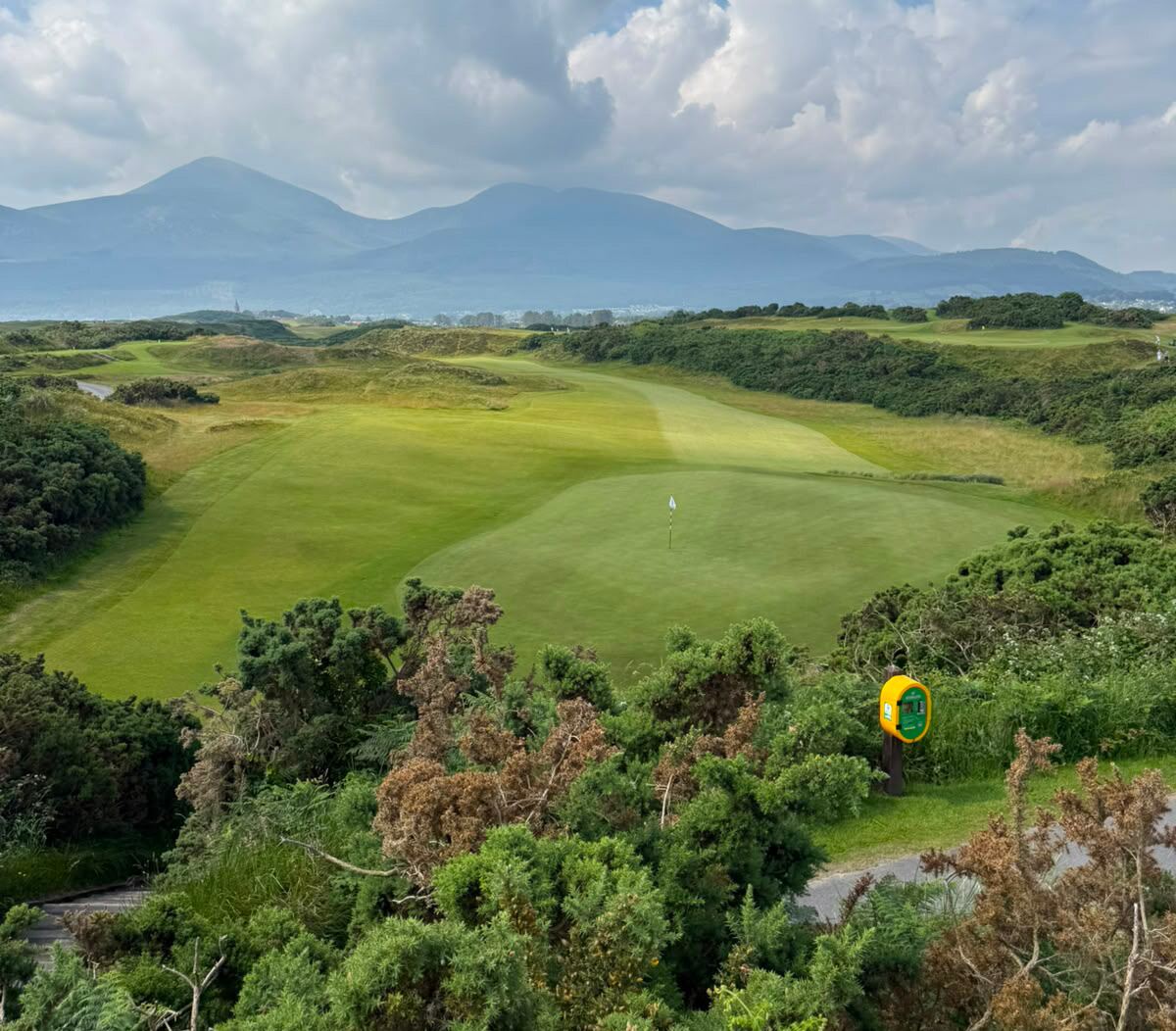
Within a few minutes of walking onto the course I understood. Royal County Down does not photograph. It has to be stood on.
The journey from Dublin
From Dublin Airport it is about 90 minutes north to Newcastle, County Down. If you are not used to driving on the left, take a taxi or private transfer. The roads are quiet but the scenery deserves your full attention rather than half of it. Rolling hills, lush green fields, more sheep than people, more cows than sheep, all set against the Mourne Mountains rising sharply behind. Coming from Austria, where dramatic landscapes are part of everyday life, I had not expected Ireland to land quite so firmly.
It did.
Arriving at the Slieve Donard
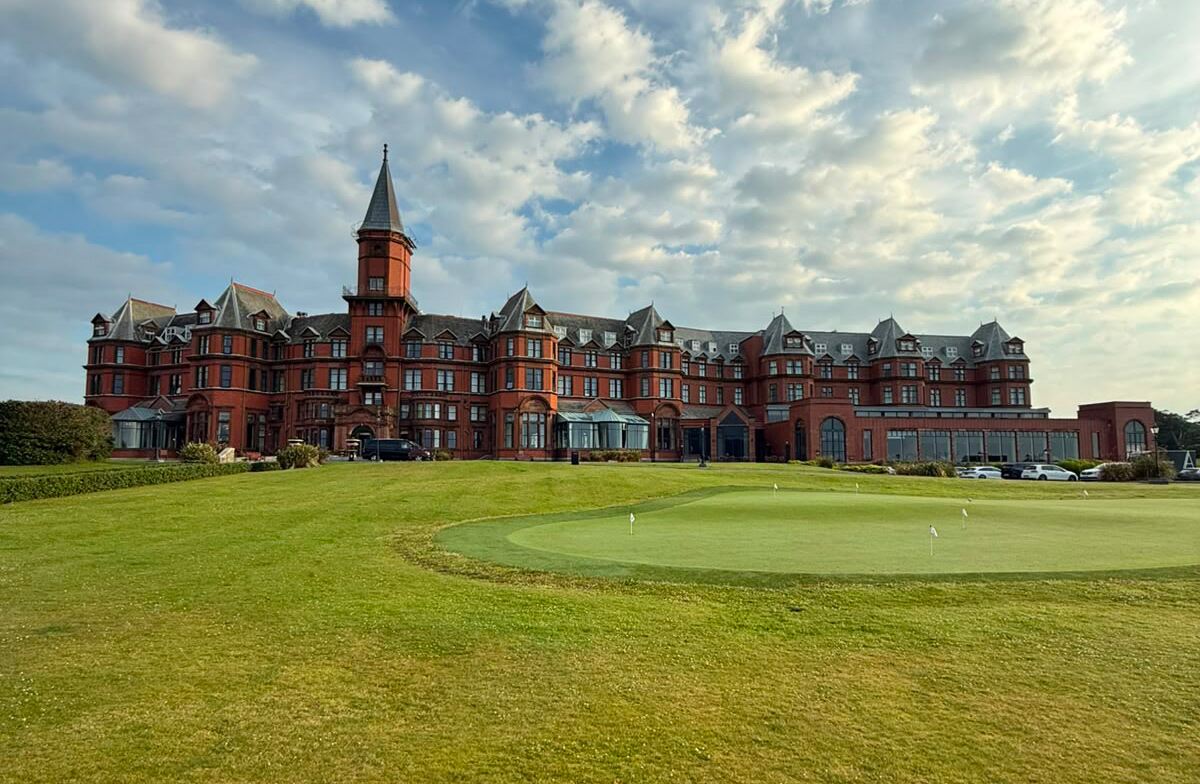
The Slieve Donard Hotel sits directly on the Irish Sea coast, a red-brick Victorian building with the course literally across the road, around a hundred metres from the first tee. It is the kind of base that does most of a golfing weekend’s work before you have unpacked.
It was 9.30pm when I arrived and the sun was still in the sky. I walked onto the course and stood there. The towering dunes, the firm greens, the silence, the sea. Not just beautiful. Settled. Like a place that had always existed exactly as it was.
What makes Royal County Down different
Among golfers, nobody calls it Royal County Down. It is simply RCD.
The thing that separates RCD from most modern championship courses is that nothing on it feels designed. The dunes appear where the land already put them. The fairways rise and fall with the landscape. Every hole feels discovered rather than constructed.
A great deal of contemporary course architecture, particularly in parts of the United States and the Gulf, is built to impress. Earth is moved, drainage is engineered, every undulation placed for visual or strategic effect. The results can be stunning, but they have the quality of being made. Royal County Down is the opposite proposition. It is what Old Tom Morris found when he extended the original nine-hole layout to eighteen for a fee of four guineas in 1890. The intervening century has refined it, with Harry Vardon contributing in 1908, H.S. Colt redesigning the fourth and ninth in 1925, and Donald Steel adding the modern sixteenth in the late 1990s. The bones, though, are still Morris’s, and Morris’s bones were already the land’s.
That is the line that matters. The land was here first. The course is simply how golf chose to lay itself across it.
A sleepless night
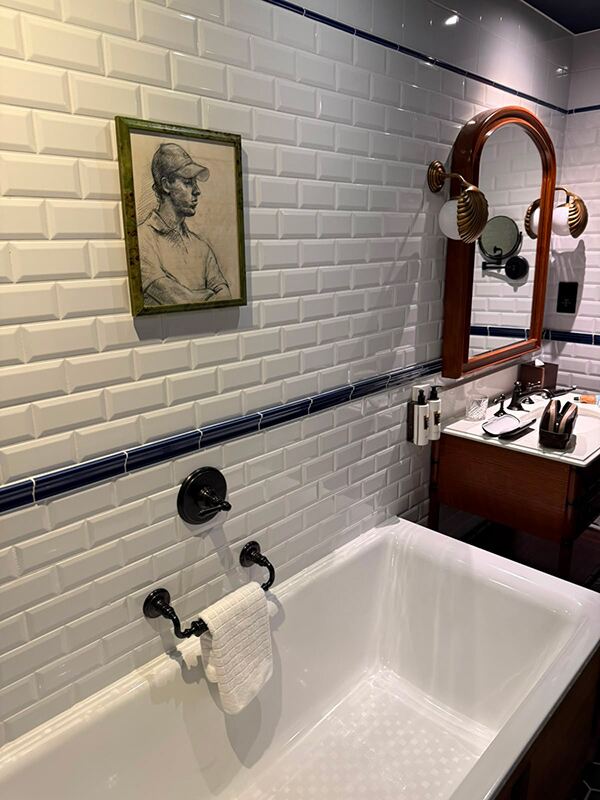
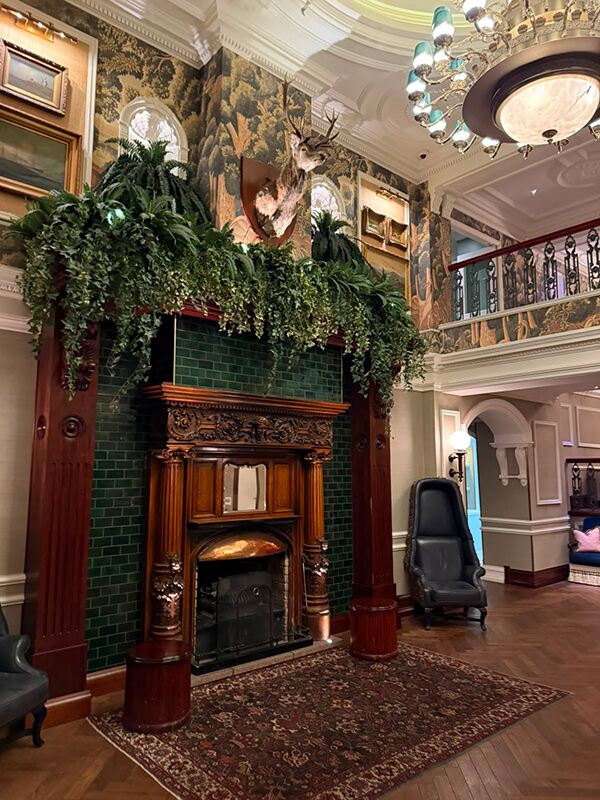
The Slieve Donard is a golfer’s hotel from the moment you walk in. A helipad for the more well-travelled guests, a putting green overlooking the sea, every detail pointed at one purpose.
I went to bed early ahead of an 8am tee time. Or I tried. Partly excitement. Partly the local seagulls, which apparently never sleep. They circled above the hotel all night, providing a soundtrack that made proper rest mostly impossible. The next morning I decided to take it as a sign. If birds were the obstacle, perhaps a few birdies were the answer.
 |
 |
The round
Like every first-time visitor, I spent a little too much money in the pro shop before going out. The merchandise is genuinely excellent and not the standard catalogue stuff you find at most courses.
After a brief warm-up on the practice range, we met the caddies. One small piece of advice. Bring a stand bag. I had brought my tour bag and although my caddie graciously used a trolley, anyone arriving with that much weight is doing the caddie no favours. A lighter bag is the courtesy.
Then the first tee. The opening fairway looks impossibly narrow. About 80 per cent of the course feels that way: blind shots, dunes, heather, gorse, doglegs disappearing into the landscape. It can be intimidating. The caddies make the difference. Their local knowledge gives you confidence on every shot, and more often than not they will find balls you were certain had gone forever.
We were fortunate with the weather. Twenty-four degrees and almost no wind. For a links course in late spring, conditions cannot get better than that. The greens were running fast, smooth and true.
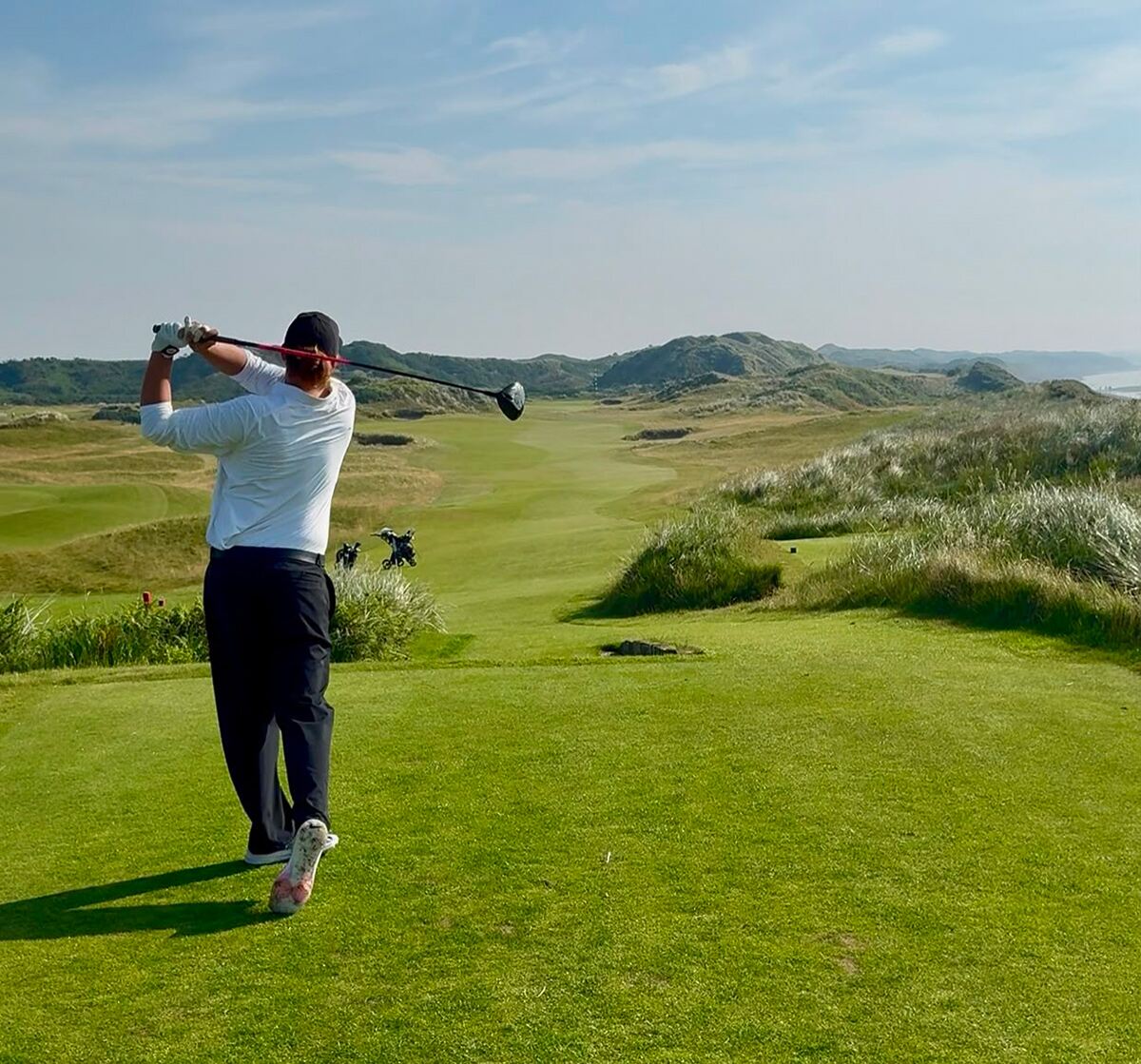
My favourite hole was the famous ninth, a long par four where the tee sits high and the fairway drops around 80 feet below. The caddie points at a marker and tells you “five yards right of the pole.” You trust him, you swing, and only as you walk forward does the landscape reveal itself. Slieve Donard peak in the distance, the sweeping fairway descending toward Newcastle, the Irish Sea beyond. It is one of those moments that explains everything you have read about the course in one walk.
Playing links for the first time also taught me a hard lesson. Around the greens, I was hopeless. Tightly mown run-offs, unpredictable bounces, an endless menu of options instead of one obvious shot. Links golf is not just a different style of golf. It is almost a different sport.
We finished just after 12.30pm and went into the clubhouse for lunch, where conversation drifted as it always does to Rory McIlroy. The other thing that caught my ear in the clubhouse was the word “wee.” A wee coffee. A wee sandwich. The bathroom is under the wee stairs. By the time the plates were cleared I was using it too.
One more round, at Ardglass
Most golfers would have called that a perfect day and gone home. I drove forty minutes south to Ardglass Golf Club for an evening tee time, after an 80-minute massage back at the hotel because the body had earned it.
I played alone. Three unforgettable hours.
 |
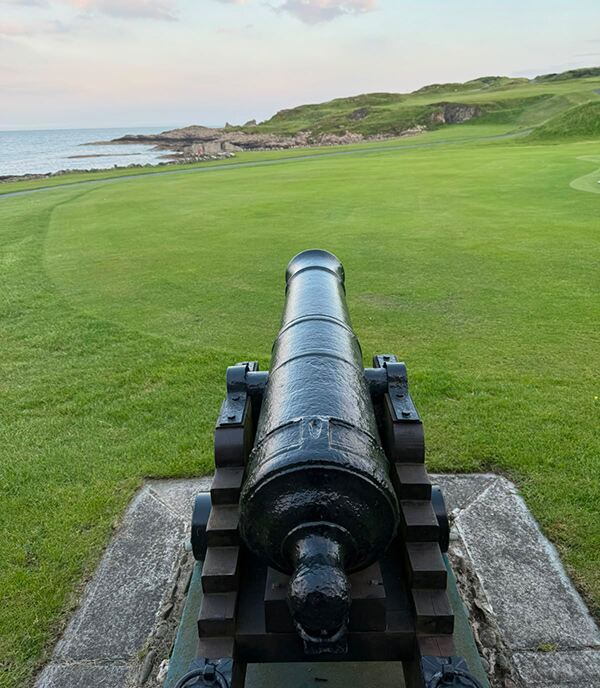 |
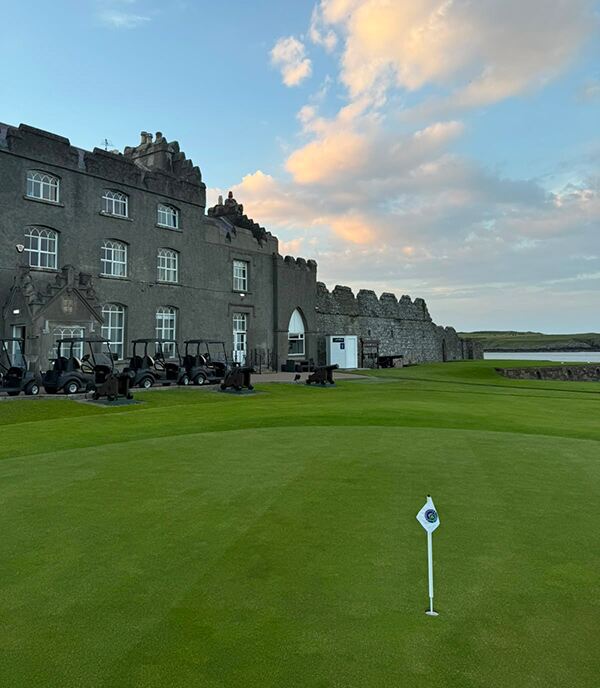
Ardglass is not in the world’s top ten. It does not need to be. Built along the cliffs of the Irish Sea, with ancient castle walls behind the first tee and crashing waves to the left of half the holes, it has the quality of a film set. The clubhouse is the oldest building in the world used as a golf clubhouse, parts of it dating to 1405 when the structure was a fortified warehouse for fifteenth-century traders. The course itself was laid out in 1896 by the Reverend Thomas MacAfee, beginning life as a seven-hole layout under a thousand yards in total and only reaching its present 18-hole form in the 1960s.
The Game of Thrones soundtrack kept playing in my head as I walked from hole to hole, which is fitting since several locations from the show were filmed in this part of County Down. The greens are slower than RCD’s, perhaps a Stimpmeter reading of eight to RCD’s eleven, but none of that registers when you are looking at the Irish Sea from the second tee box. Every hole has its own identity. Every green offers another view.
If you are travelling to Royal County Down, play Ardglass too. The two together are the day, not just the headline.

Final thoughts
People often ask whether Royal County Down deserves the world number one ranking. After one round, my answer is yes. Not because it is the hardest. Not because it is the longest. Not because it is the most luxurious. Because nowhere else have I played a course that feels so entirely at home in its own landscape. Royal County Down does not try to impress. It simply is what it is. After 24 hours in Newcastle, that turns out to be the rarest thing in modern golf.
What to wear
Newcastle in May can give you any weather it likes. The morning of my round was a generous 24 degrees with almost no wind. The previous evening, standing on the course at 9.30pm, was significantly cooler. The Slieve Donard sits on the Irish Sea, and even at the height of summer, mornings and evenings carry a coastal chill that travels straight up the trouser leg. I opted for the men’s long sleeve g.Max pique, just to keep the sun and wind off my arms, paired with a classic g.Ross trouser which were perfectly breathable, lightweight and stretchy for the conditions. A packable layer for changeable conditions is worth it. The g.Wick midlayer was perfect for the evening with the sun gone and the sea breeze a little cooler. For Ardglass I used the g.Silloth shirt.