 2026 Platinum
Table of Contents
- The Sibling Rivalry Nobody Talks About
- Carnoustie: The Burnside and Budden Links
- Cruden Bay: The St Olaf
- Gleneagles: The Queens Course
- Turnberry: The King Robert the Bruce
- Gullane No. 2 and No. 3
- Prestwick St Nicholas: The Overlooked Neighbour
- The Real Secret
The most picturesque course at Gleneagles, The Queens
The Sibling Rivalry Nobody Talks AboutThere is a peculiar thing that happens when you play golf in Scotland long enough. You stop chasing the trophy courses and start gravitating towards their quieter neighbours. Not because the championship layouts disappoint, far from it, but because the second courses at Scotland's great golfing destinations offer something the headline acts sometimes cannot: elbow room, honest golf, and the feeling that you have stumbled onto something the rest of the world has not quite discovered yet. Any golfer fortunate enough to play many of these courses will recognise the pattern. One arrives expecting a warm-up, a pleasant enough way to fill an afternoon before the main event. One leaves wondering whether one has just played the better course. |
Carnoustie: The Burnside and Budden Links
Most visitors to Carnoustie arrive laser-focused on the Championship course, and rightly so. But tucked alongside it sit two courses that deserve far more than an afterthought. The Burnside has genuine championship pedigree of its own. When Ben Hogan won the Open in 1953, qualifying was split across 18 holes on the Championship course and 18 on the Burnside. That tells you everything about the quality of the turf underfoot.
It plays like a slightly shorter, slightly tighter version of its famous sibling, with some cracking short holes and a 17th that will make you think twice about your club selection. The greens run just as true, the bunkers punish just as firmly, and a sausage roll from the halfway house afterwards tastes just as good with brown sauce on a cold Angus morning.
The Budden Links, redesigned by Peter Alliss and Dave Thomas in the late 1970s using land acquired from the Ministry of Defence, is a different proposition entirely. It is shorter, more playful, and a genuinely fun afternoon out. If you are playing 36 holes at Carnoustie, and you really should, pairing the Championship course with either the Burnside or the Budden makes for a perfect day. You will not be out there for five hours on the shorter course, and you will have energy left for dinner in Dundee, which has come on enormously in recent years for restaurants and culture.
Cruden Bay: The St Olaf
Cruden Bay's championship course is one of those places that quietly appears on every serious golfer’s bucket list. The St Olaf, a nine-hole course that sits right in the middle of the championship layout, rarely gets the same billing. It should.
Originally laid out as the ladies' course by Old Tom Morris and later reworked by Tom Simpson and Herbert Fowler in the 1920s, the St Olaf shares the same extraordinary links land and topography as the main course. You get a taste of proper links golf, rolling terrain, and some genuinely memorable green complexes, all in about an hour and a quarter. If you have a tee time on the championship course, a round on the St Olaf is included in your green fee, playable the day before, the day of, or the day after. The best approach is to play it late afternoon the day before your main round. It gets you acclimatised to links golf, loosens the swing, and gives you a feel for the turf before you step onto the championship tees the following morning.
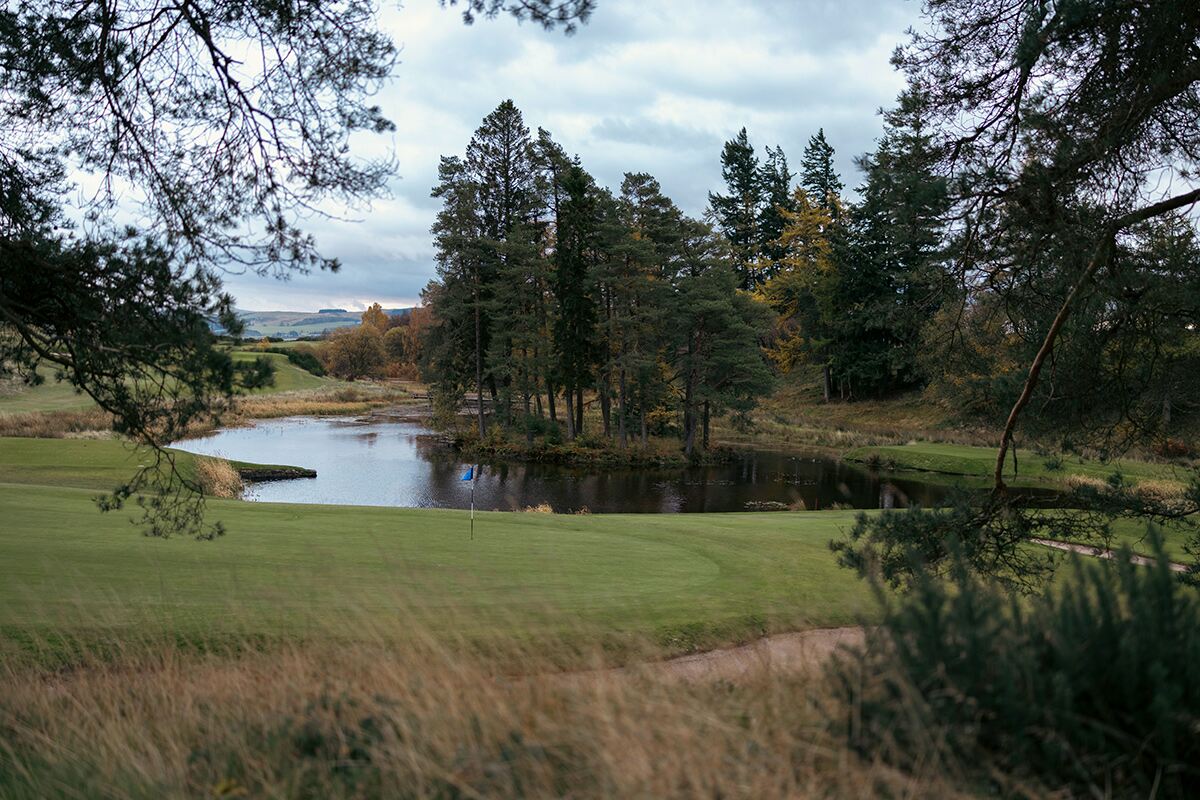
The most picturesque course at Gleneagles, The Queens
Gleneagles: The Queens Course
Ask ten golfers about Gleneagles and nine will talk about the PGA Centenary, home of the 2014 Ryder Cup and the 2019 Solheim Cup. The Kings course, designed by James Braid, will get a mention from the more historically minded. But the Queens? Barely a whisper.
Which is a shame, because the Queens is an absolute joy. Tighter and shorter than the Kings, it demands accuracy off the tee and rewards thoughtful course management. There is only one par five, followed by a tantalisingly short par four that gets the pulse racing. The 9th, with its severe dogleg, is one of those holes that divides opinion. You are hitting iron off the tee to the corner and another iron into the green. Some golfers find it maddening. Others find it brilliant. It has character, which is something a lot of modern courses are desperately short of.
The Queens has also served as a backdrop for several Glenmuir photoshoots over the years, and it is easy to see why. The combination of mature pines, water features, and the Ochil Hills beyond creates the kind of scenery that makes golf clothing look as good as it performs. What sets Gleneagles apart from almost everywhere else is the service. The halfway house, positioned between the Kings and Queens courses, operates a telephone ordering system from the 10th tee. By the time you walk up, your Scottish bridie is warm and waiting. Try one. You will not regret it.
Turnberry: The King Robert the Bruce
Here is something that might raise eyebrows: the King Robert the Bruce course at Turnberry uses the coastline even better than the Ailsa. There, it has been said.
The Ailsa is magnificent, of course. But the Bruce, having undergone significant upgrades with Martin Ebert's involvement, has transformed from a perfectly pleasant but unremarkable second course into something genuinely special. When you reach the coastal holes, with the Ayrshire coastline stretching out before you and Ailsa Craig sitting in the distance, it becomes clear that if this course existed anywhere else in Scotland without the Ailsa next door, it would be spoken about as a world-class championship layout in its own right.
The bunkers are beautifully crafted, the variety of holes is outstanding, and on a still day, it is very scorable. If you are staying at the Turnberry hotel, which is a treat in itself, do not make the mistake of playing the Ailsa twice and skipping the Bruce. You will miss the better value round and, arguably, the better views.
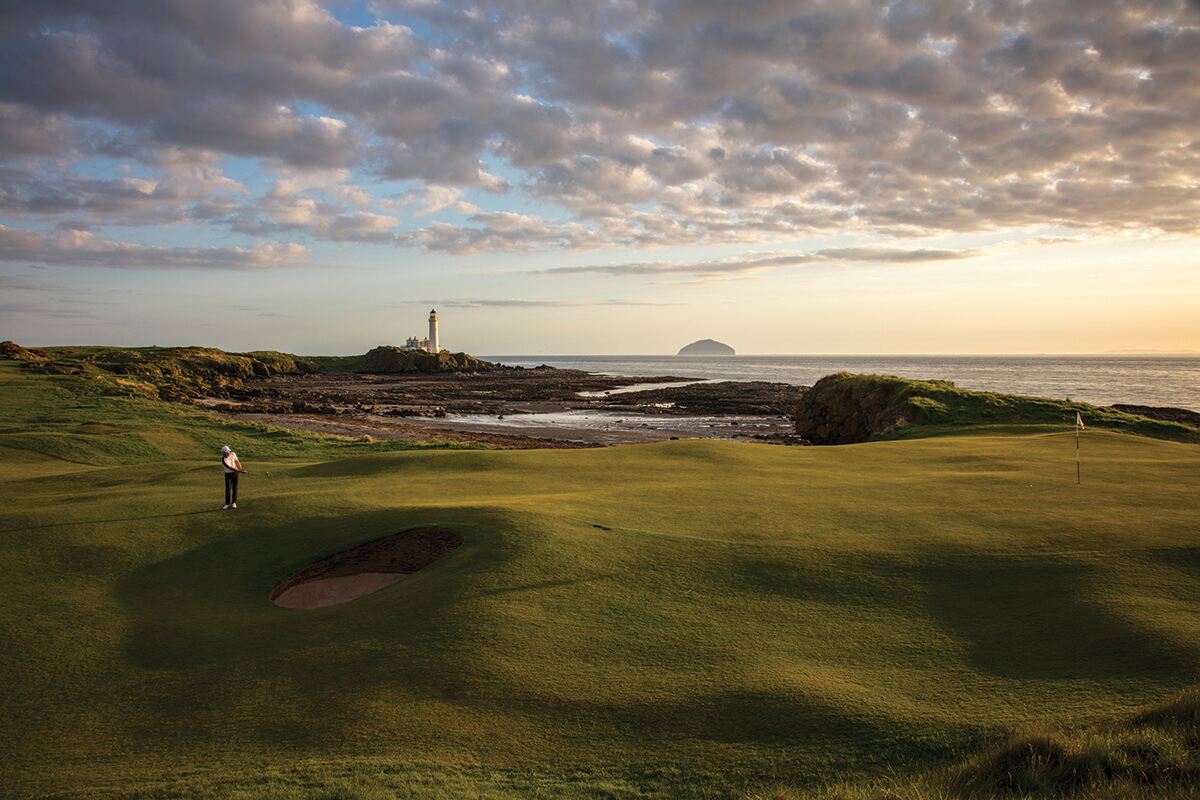
Turnberry’s King Robert The Bruce side by Side with Ailsa
Gullane No. 2 and No. 3
East Lothian does not do subtlety when it comes to naming its courses. Gullane has numbers one, two and three, laid out in the order they were built. No imagination, perhaps, but there is a refreshing honesty to it.
A good number of the locals will tell you, usually in that plain-speaking East Lothian way, that Gullane No. 2 is the better course. It holds a special place in many hearts as the first proper links course people ever played, bikes ridden down from Edinburgh as teenagers to get a round in before sunset. The turf is the same ancient links land, the views across the Firth of Forth are just as sweeping, and the green fees are significantly kinder on the wallet.
Gullane No. 3 is shorter and tighter still, with small greens that test your iron play and short game far more than any championship course. Medal players tend to grumble about it, which is usually a reliable sign that it is doing its job properly.
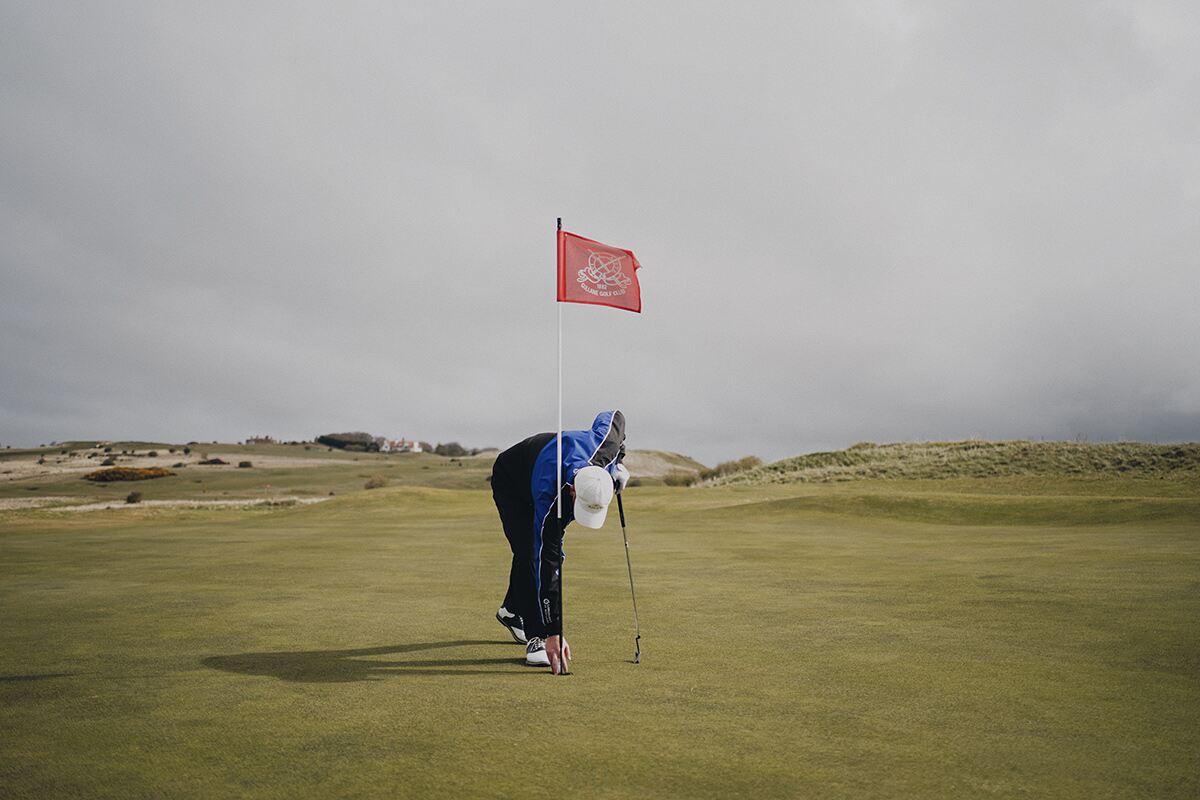
Gullane No. 2 a trust test of links golf
Prestwick St Nicholas: The Overlooked Neighbour
While we are in Ayrshire, it would be remiss not to mention Prestwick St Nicholas, sitting quietly in the corridor between Prestwick and Royal Troon. Old Tom Morris was a member here, and he won three of his Open Championships while holding that membership. The course offers two terrific drivable par fours at the 3rd and 15th, and a closing par three of 227 yards downhill with out of bounds running the entire right side that will test your nerve after seventeen holes of golf. The views from the clubhouse out across to the Isle of Arran and Ailsa Craig are, on a clear evening with the sun setting over the water, as good as any in Ayrshire. At a fraction of the green fee charged by its famous neighbours, it is one of the best value rounds of its famous neighbours and a course that rewards thoughtful, position-first golf. If you find yourself in the Troon area with a spare afternoon, this is where you should spend it.
The Real Secret
Here is the thing that tour operators and travel writers rarely say out loud: there is no reliable correlation between green fee and experience. One sees golfers come to Scotland, play the Old Course, Kingsbarns, Carnoustie and Castle Stuart, then spend a fun afternoon on a humble nine-holer for a fraction of the cost and rank it among the top two or three experiences of their trip. The second courses of Scotland are not consolation prizes. They are some of the best golf you will play anywhere, with fewer people on the fairways, friendlier faces in the clubhouse, and that unmistakable feeling of being in on a secret.
Next time you are planning a Scottish golf trip, book the famous course by all means. But leave a day for its quieter sibling. You might just find it is the round you remember most.