 2026 Platinum
Table of Contents
- The course
- Crow’s Nest
- What stays with you
- What to wear for winter golf on Arran
- The crossing home
- How to get to Shiskine
There is something about taking a ferry in winter that makes the world feel further away than it is.
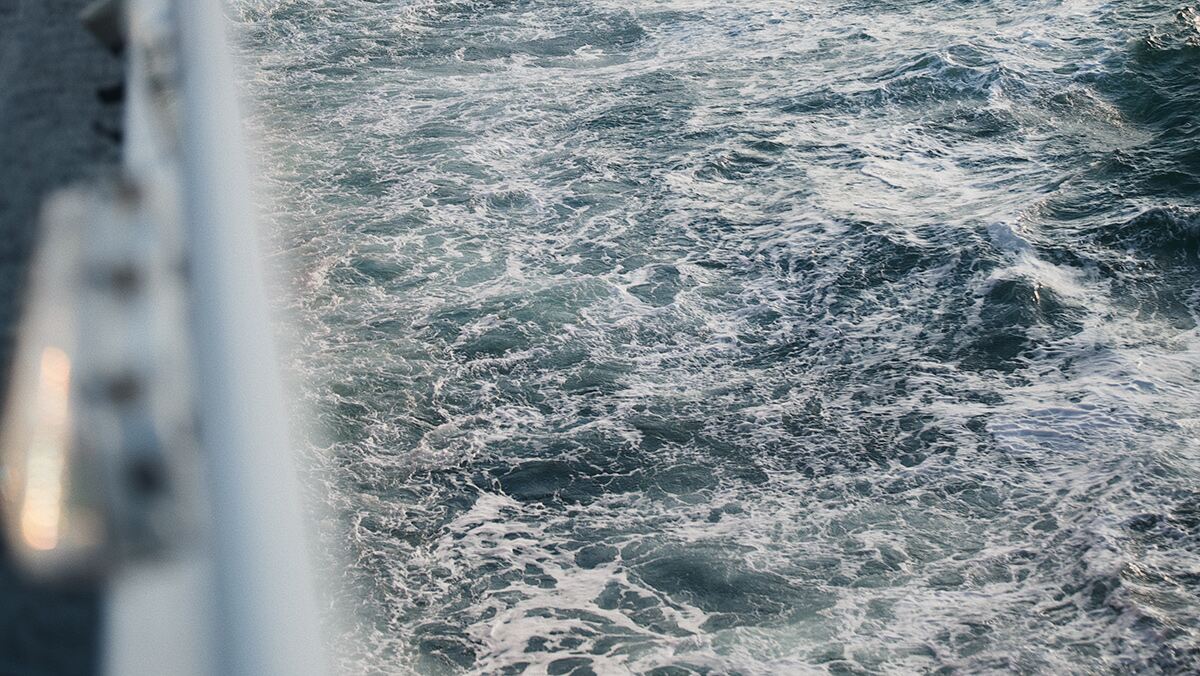
Even before Arran rises out of the slate sets of waves, the journey has already begun to pull at you. The harbour is all rusted, cold metal and concrete, gulls cawing and circling in the frigid winter air, that unmistakable smell of salt and diesel teamed with something older, more sacred beneath it, seaweed, stone, the elements and golf’s origins. We boarded with our shoulders tucked against the wind and stood bracing against the bitter sea air for a moment on deck longer than is sensible, just to feel the crossing properly. The air has teeth. The water shifts and heaves below in dark folds. Everything seems pared back to its essentials: sea, sky, and the rugged coastline of Scotland.
Matthew, one of our party, remarks that in summer this ferry is simply a means of getting somewhere, pleasant, calm, filled with childhood memories of warm evenings playing golf on the campsite. But right now, in winter, it feels more ceremonial than that.
Arran appears slowly, as if remembered rather than reached. Not all at once, but in pieces: a shoulder of the Holy Isle softly lit by the heavens. A mountain lost in cloud. A line of cliff. The suggestion of a shoreline. The island always seems to carry its own weather. On that day the wind was already at work with the land, pushing through the glens and up the peaks, worrying at the grasses and bending them silver. It was the sort of wind that never quite settles into one note. It whistles, then hushes, then returns with a low, hollow sound, as though the island itself were breathing through its primeval rocks.
The drive from the ferry is reason enough to come. The road folds along the coast, flanked by seals, and then away from it, winding through a landscape that feels improbably dramatic for somewhere so compact and unassuming. Vast mountains rise suddenly from the roadside. Cliffs loom and recede. Fleeting deer ponder the movements of us mere mortals below. The sea keeps reappearing in flashes between bends, pale and restless and flecked white where it meets the shore.
And then, almost as if it has been left there by accident, there is Shiskine.
The course
It is a strange and wonderful thing, a 12-hole course laid down at the edge of the world, or so it feels when you arrive in the off-season. There are tidier courses, certainly. More polished ones. Better manicured, more complete in the conventional sense. Shiskine is not really interested in any of that. The pro shop is all it needs to be, the course a little weather-beaten, a little rough around the hems. But that roughness is inseparable from its charm. It belongs to the place. To make it too neat would be to misunderstand it entirely. Some courses are desperate to be admired. Shiskine asks only to be experienced.
12 holes meander close to the sea, cliff-lined and exposed, with the land appearing to have simply relented for long enough to let golf happen there. The fairways run and dip with a kind of casual confidence. The greens feel discovered rather than designed. Everything is at the mercy of the elements, and better for it. There is no sense of separation between course and coast. The salt is in the air, in your waterproofs, on your lips. The wind moves through the marram and the rough grasses with a dry, papery hiss peculiar to winter links. Somewhere below our golf balls, beyond the edge of our bags placed by the tee, waves keep arriving at the rocks with a patient, relentless force.
Crow’s Nest
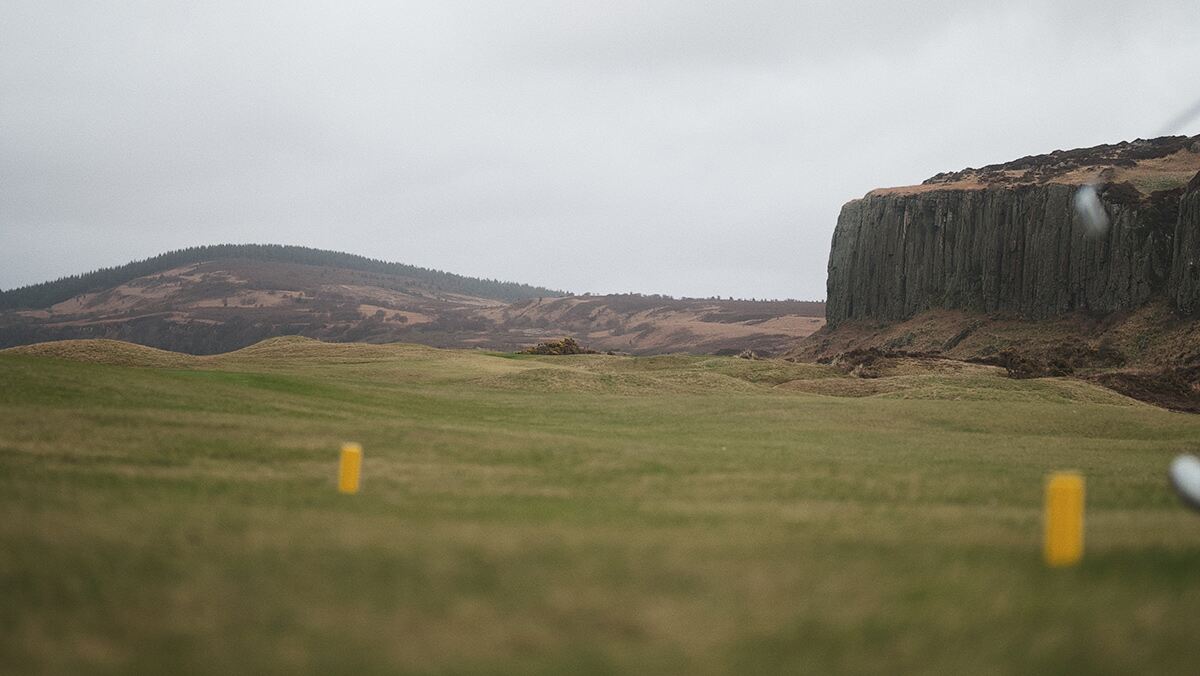
There is one hole in particular that asks something of you before it gives anything back. The climb to Crow’s Nest is not long enough to be called a trek, but in the wind it becomes something of a pilgrimage. The tee shot is blind, navigated only by a marker post set against a cliff-top backdrop. Only a flick with a wedge, the anticipation of where our balls landed on our minds as we clamber upwards through the rough, shoulders angled into the weather, feeling the course fall away behind us. The air seems sharper there. The sound of the sea louder. Grass whips at your ankles. The path rises into the cliffs, safely on the plateau our balls are there, or thereabouts, allowing us to take in the prehistoric views of the Crow’s Nest.
The green sits perched high in the cliffs above the course, looking down onto the coast and the crashing waves below, a par 3 with one of those views that momentarily loosens your grip on the game itself. The green is there, yes, and the shot still has to be played, but your eye cannot help drifting outward to dark rock, the white water, the endless movement of the sea. It feels less like standing on a hole and more like finding a ledge at the edge of something untamed.
What stays with you
That, perhaps, is what stays with you most. Not only the shape and creativity of the holes, or the novelty of a 12-hole course, or even the unlikely beauty of a place so rugged and exposed. It is the atmosphere of it all. The organic theatre of it. The feeling that golf here is not imposed upon the landscape but borrowed from it for a little while. That the course exists in conversation with the island, with the weather, with the sea below and the wind that rules it all.
In winter, this feels especially true. The colours are quieter and more muted then, dun grass, charcoal rock, the muted green of hardy fairways, the pewter shine of water under cloud. Nothing shouts. Everything endures.
 |
 |
What to wear for winter golf on Arran
A winter round at Shiskine is not a question of style. It is a question of survival. The wind off the Kilbrannan Sound is relentless, and the salt air finds every gap in your clothing. Layering properly is the difference between an experience you treasure and one you simply endure.
Men’s
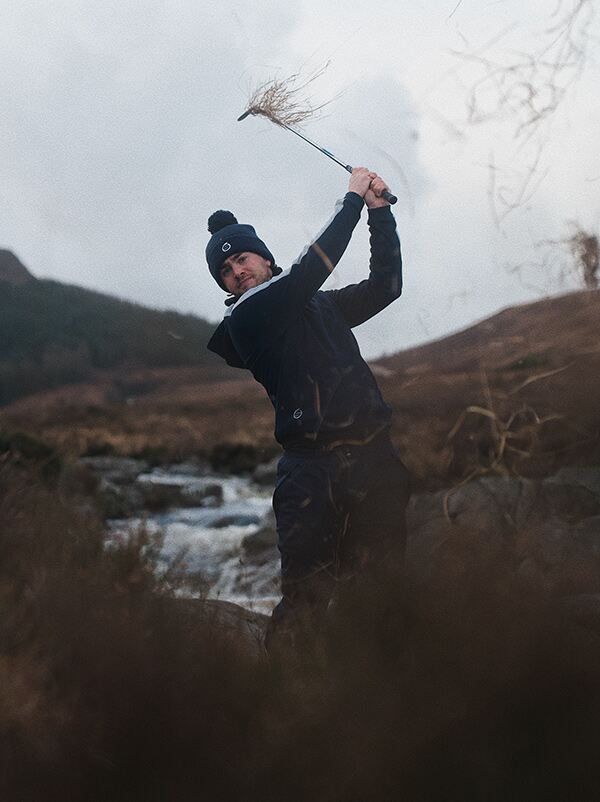
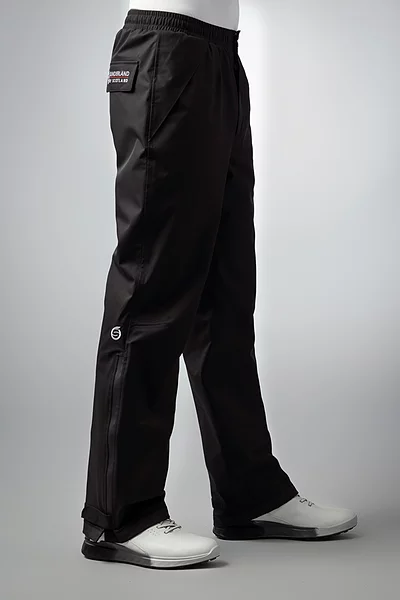
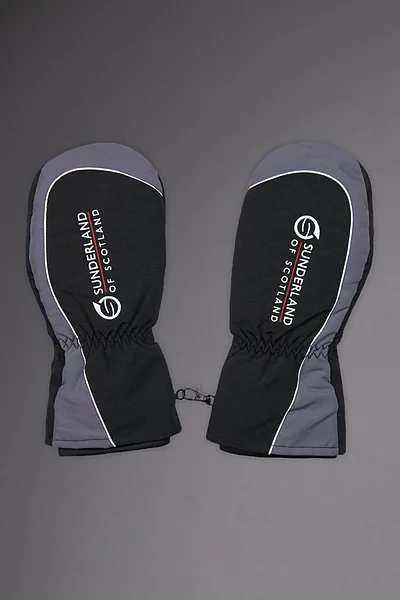
The s.Atlas hoodie proved its worth before we even reached the course. On the ferry crossing, the hood kept the wind off the ears and the fleece lining held in warmth while the deck wind cut through everything else. On the course itself, the s.Typhoon jacket did exactly what the name suggests, keeping driving rain and horizontal gusts at bay without restricting the swing. The s.Quebec trousers handled the wet rough and the hillside scramble to Crow’s Nest without complaint. Sunderland s.Mittens between shots and an s.Neck Warmer pulled high against the jaw completed the armoury. Winter golf on an exposed Scottish island is no place for half measures.



Ladies’
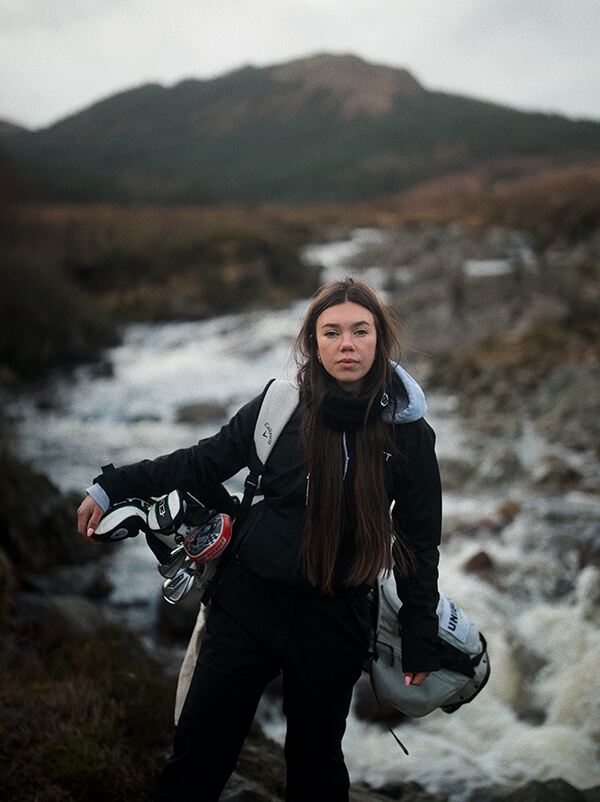
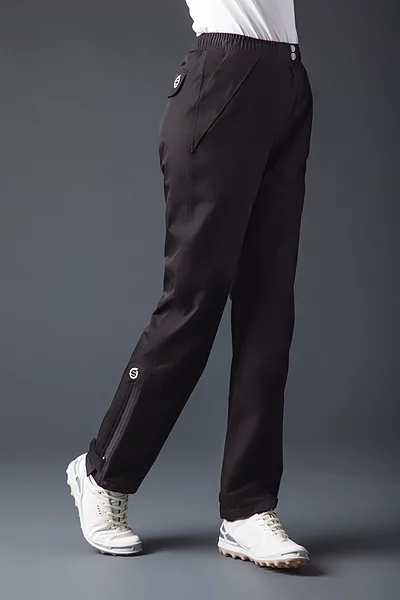
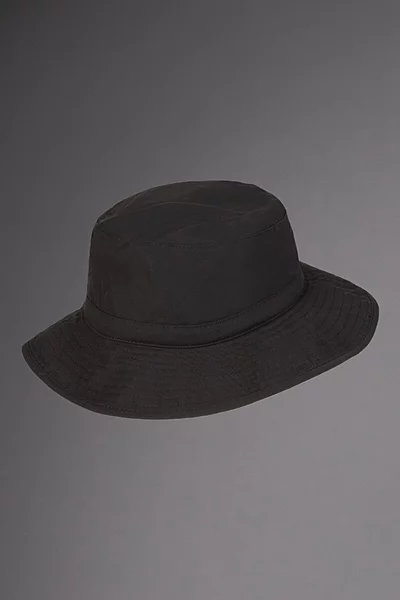
The s.Whisperdry Whistler fleece was a lifesaver. The faux fur lining holds warmth beautifully, and the hood is cut to shield against exactly the kind of swirling coastal wind Arran specialises in. Paired with the s.Alpine lined sweater underneath and the s.Montana trousers, the layering system worked throughout the round. The s.Bucket Hat kept the rain off without catching the wind the way a peaked cap does, which on a course this exposed makes a genuine difference.


The crossing home
By the time we leave, the light has already begun to thin. The drive back to Brodick curls once more through the mountains and along the edge of the coast as the soft winter light fades behind the raw, exposed mountains. Our ferry waits somewhere beyond the darkening road, and the roar of wind is still lodged somewhere in our ears.
How to get to Shiskine
The CalMac ferry runs from Ardrossan on the Ayrshire coast to Brodick on Arran. The crossing takes approximately 55 minutes. From Brodick, the drive to Shiskine takes around 30 minutes along the coastal road, which is scenic in any season. Booking the ferry in advance is strongly recommended, particularly in summer and on weekends, as sailings can fill up. In winter, the service runs less frequently and is subject to weather disruption, so build flexibility into your travel plans. A car is essential on Arran.