 2026 Platinum
Table of Contents
- A hippo, a destroyer and a plaque
- Founded 1884, and shaped by half the game’s architects
- A course built around another course
- How Formby asks to be played
- The stretch from five to nine
- Halfway houses, sausage rolls and a gin at the ninth
- The practice ground
- What to wear
- Formby Ladies
A hippo, a destroyer and a plaque
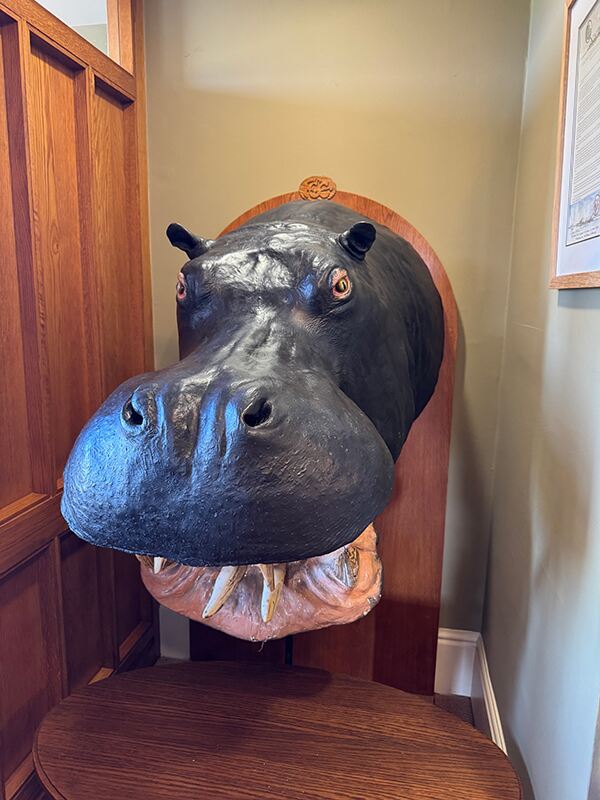
Most golf clubs put silver in the cabinet by the door. Formby has the head of a hippopotamus.
It arrived in 1909, presented by the widow of a member, Mr E Storey, who had shot it in Africa. It has been in the clubhouse ever since, with one notable interruption. Visitors call it Horace.
In the spring of 1940, with the clubhouse sandbagged and requisitioned as an officers’ mess and the fairways strung with barbed wire and tank traps, a party of Royal Navy officers came out from Gladstone Dock for a round of golf. Dinner with the Army followed. So, in due course, did the hippo, which left the building in the back of a car wrapped in blankets, was stopped by a policeman during an air raid in Liverpool, and was hoisted aboard the destroyer HMS Veteran the following morning.
 |
 |
Horace went to Norway. He was lashed to the searchlight platform through the Narvik campaign and came home short of one tooth, which his hosts blamed on a near miss from the Luftwaffe. The engineers turned a replacement in steel, an inch and a half across, and fitted it. The Admiral commanding at Liverpool, who happened to be a Formby member, took a dim view and demanded the hippo’s immediate return along with apologies to the committee.
Horace came back with the steel tooth still in place and a new brass plaque reading "Shot down over Narvik". The whole business is set down in Captain Jack Broome’s 1972 memoir Convoy is to Scatter, by the officer who took him.
The tooth is still there. So is the plaque.
Founded 1884, and shaped by half the game’s architects
Formby was founded in 1884, and for its first three decades played over nine holes. The pines that now define the place were not an accident of the dunes. The club’s president, Charles Weld Blundell, planted the first of them, and members carried on the work.
The eighteen-hole course is the work of Willie Park Junior, who laid it out in 1912. Park won The Open twice, in 1887 and 1889, and wrote The Game of Golf in 1896, the first book on the game written by a professional. James Braid altered the course in 1922, Harry Colt in 1933, and Donald Steel remodelled a section of it in the 1980s after the Irish Sea broke through the dunes and took two holes with it. Rather than fight the sea, Steel built new holes inland and let the old ground return to nature. Mackenzie and Ebert began a long-term development plan in 2020.
Four architects of the first rank, plus the sea, over a hundred and forty years. It says something for the routing that it still feels like one course rather than a committee.
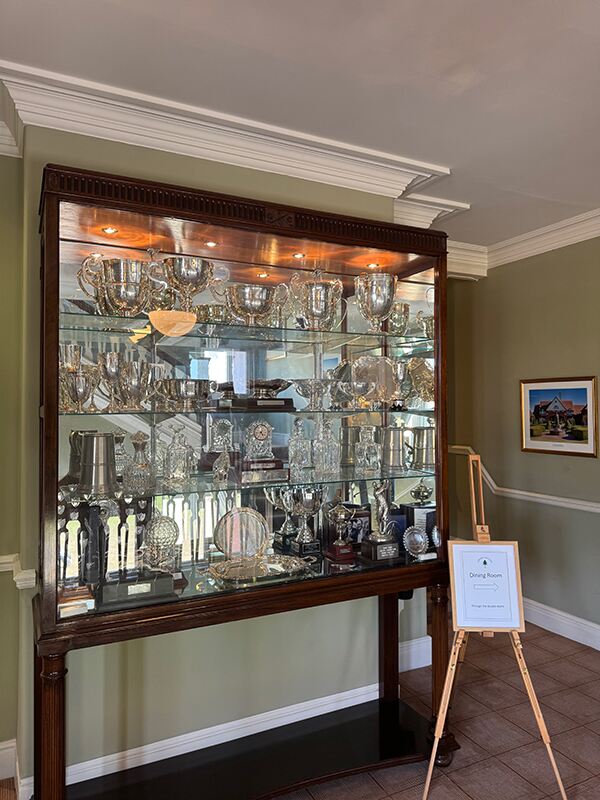
The championship record is amateur golf’s rather than the professional game’s, and none the worse for it. Four Amateur Championships have been played here, in 1957, 1967, 1984, when José María Olazábal beat Colin Montgomerie in the club’s centenary year, and 2009, when Matteo Manassero won it at sixteen and remains the youngest champion in the event’s history. Add five English Amateurs, four Brabazon Trophies, the 33rd Curtis Cup in 2004, the Arnold Palmer Cup in 2016 and the PGA Seniors Championship in 2021 and 2022, and the point makes itself.
The club has also given itself over to other work when asked. The course and clubhouse served as a convalescent home during the First World War, and the clubhouse was requisitioned again in the Second.
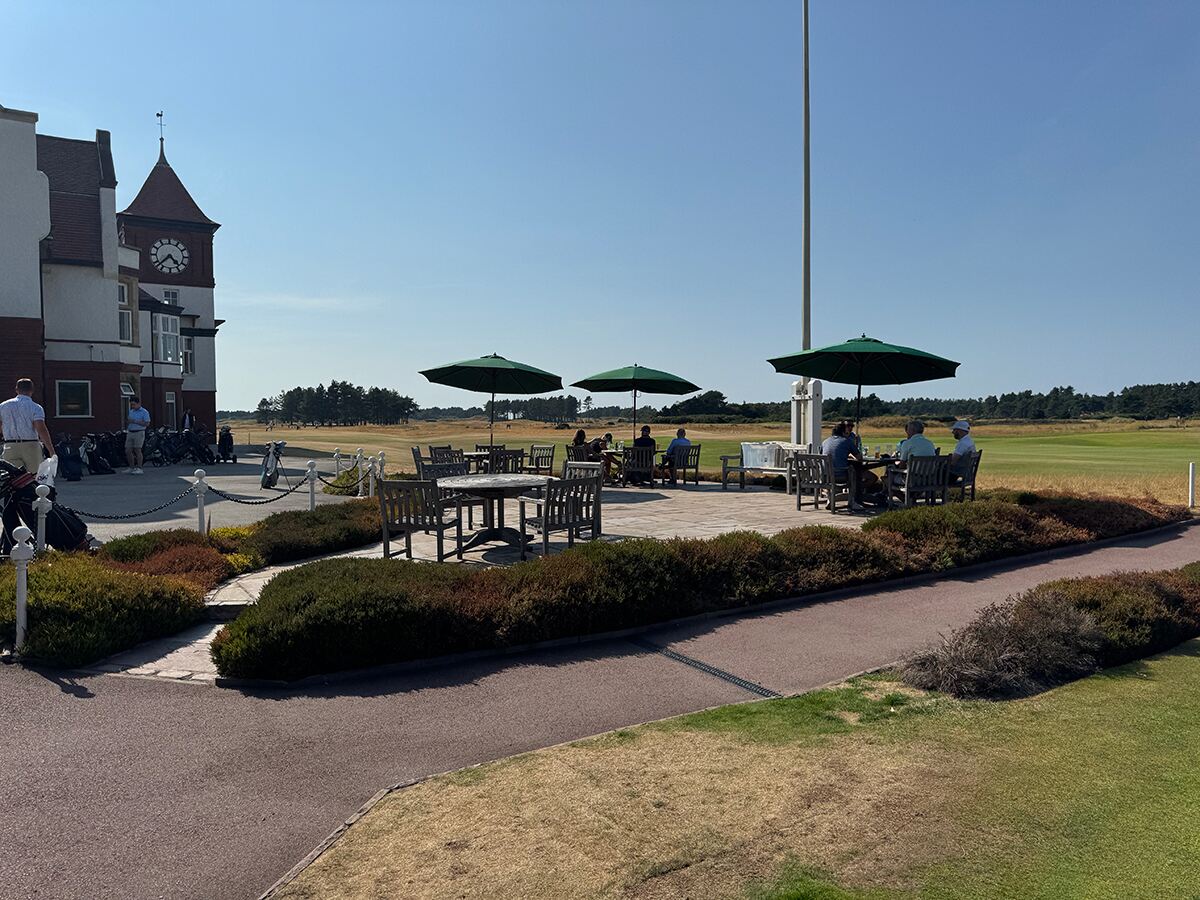
The clubhouse dates from 1901, replacing one lost to fire two years earlier. The clock tower was added in 1909, a gift from Bruce Ismay of the White Star Line to mark the club’s twenty-fifth anniversary, three years before the Titanic. The dining room upstairs looks straight out over the course, and the chairs in it have been carrying members for a century.
A course built around another course
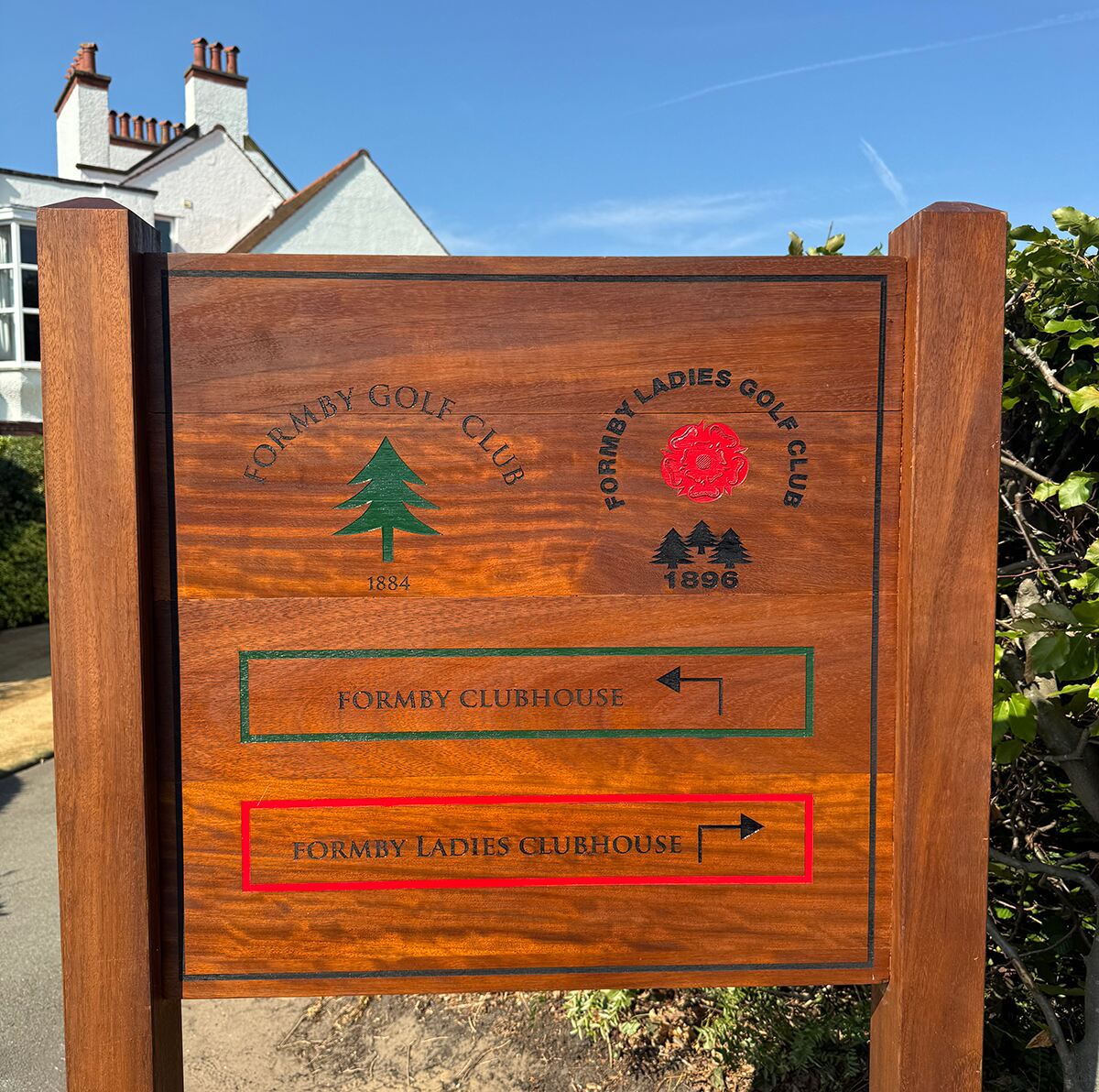
The single most unusual thing about Formby is not the pines or the hippo. It is that the men’s course runs in one enormous loop around a second, entirely separate golf club. Formby Ladies’ Golf Club sits in the middle, with the practice ground alongside it, and the championship course encircles the pair of them.
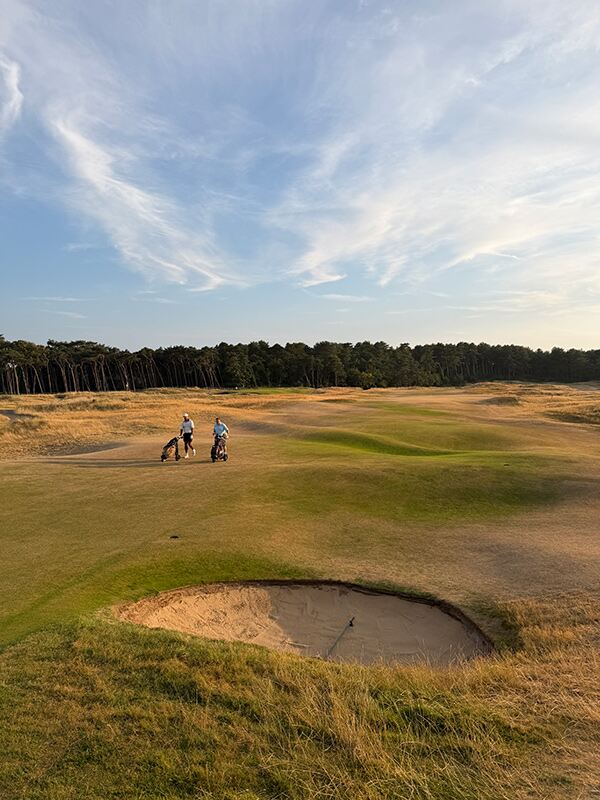
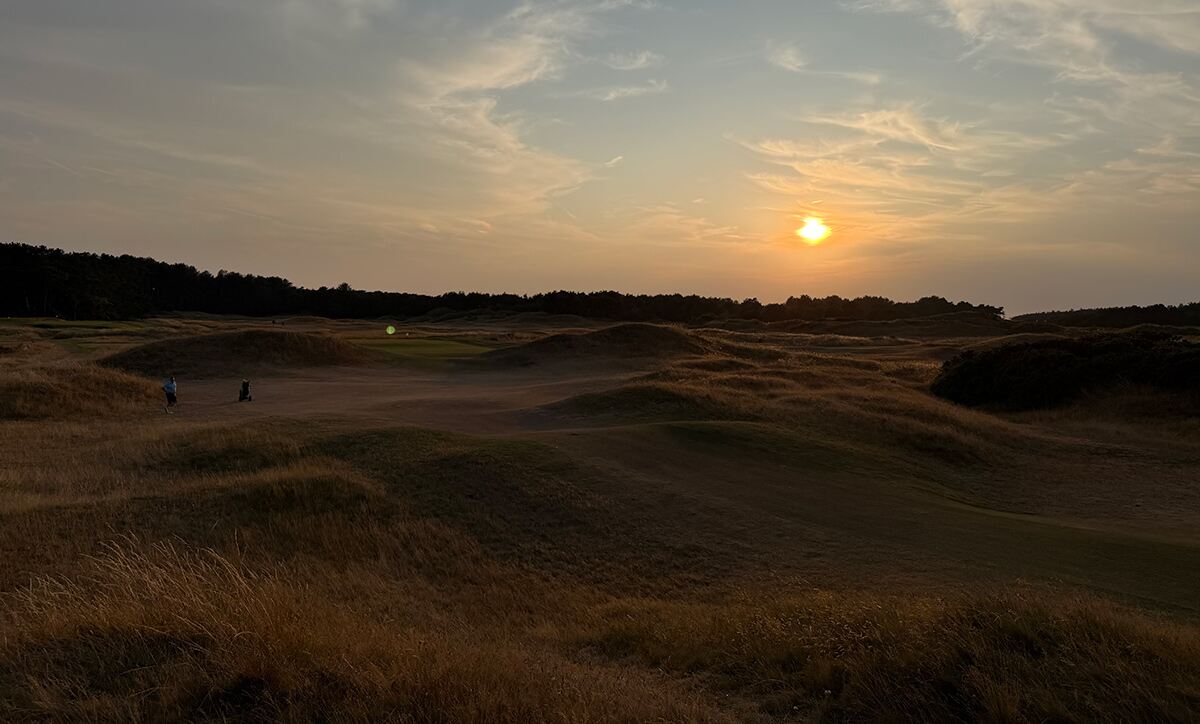
The effect on the walk is considerable. Because everything faces outward, the land reads as vast. Firm, fast, open, and almost entirely free of anything man-made. No houses come into view until the closing holes. For a course sitting in the middle of Merseyside, it feels remarkably like an escape.
That is the honest difference between Formby and the three Open venues around it. Royal Birkdale, Royal Liverpool and Royal Lytham and St Annes are bigger occasions and, on their day, more spectacular. Formby is a sanctuary. Different pleasure entirely.
 |
 |
How Formby asks to be played
The card is not the challenge. Formby plays to a par of 72 over 7,128 yards from the blues, 6,815 from the whites and 6,502 from the yellows, which by modern championship standards is nothing at all. It defends itself by other means, and the shape of the card tells you how: thirty-seven out, thirty-five home, with only three par 5s and three par 3s among twelve par 4s.
The bunkers are the whole argument. Revetted, steep-faced, beautifully built, and filled with a very fine sand that a club will bury itself in if the swing gets greedy. Escaping is possible. Escaping usefully often is not. The fairway bunkers in particular are to be avoided at any cost, and the strategically correct shot at Formby is frequently the one that takes them out of play rather than the one that flirts with them.
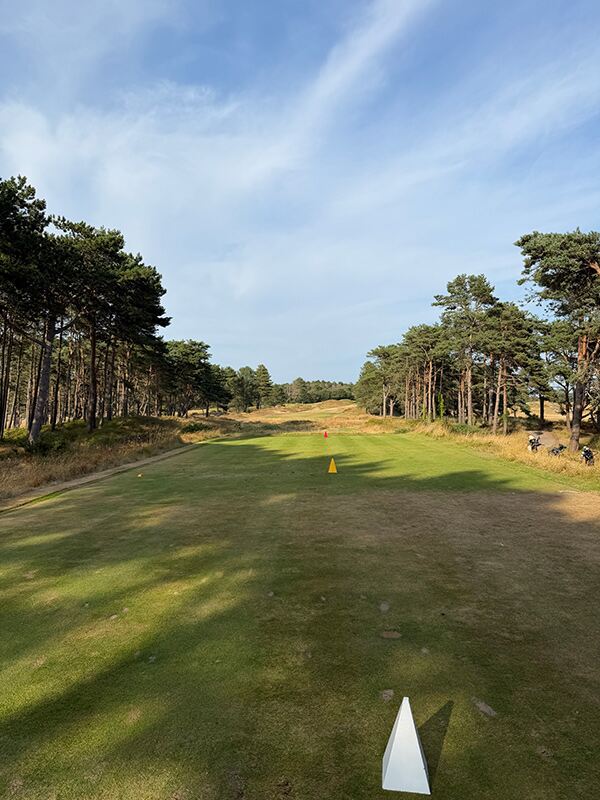
The first sets the tone. Stay left off the tee. The right side runs tight along the railway and offers no forgiveness whatsoever. At 413 yards off the whites and only the eleventh stroke index, it is a hole that looks gentler on paper than it plays with a train going past.
Among the pines, read the markers correctly. Formby uses white circle markers and green posts to help golfers locate a wayward tee shot in the trees. They are for finding a ball, not for aiming at. It is an easy mistake to make on a first visit and an expensive one.
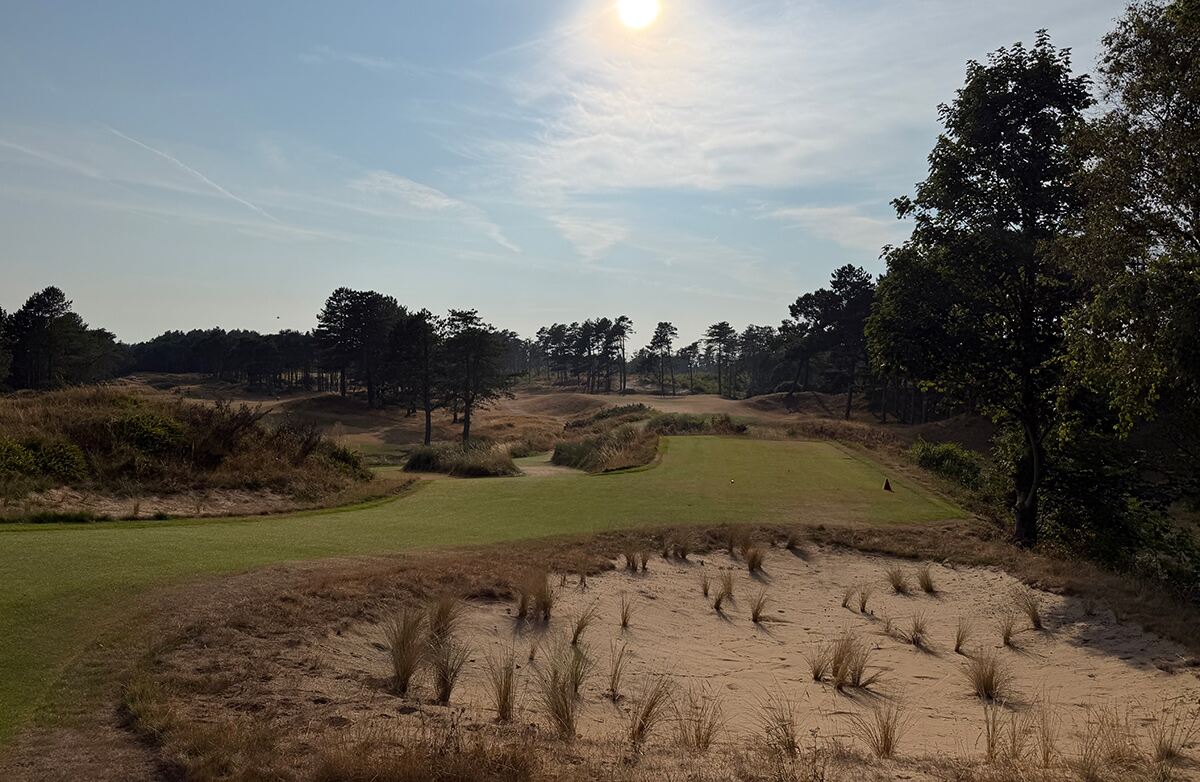
The three par 3s are the best holes on the course, and none of them is long. The fifth is 162 yards off the whites, the tenth 189, and the sixteenth just 129. Every one is excellent. The sixteenth is the eighteenth stroke index, nominally the easiest hole on the property, and it will still take a shot off anyone who treats it casually. Proof that the most interesting holes need not be the longest. The fifth, uphill and spectacular, wants a tee shot held left.
The par 5s are all reachable in two decent blows. There are only three of them, the third at 543 yards, the eighth at 481 and the seventeenth at 532 off the whites, and the eighth in particular is a genuine two-shot hole for anyone who finds the fairway. That makes Formby properly scorable for a mid-handicapper who stays out of the sand, and a real chance of a good number is part of the charm.
The hardest hole is not where most expect it. The ninth is stroke index one, a 454-yard par 4 off the whites, and the fifteenth is stroke index two at 403 yards. Both are par 4s of the sort that quietly undo a good front nine. The fourth, by contrast, measures 313 yards from the blue tees and the white tees alike, which makes it driveable and one of the more tempting short holes on this coast.
The wind does not stay put. A morning round can play downwind off the first tee and an afternoon round straight into it. The routing, looping the whole way round, means the breeze arrives from a different quarter every few holes regardless.
In high summer the fairways burn out and run, though constant watering keeps them fair, and the greens stay receptive enough to hold a well-struck iron.
The verdict most visitors reach: not too long, not a slog, and not boring. A course one could play every day of the week. It also improves on acquaintance, revealing itself slowly rather than announcing everything on the first visit.
The stretch from five to nine
The fifth and sixth are the pair most people remember. The fifth is the short hole, uphill and spectacular, played to a green that punishes anything held out to the right. The sixth, 407 yards and the fifth stroke index, asks for a blind approach, the sort of shot that is either a delight or a torment depending entirely on whether one trusts the line.
The seventh and eighth are as good as any consecutive pair on the coast, and both are decided from the tee. The seventh is only 378 yards and the eighth a reachable par 5, so neither is about power. Position is everything on each.
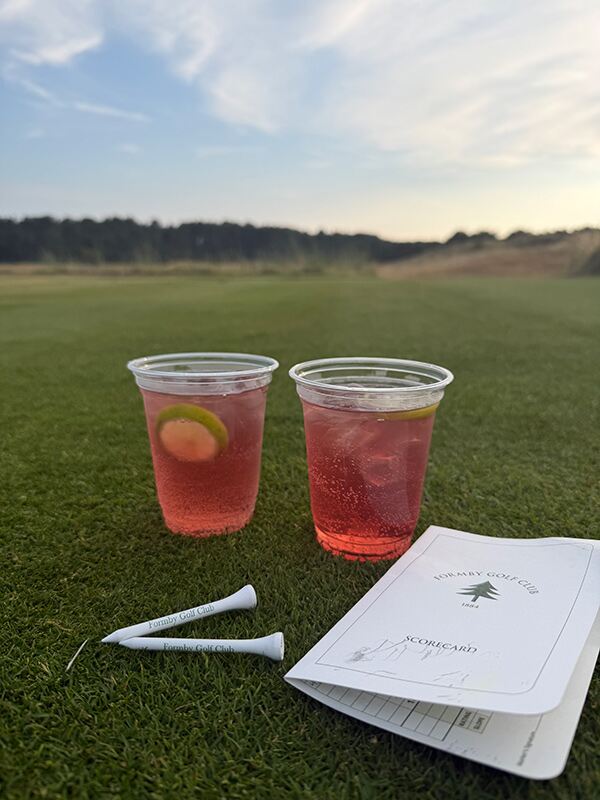
Then the ninth, where the walk to the tee is usually met with a gin and tonic made with a Lancashire gin, and where the Irish Sea opens up in front of the golfer. It is worth knowing, gin in hand, that this is stroke index one and the hardest hole on the card. Formby has a sense of humour about these things.
 |
 |
Halfway houses, sausage rolls and a gin at the ninth
Formby does hospitality with a lack of fuss that a lot of grander clubs could learn from. The welcome on arrival extends to a proper tour of the clubhouse and dining room. Sandwiches ordered before the round arrive quickly and boxed, with crisps. The coronation chicken is very good and the mushroom soup close to perfect.
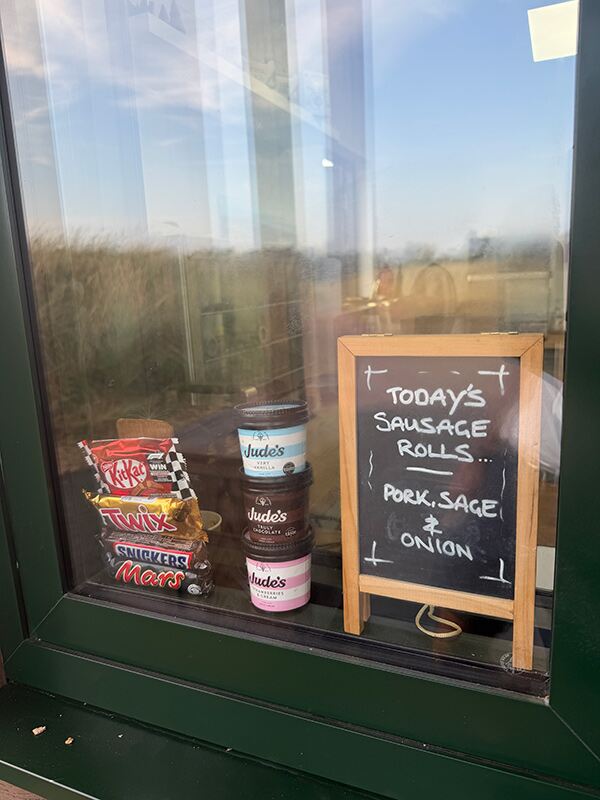
The halfway house comes up after the eleventh, and then obligingly again after the thirteenth, which is an arrangement more clubs should consider, particularly with the fifteenth and its stroke index of two still to come. The sausage roll is pork and sage, and worth the stop.
The bar mixes a transfusion, though not with Tito’s, so anyone particular about their vodka should adjust expectations. The local Lancashire spirits are the better call in any case.
The practice ground
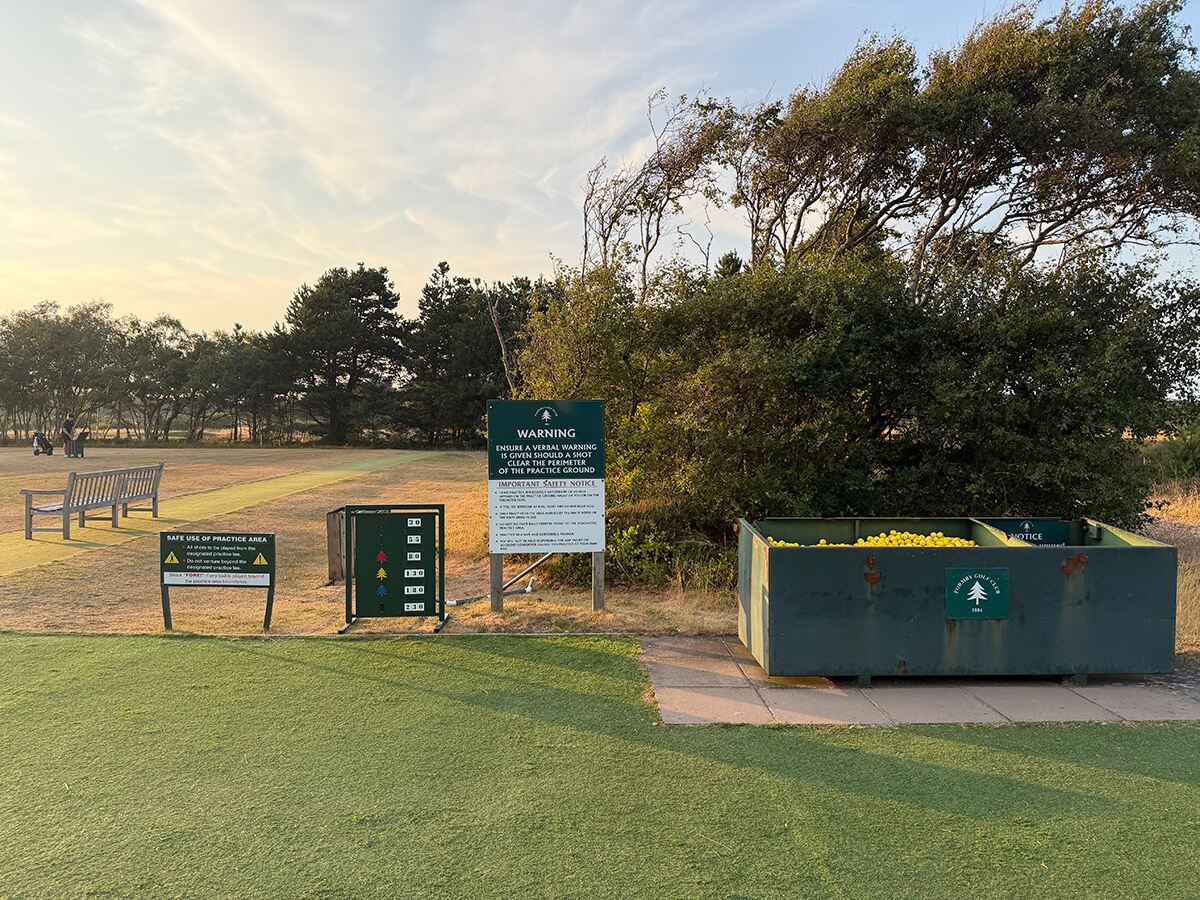
The range sits a good ten minutes’ walk from the clubhouse, out past the Ladies’ course. It is worth the walk. Grass, plenty of balls, and lies as tight as anything found on the course itself, which is the whole point of a warm-up and something a mat can never teach.
What to wear
Formby in summer is a warm, exposed, firm and fast walk with very little shade once out of the pines, and a wind that changes direction as the routing turns. That combination asks for breathability first and a light layer in reserve, rather than anything heavy.
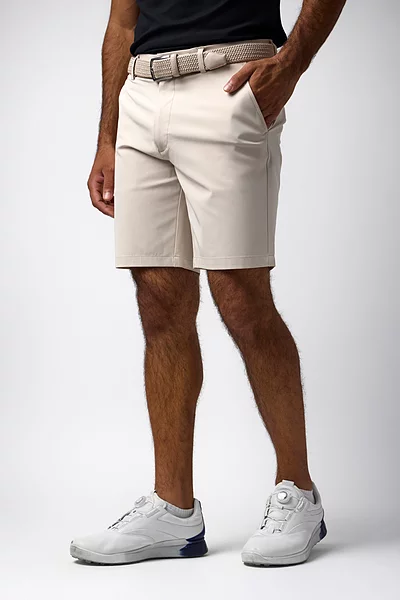
A performance pique polo handles the walk and the heat, with a slipover or a quarter zip midlayer in the bag for the exposed holes when the breeze comes off the Irish Sea. Both pack down to nothing and both matter more at Formby than the forecast suggests, because the wind on the outward holes and the wind on the way home are rarely the same wind.



The ladies’ equivalent works the same way, a shaped performance polo with a quarter zip over the top for the turn.
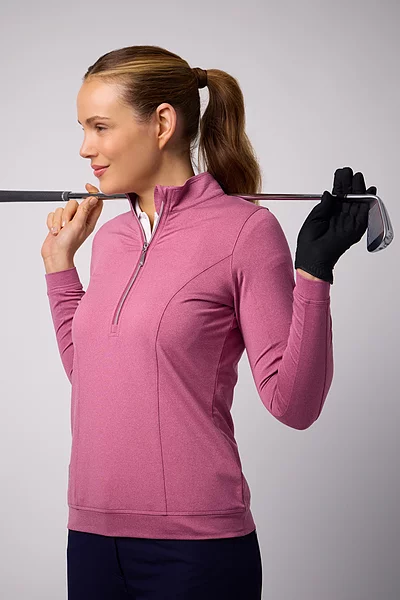
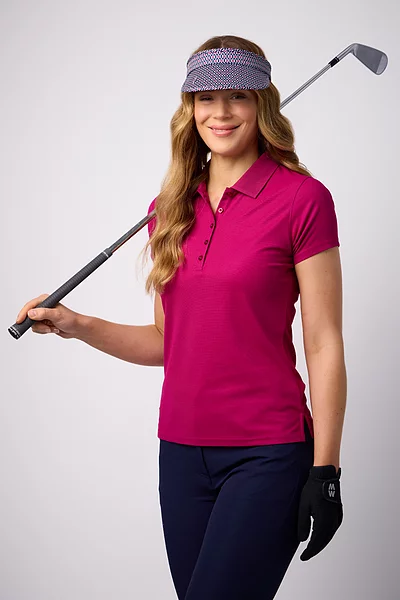

Formby’s dress code is traditional, as one would expect, and neat golf attire is the expectation in the clubhouse and dining room. It is worth checking the current requirements with the club before travelling.
Formby Ladies
Formby Ladies’ Golf Club is a separate club with its own course, and it is not restricted to women golfers. It has a strong reputation as a links course in its own right, and it sits entirely inside the championship course. Anyone making the trip with a spare half-day should consider it rather than walking past it on the way to the range. The proper way to do it is play both in the same day with lunch in between.