 2026 Platinum
Table of Contents
- Start with navy
- The three practical rules
- Warm or cool: finding shades that suit
- What golf does to colour that fashion does not
- This season: navy and raspberry, Tahiti, linen and black
- Prints and stripes
- Small touches
Start with navy
Navy is the most useful colour in golf clothing and it is not close. It reads as smart on the course and acceptable in the clubhouse, it sits with almost every other colour, and it suits people that black overwhelms.
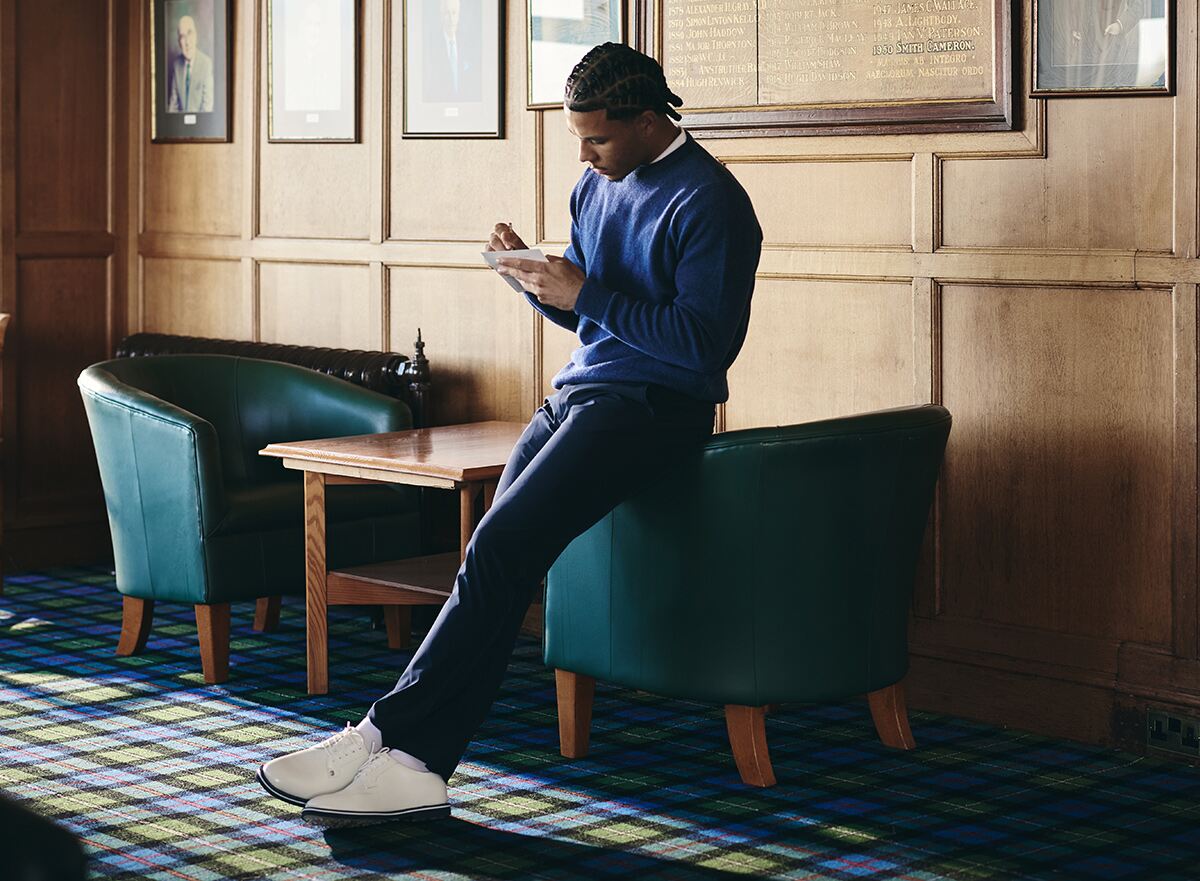
Its real advantage is optical. Under the flat overcast light that covers most Scottish golf for most of the year, mid-tone colours drain towards grey. Navy does not. It reads as navy in dull light and as navy in bright sun, which is more than can be said for sage, dusty pink or most mid-blues. A wardrobe anchored in navy behaves predictably in conditions that are anything but.
That is why the efficient approach to seasonal dressing is not to replace what is there. It is to keep the anchors and change what sits against them.
The three practical rules
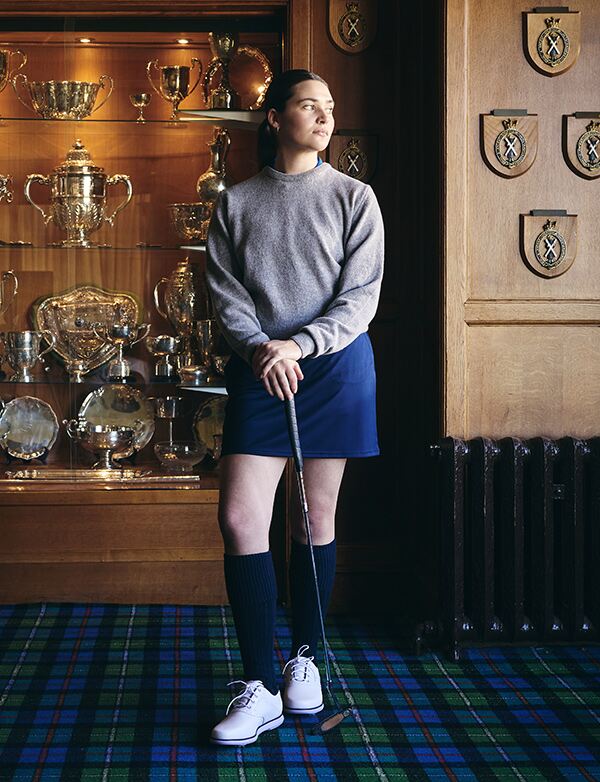
Anchor the light with the dark. Pale shades on their own wash out, particularly on a links course where sand and sky are already doing the same thing. A light polo works when there is something with weight above or below it.
Let one colour do the work. One shade carrying the interest, with everything else supporting, will look considered. Two competing shades will look accidental. This is the single most common mistake in golf clothing and it is entirely avoidable.
Contrast beats matching, but tonal beats both when it is deliberate. A navy polo with navy trousers can look excellent if the fabrics differ enough to show the intent. The same combination in identical fabric looks like a uniform.
 |
 |
Warm or cool: finding shades that suit
Most colour advice sorts people by how dark their skin is, which is close to useless. The more reliable division is undertone, and it applies to everyone.
The simplest test is the inside of the wrist in daylight. Veins that look blue or purple suggest a cool undertone. Veins that look green suggest warm. If it is genuinely hard to tell, the undertone is neutral and most things will work. A second check: silver jewellery tends to flatter cool undertones, gold tends to flatter warm.
Cool undertones are lifted by navy, raspberry, true white, charcoal and cool blues. Warm yellows and orange-based reds tend to fight them.
Warm undertones are lifted by linen, camel, olive, cream and warmer reds. Stark white can look harsh where cream would not.
Neutral undertones have the run of both and should simply pick what they like.
This matters more in golf than in most clothing because golfers are photographed at prizegivings, in societies and on club walls, usually in unforgiving daylight, usually without warning.
What golf does to colour that fashion does not
Four hours outdoors imposes constraints no style guide accounts for.
Sweat shows worst on mid-tone blues and greys. Pale blue is the least forgiving colour in golf clothing on a warm day. Navy, black and white all handle perspiration far better, white because it dries without leaving a visible mark.
Light trousers and links golf are an uneasy pairing. Wet marram, revetted bunker faces and dune sand all leave evidence. A stone or linen trouser is a fine choice at a parkland club in July and an act of optimism at Birkdale in October.
Dark colours absorb heat. Obvious, but routinely ignored. On the sort of week the Open enjoyed at Royal Birkdale this July [link to the Open Article], with temperatures climbing towards the high twenties midweek, a navy performance polo in a technical fabric is a different proposition from a navy cotton one.
Bright light flattens pale colours; dull light flattens mid-tones. The colours that survive both are the darks and the true whites. Everything else is conditional, which is precisely why the anchors matter.
 |
 |
This season: navy and raspberry, Tahiti, linen and black
Three combinations are worth the attention this season, and each solves a different problem.
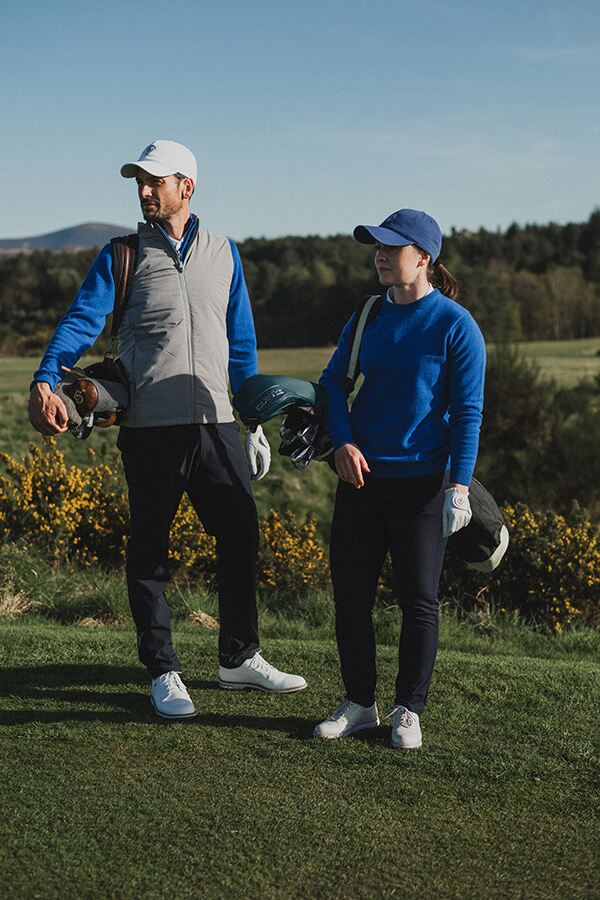
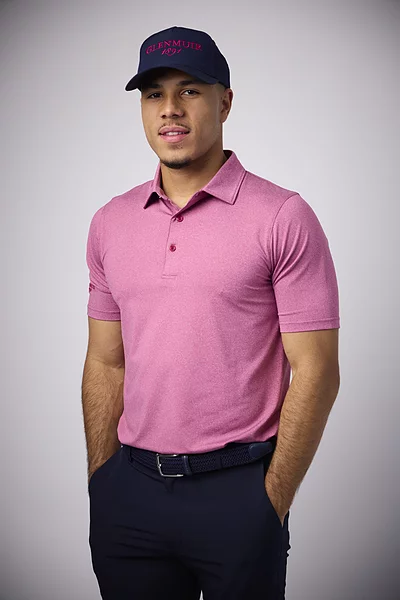
Navy with raspberry. Raspberry is a cool-leaning red, and that is the whole reason it works here. Warm, orange-based reds sit awkwardly against navy and always have. Raspberry shares navy’s coolness, so it reads as a deliberate accent rather than a collision. Used as the smaller element, in a sweater or a stripe rather than head to toe, it lifts a navy base considerably. g.Knox, the merino crew neck, comes in raspberry among a wide range of shades and is the straightforward way to test the combination.
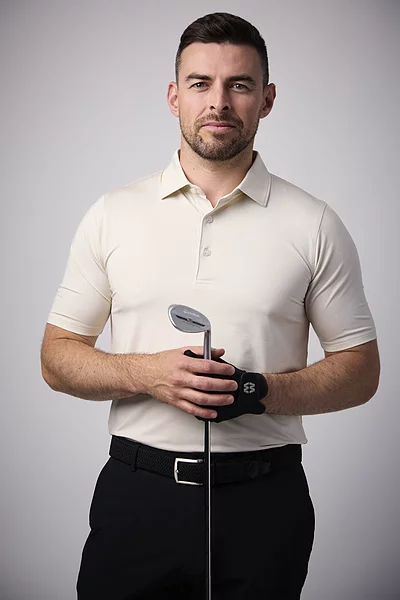
Tahiti. A clear, cool blue and the most confident of the three. The risk with Tahiti against navy is that two blues merge into a single indistinct mass at any distance, so it needs white between them. Tahiti polo, white trouser, navy sweater over the shoulders is the arrangement that works. g.Silloth, with its tailored collar, is the cleanest base for it.
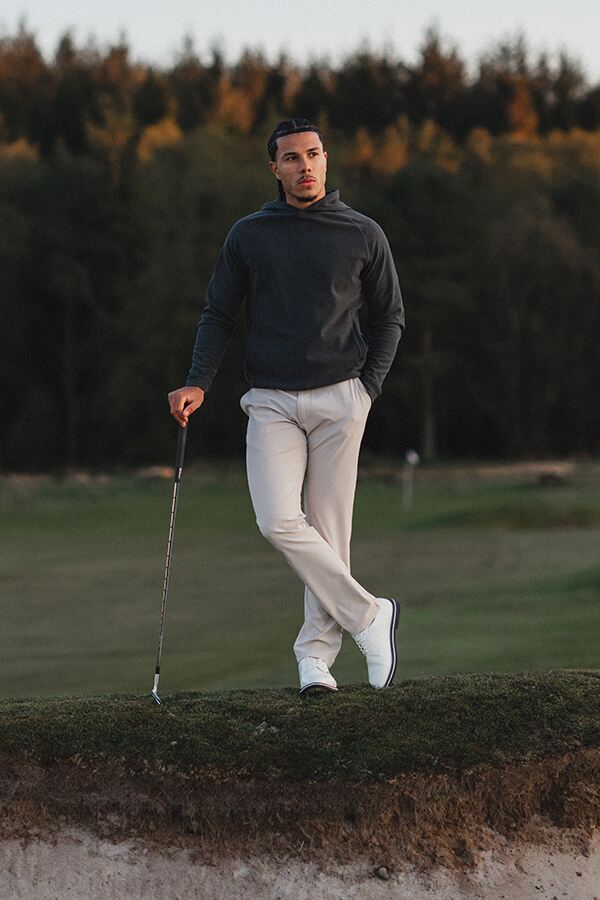
Linen with black. The most understated and probably the most versatile. Linen is a warm neutral, and black is the hardest anchor available. The pairing works because linen carries enough warmth to stop black reading as severe, which is the usual failure of black in golf clothing. It also travels well between the course and the clubhouse without adjustment.
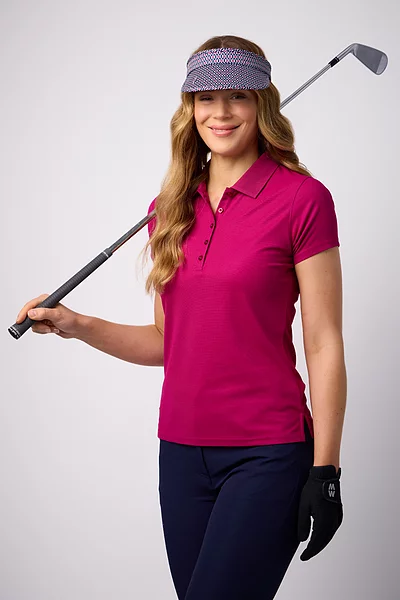
For ladies, g.Paloma covers the performance polo in the season’s shades. For a midlayer that takes any of the three combinations, g.Coll in a quarter zip is the shape that raises no questions anywhere.

Prints and stripes
Stripes are the safest pattern in golf and the most flattering. Breton and rugby stripes both work, and a fine horizontal stripe like the two-colour micro stripe on g.Torrance adds texture without announcing itself from the next fairway.
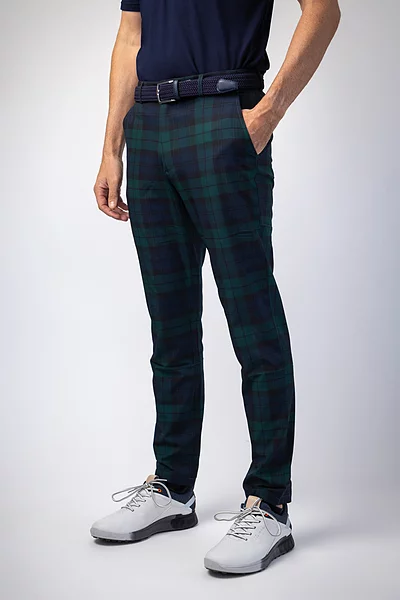
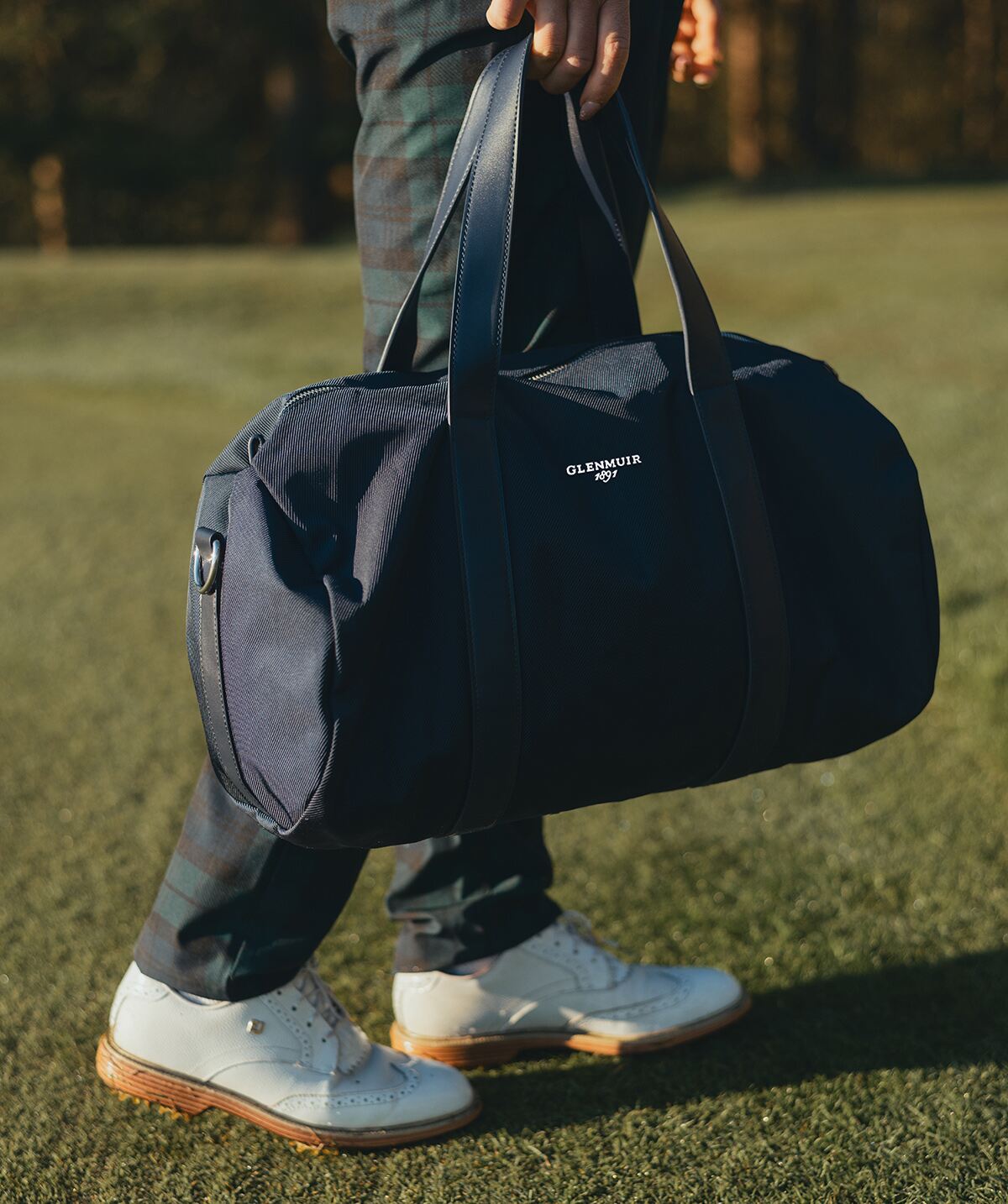
Tartan and check trousers sit in the same category. g.Ross for men and g.Kaley for ladies are the reliable options, and both benefit from being the only pattern in the outfit.
Conversational prints are where golf clothing most often goes wrong. Animals, plants, novelty motifs and anything with a joke in it will date faster than the garment wears out. The useful test is whether it would pass without comment at a traditional Scottish club. If there is any hesitation in answering, the answer is no.
Small touches
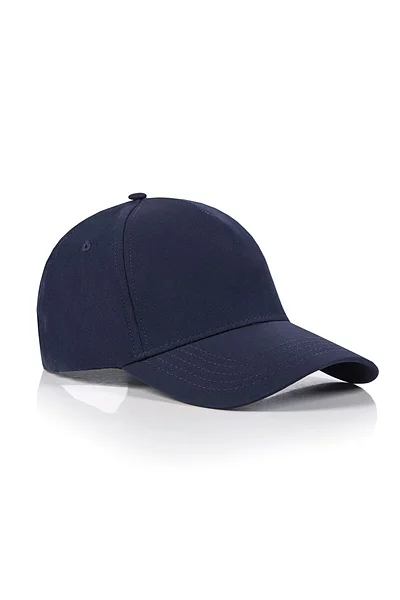
A wardrobe refresh does not require a new outfit. A g.Cowan cap in a lighter shade changes the balance of an existing combination for very little. Silver lurex tipping and diamante detailing on the ladies range do the same job at collar and cuff, where the eye actually goes.
These are the cheapest interventions available and usually the most effective, because they change the accent without disturbing the anchor.