 2026 Platinum
Table of Contents
- The drive to Hilton Head
- Pete Dye’s first masterpiece
- The round
- The bunkers, and the Spanish moss
- The Heritage Plaid
- Beyond the round
- The halfway house
- Sea Pines life
- The verdict
- What to wear
The drive to Hilton Head
My late grandmother and grandfather had played Harbour Town years before and spoken of it with great admiration ever since, which gave this trip its own quiet sense of occasion.
You fly into Charlotte and you drive south. The journey takes around four hours by road, with a Wendy’s stop somewhere around the South Carolina border, and the last hour is the part that earns the trip. The plantations, the private estates, the long avenues of live oaks hung with Spanish moss. By the time you cross the Cross Island Parkway onto Hilton Head, the air is warm in a way that reminds you of Barbados or the Bahamas rather than the South Carolina mainland.
Hilton Head Island takes its name from Captain William Hilton, an English sea captain who explored the area in 1663. The island has somewhere in the region of seventy-five courses within a twenty-mile radius. The destination among them, the one with the lighthouse on the eighteenth green and the tartan tradition, is Harbour Town Golf Links, on the southern tip of the island within Sea Pines Resort.
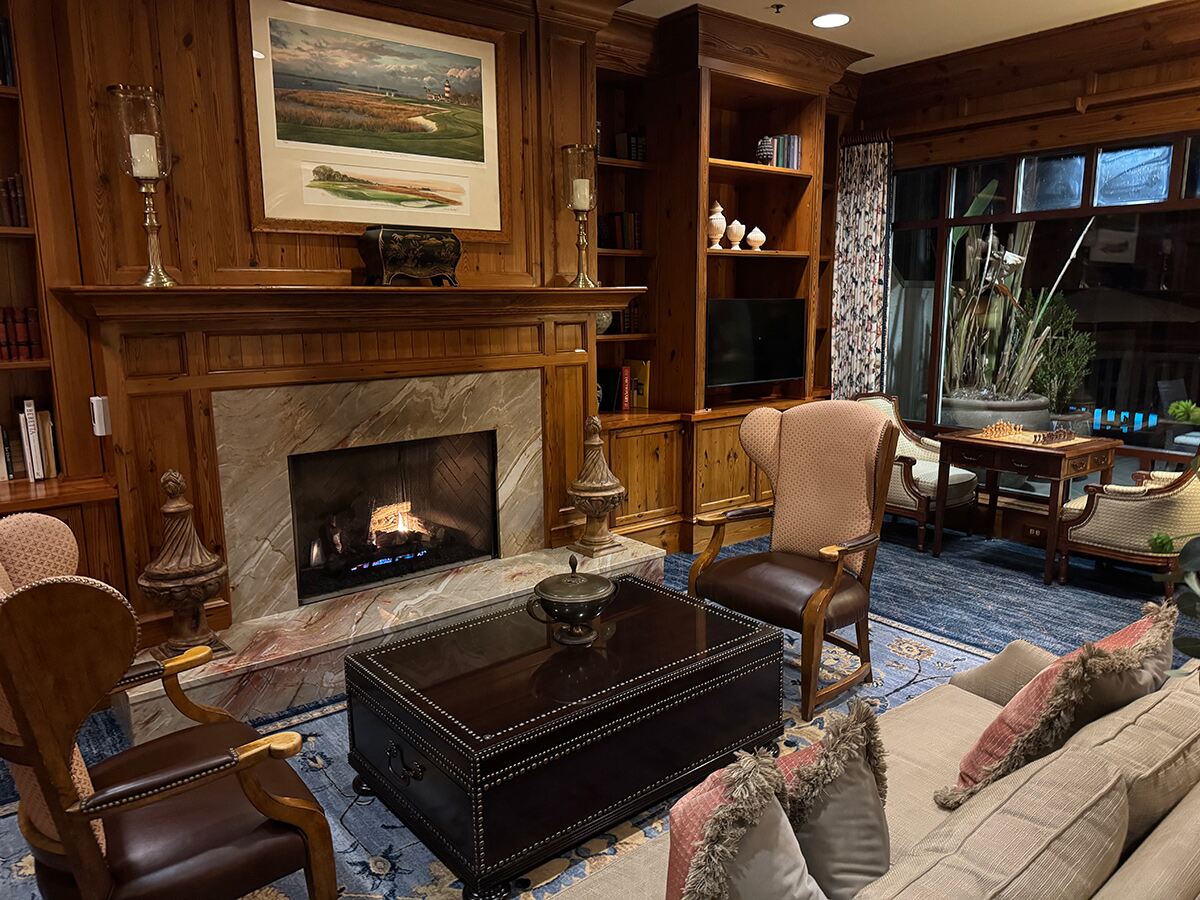
We stayed at The Inn & Club at Harbour Town, a Forbes Four-Star property that does old-school heritage at its most committed. Wood panelling, dark green walls, cream armchairs, the kind of lobby where you sink into a chair with a drink and immediately understand the rhythm of the place. The walk from the hotel to the first tee takes a few minutes.
Pete Dye’s first masterpiece
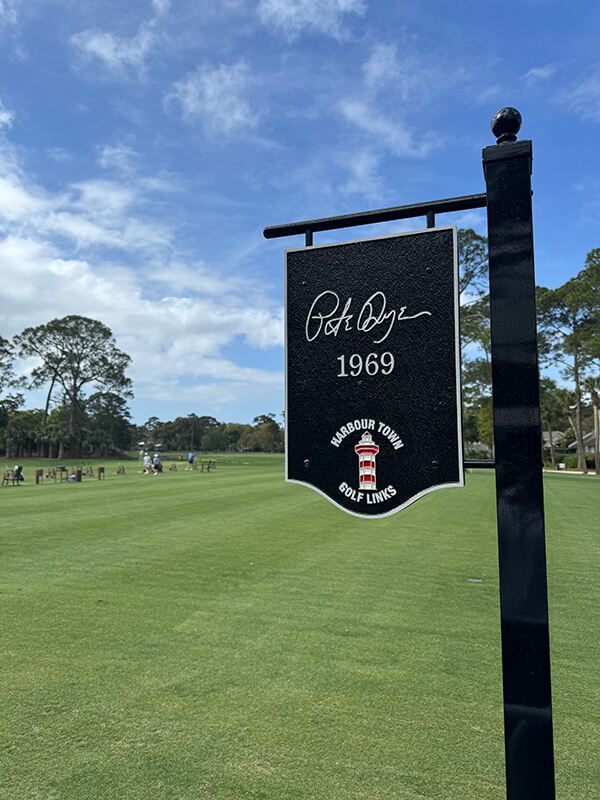
Harbour Town opened in November 1969. Construction began in July 1968 and the build took fourteen months. The course hosted its first PGA Tour event on schedule that November, the inaugural Heritage Classic, which Arnold Palmer won at the age of forty, ending a fourteen-month winless drought. That detail alone helped establish the course in the American golf imagination.
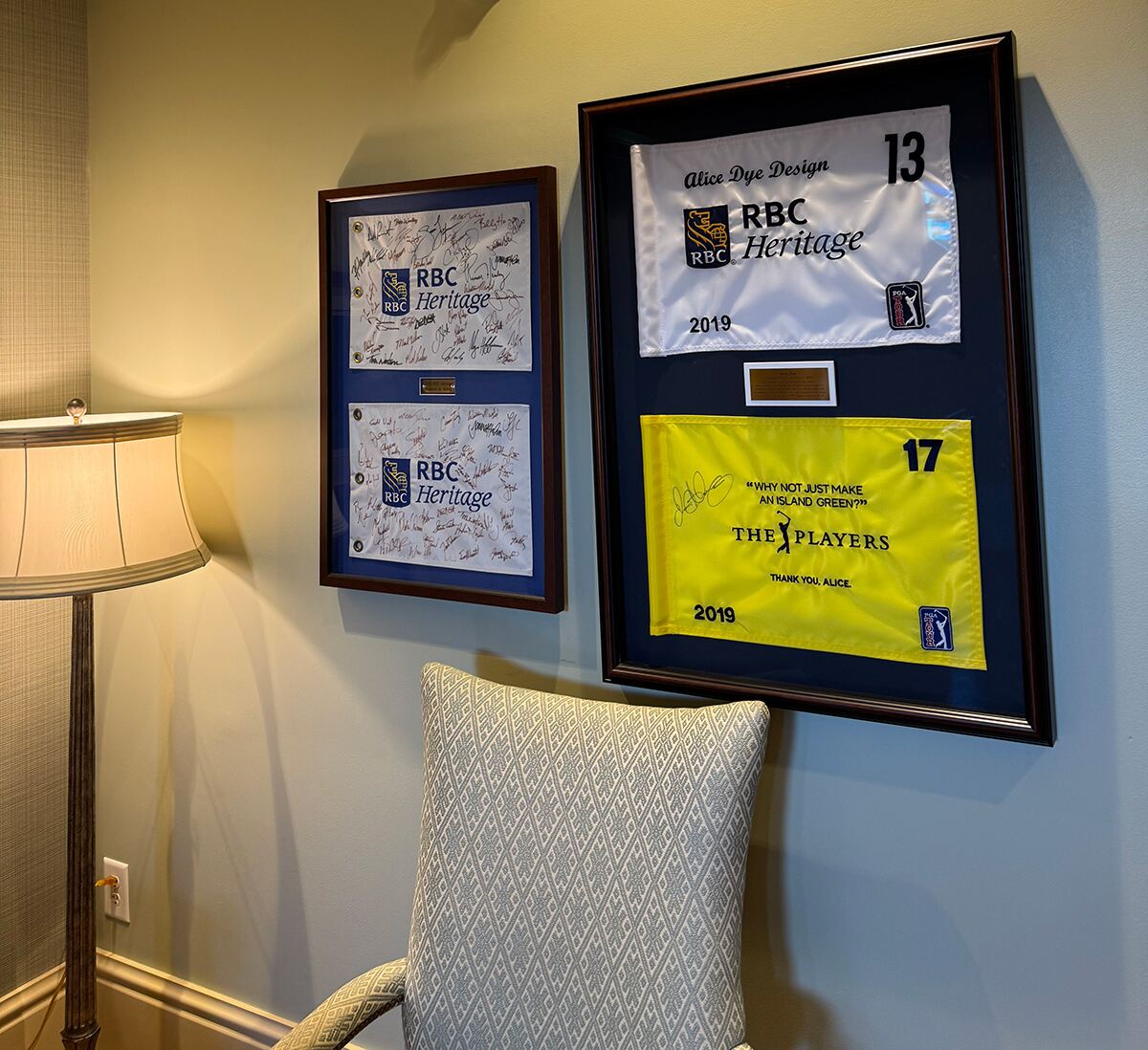
The design credit officially belongs to Pete Dye with Jack Nicklaus listed as design consultant. The truth is a more collaborative arrangement. Nicklaus made twenty-three visits during construction. Dye later wrote about how Nicklaus’s involvement gave him confidence in the design choices he was making. Alice Dye, Pete’s wife and a fine player in her own right, designed the wraparound bunker and elevated green at the par-four thirteenth. George Cobb had drawn an original routing for the first sixteen holes which Dye largely accepted, then deviated toward the water for the dramatic coastal finish that runs from sixteen through eighteen.
 |
 |
The reason this matters is that Harbour Town was a course unlike anything else on the Tour in 1969. Most American courses of that period were 7,000-yard tests of strength with large rolling greens. Harbour Town opened at 6,655 yards with greens averaging 3,700 square feet, around half the size of the typical tour green of the era. Charles Fraser, the developer of Sea Pines, had wanted something distinctive. Dye gave him something that, more than fifty years later, still feels like its own argument.
Davis Love III, a five-time Heritage champion, led the 2025 restoration with his Love Golf Design team. The work preserved Dye’s strategic identity, rebuilt all green complexes, bunkers and bulkheads, and updated the agronomics. When we played, the course was in superb condition. Two weeks before the RBC Heritage, with the staff already preparing for tournament week.
The round
Most visitors at Harbour Town take a buggy. We were encouraged by the pro to walk, and we did. It is a lovely walk and the course is a better experience on foot. Four hours and ten minutes for the round, comfortable pace, no rush. The driving range and the chipping greens are first class. Pro V1s on the range. A patient gentleman cleans your clubs of range scuffs after you have hit balls. The pre-round care is part of the experience here.
The wind that day was around thirty miles an hour, which sits a touch above average for Harbour Town. The first thing the wind teaches you is that this is not a course where you can stand on a tee and trust the yardage on the card. The course exposes weaknesses, and the first one it goes after is whether you can see shots in three dimensions. The fairways are narrow. The overhanging live oaks force you to plan whether you need a low draw or a low fade to get out from under a branch before you have even thought about the second shot. The pros score very well when there is no wind. When the wind is up they struggle. You feel both ends of that on the same day if you are lucky.
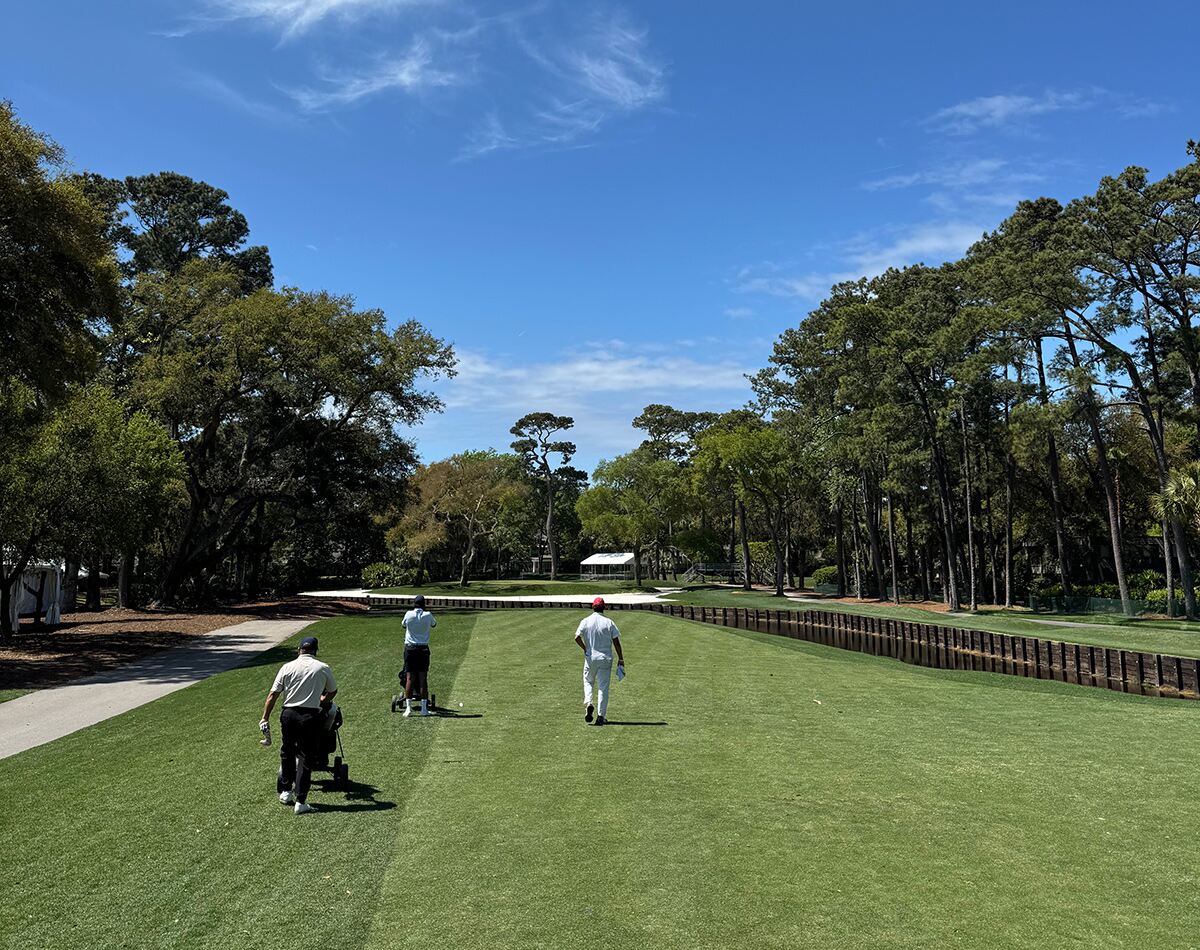
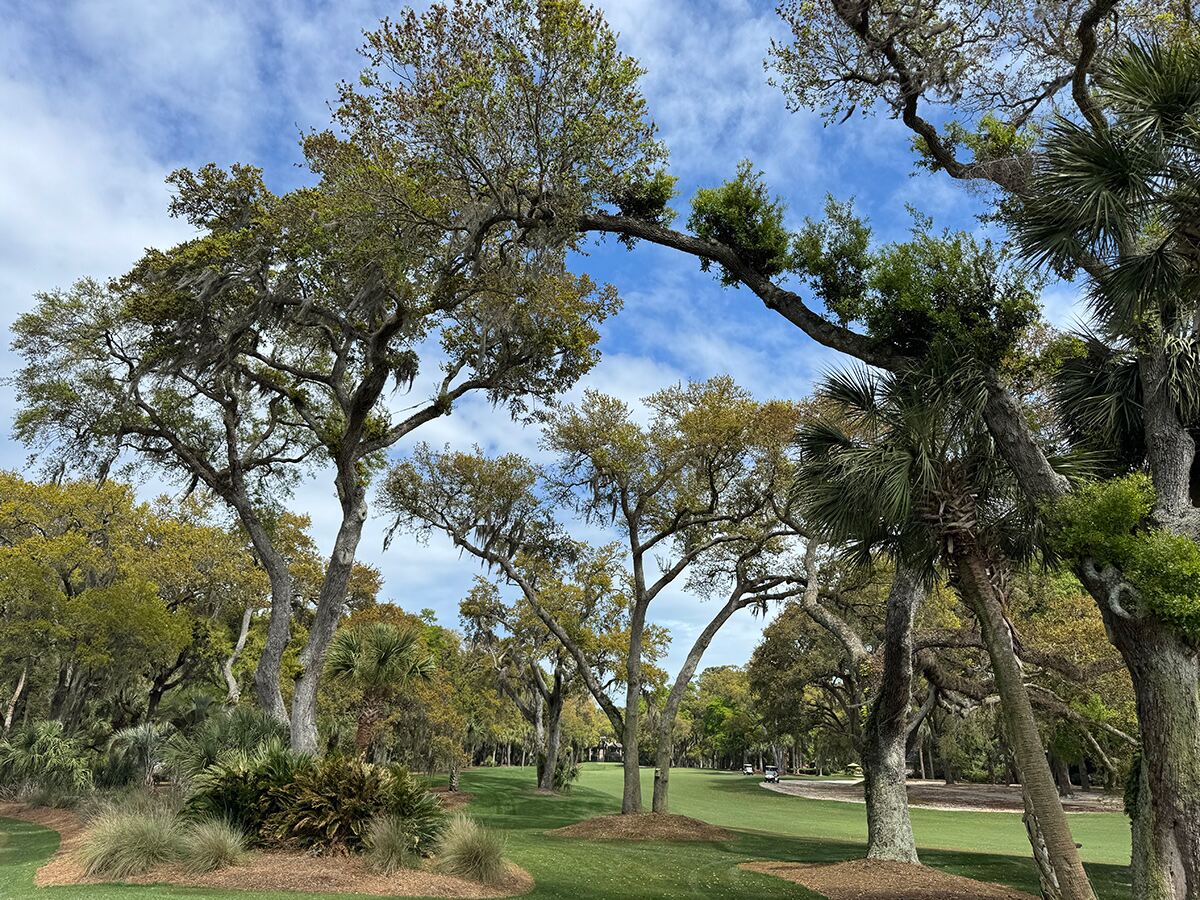
The trees are the central character. The course reminded me of Valderrama in that respect, where the cork oaks dictate the angles much more than the bunkers or the green shapes. Position is everything. There are holes where you actively want to leave yourself short rather than long, because being closer to the green takes you under a low branch and being further away leaves you blocked. Target golf in the truest sense. Grip-it-and-rip-it doesn’t reward you here. It punishes you.
The greens are small and firm, with Bermuda grass that you have to read for grain as well as line. They average 3,700 square feet, which is roughly half the size of the average PGA Tour green at 6,600 square feet. The margin for error on an approach is correspondingly small. Several holes have a tiny landing area between green and water hazard. Fourteen, seventeen and eighteen are the most exposed.
The bunkers, and the Spanish moss
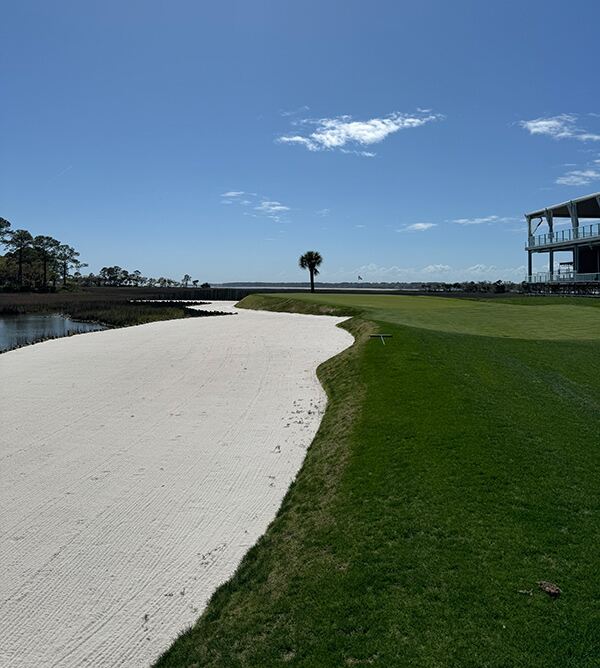
Two pieces of local knowledge that the course doesn’t tell you but the caddies will. The first concerns the bunkers. Some of them are waste areas, where you can ground your club and take practice swings. Others are formal bunkers, where you cannot. The way you tell the difference at Harbour Town is the simplest possible: if there is a rake by the bunker, it is a formal bunker. If there is no rake, it is a waste area. Look before you walk in.
The second piece of local knowledge concerns the wind, which at Harbour Town swirls because the tree canopy interrupts it. The flags tell you one thing and the clouds tell you another. The caddies look up at the Spanish moss hanging from the live oaks. Spanish moss is light, sensitive, and at the same height as your ball will be at the apex of its flight. If you watch it carefully it tells you what the wind is doing where your ball is going to be, not what the wind is doing on the ground. It is the kind of detail that lifts the local caddie above the visiting golfer by twenty yards on every approach shot.
 |
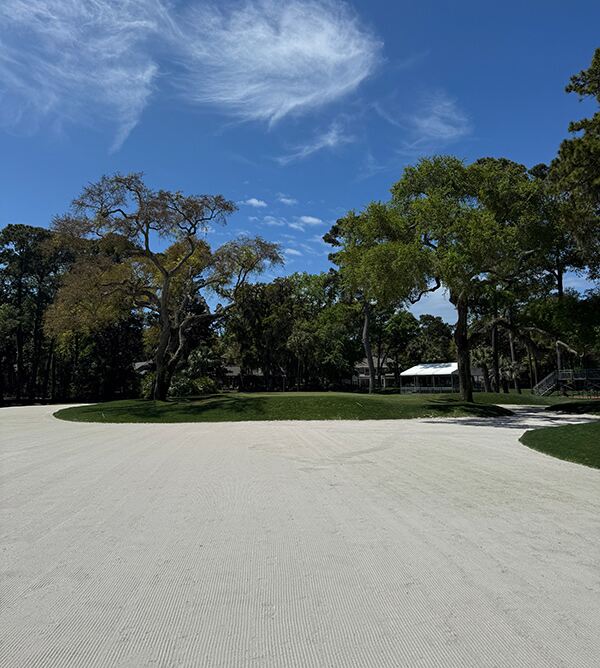 |
A small Scottish nod sits across the course in the form of pot bunkers, placed sporadically across the layout. They are homage to the links tradition, though some of them face away from the green they are nominally guarding, which makes them more aesthetic than strategic. The faces tell you they are there to make the round feel Scottish more than they are there to catch a particular shot.
The Heritage Plaid
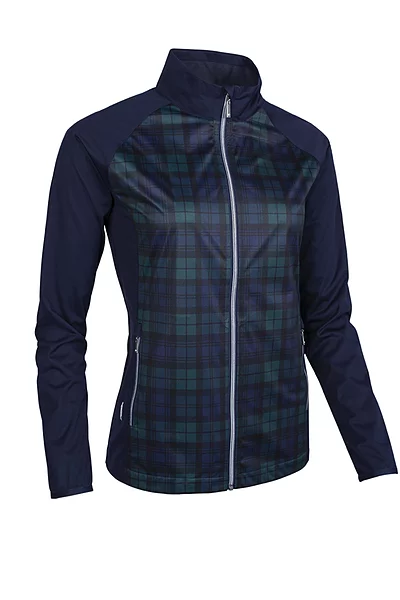
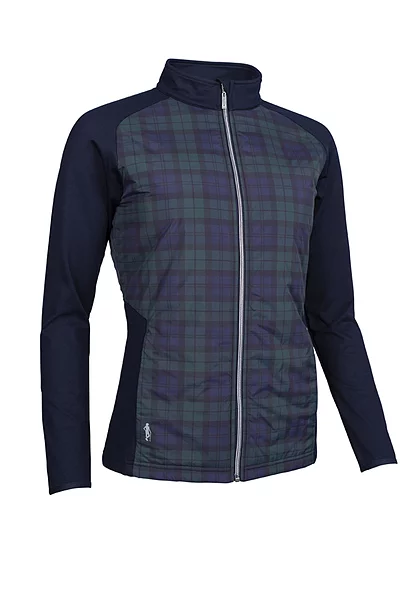
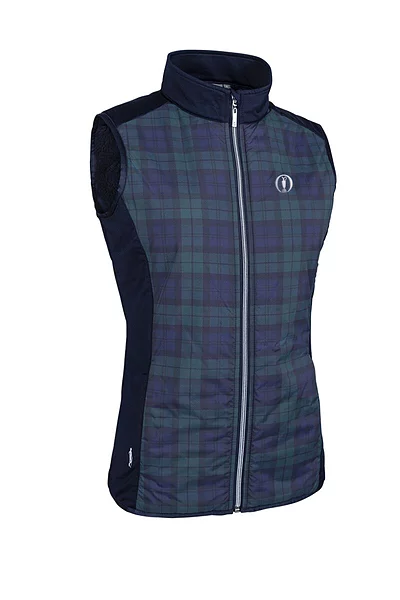
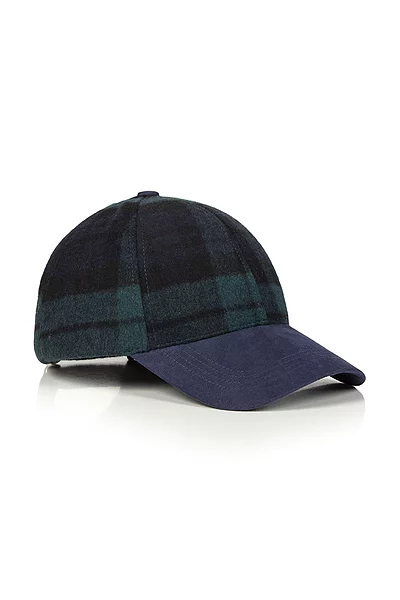
If the pot bunkers are the visual nod to Scotland, the Heritage Plaid is the bigger one. The tartan tradition at Harbour Town began in the early 1970s when Mary Fraser, wife of Sea Pines founder Charles Fraser, wanted the tournament to have a signature pattern rather than a green jacket. She was inspired by a 1790 painting of Sir William Innes wearing tartan and arranged for the Scottish tailor Kinloch Anderson to design a unique plaid specifically for Harbour Town. The pattern was a variation of the Royal Stewart, with the yellow bar removed to make it the property of the tournament rather than the clan.
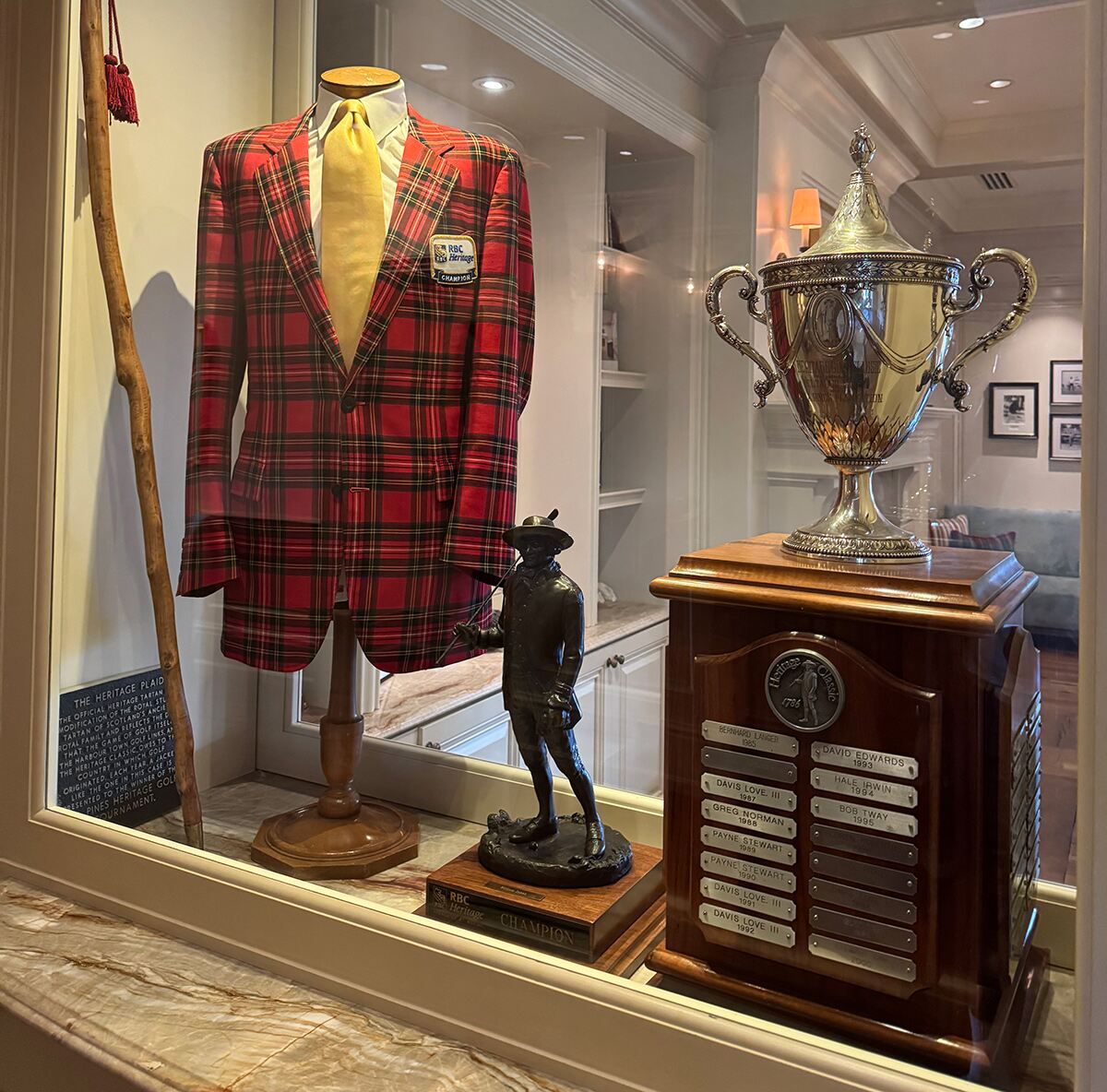
The winner of the RBC Heritage receives a custom red tartan jacket, hand-made in Scotland to this day. The tournament holds Plaid Nation Day, when spectators are encouraged to wear the pattern. The Harbour Town Lighthouse itself wears a temporary plaid wrap during the tournament week. It is a tradition with conviction, and an unusually direct line back to the Scottish roots of the game for a course in coastal Carolina.
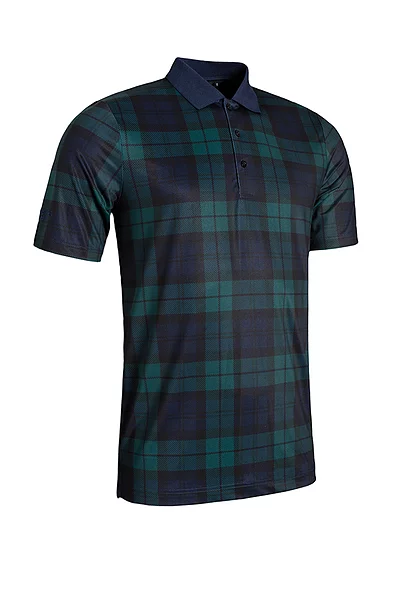
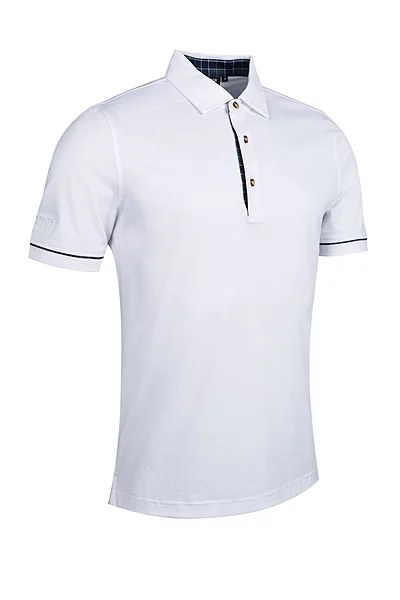
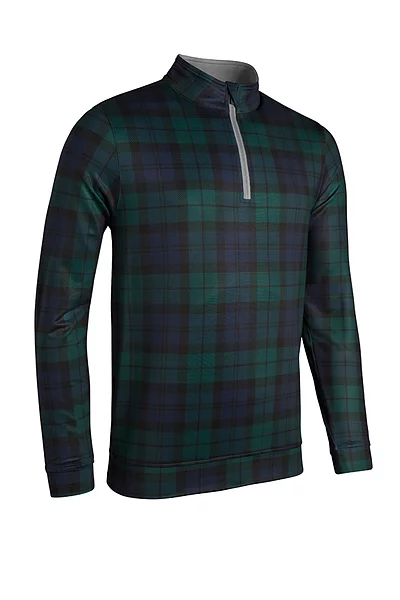
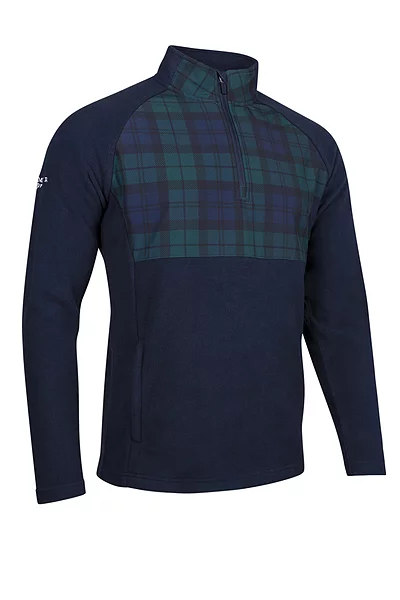
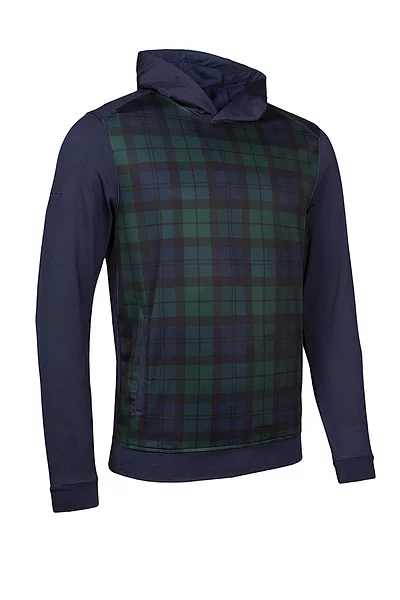
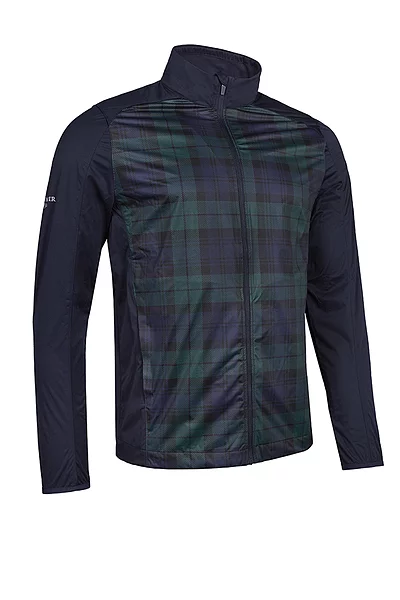
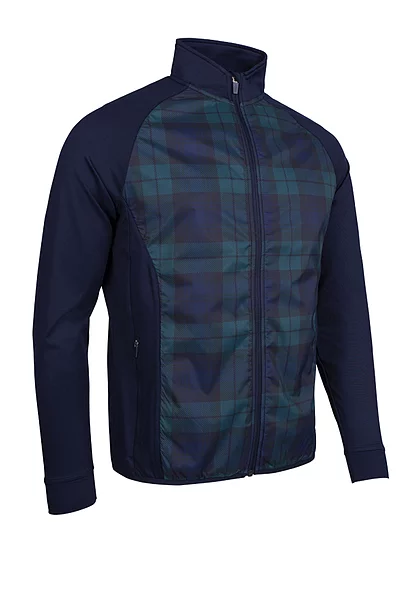
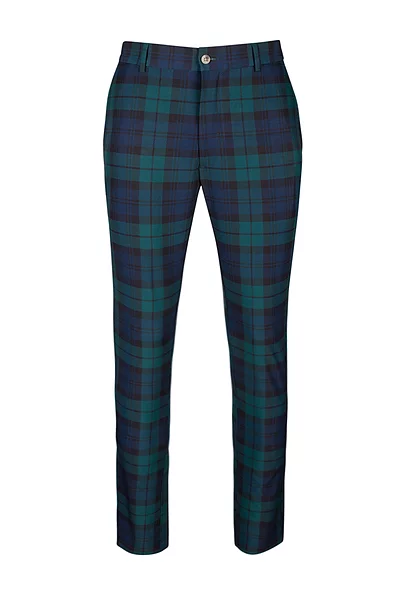
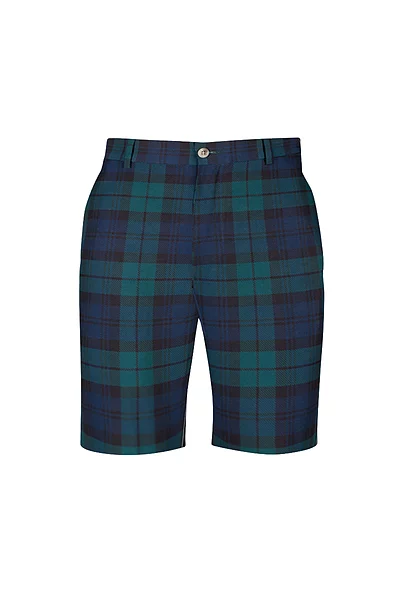
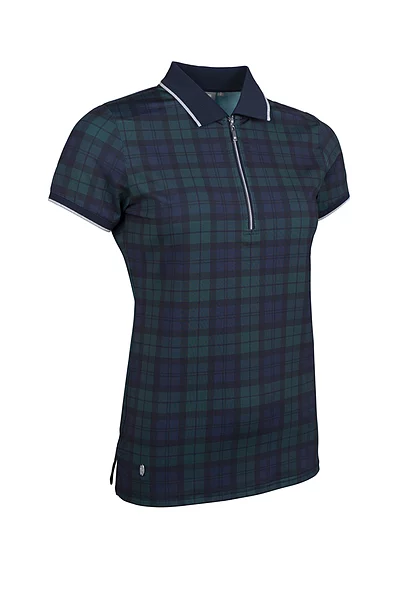
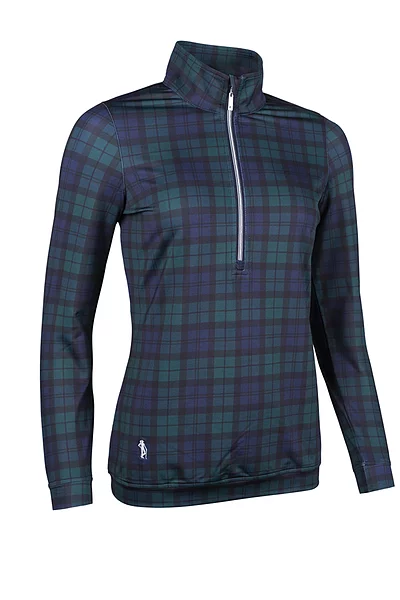
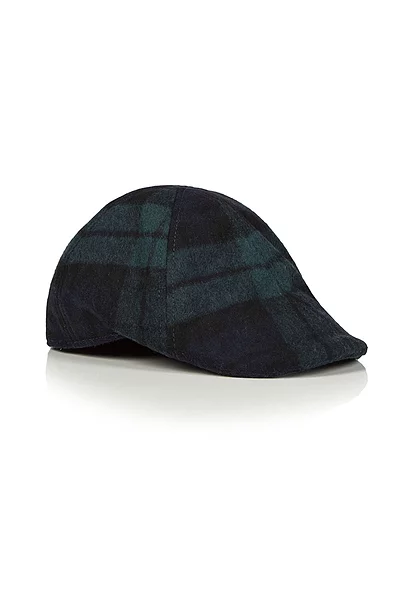
Some of our most popular tartan products are worth a look to make you feel at home at Harbour Town.

Beyond the round
A few things worth knowing about Harbour Town’s economics and the wider Sea Pines world. The course has only 150 members and the membership is capped. The main benefit of being a member is access to two tee times an hour, with the rest of the day reserved for visitors. The visitor green fee was 600 US dollars on the day we played. Member guests pay 250. During Heritage week the on-site retail does around four million US dollars in seven days, which gives you a sense of the commercial footprint of the tournament.
The course maintenance approach is its own small story. Black sand is used to fill divots rather than the more familiar green dye over white sand. During Masters week, when Harbour Town is being readied for the post-Augusta Tour stop, twenty people per hole work on the course tidying it before the players arrive. The result is that you arrive at a course presented at near tournament standard whatever week you turn up.
The kind of more private members’ clubs that Sea Pines locals talk about with quiet pride include Colleton River, where most of the golf scenes for The Legend of Bagger Vance were filmed on the Pete Dye course, the Belfair Club and Berkeley Hall. All three are more manicured than Harbour Town and all three are member-only. If you want the most polished private golf experience in the area, you need to befriend a member.
The halfway house
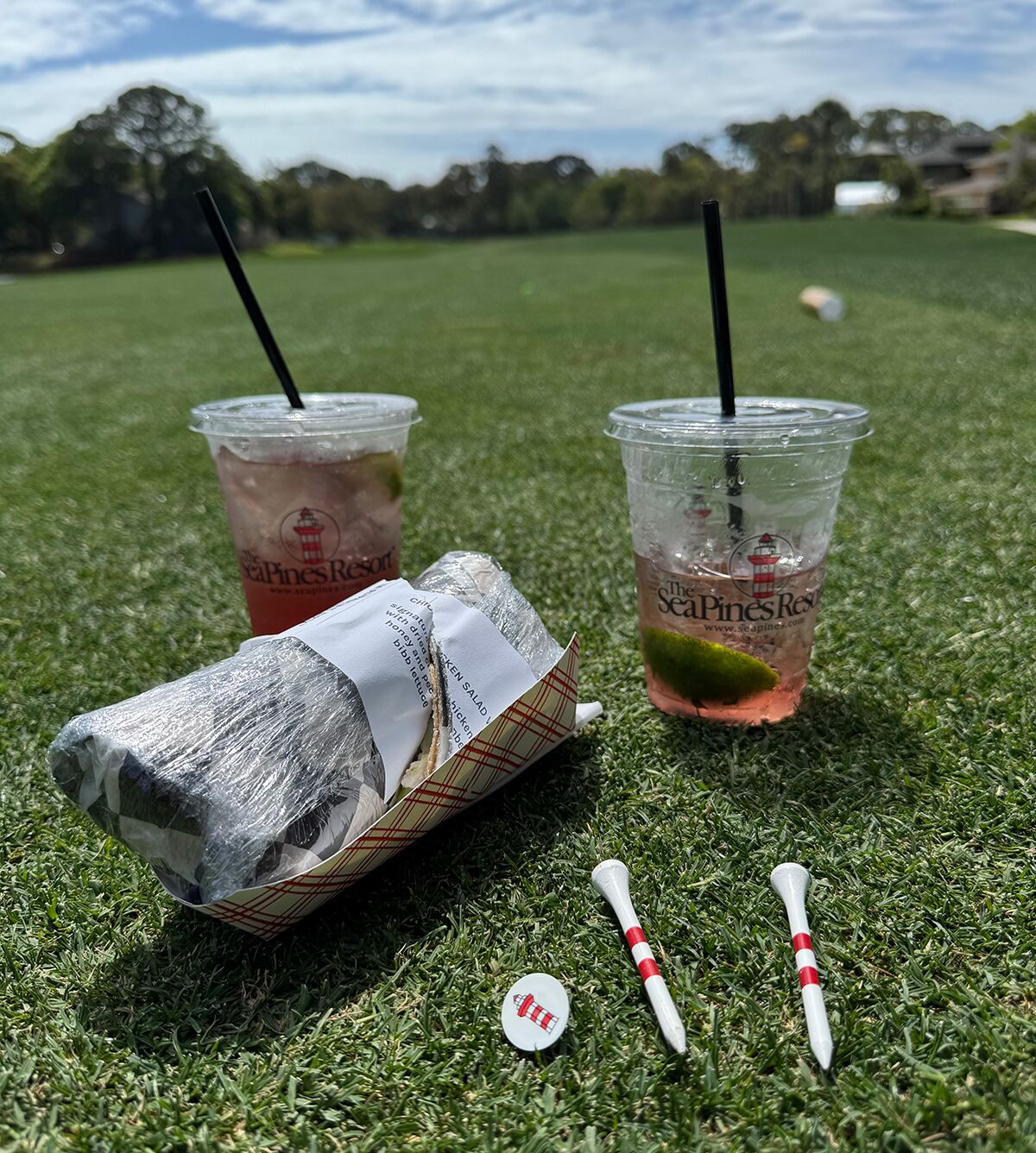
A specific recommendation. Stop at the halfway house. The chicken salad wrap is excellent, considerably better than what you can get back at the clubhouse. The hot dog is the safe option. The drink of choice is the Tito’s Transfusion, a vodka, ginger ale and grape juice mix that is the local Hilton Head answer to a long round in the heat. Sit down for ten minutes. The trees will still be there when you tee off again.
Sea Pines life
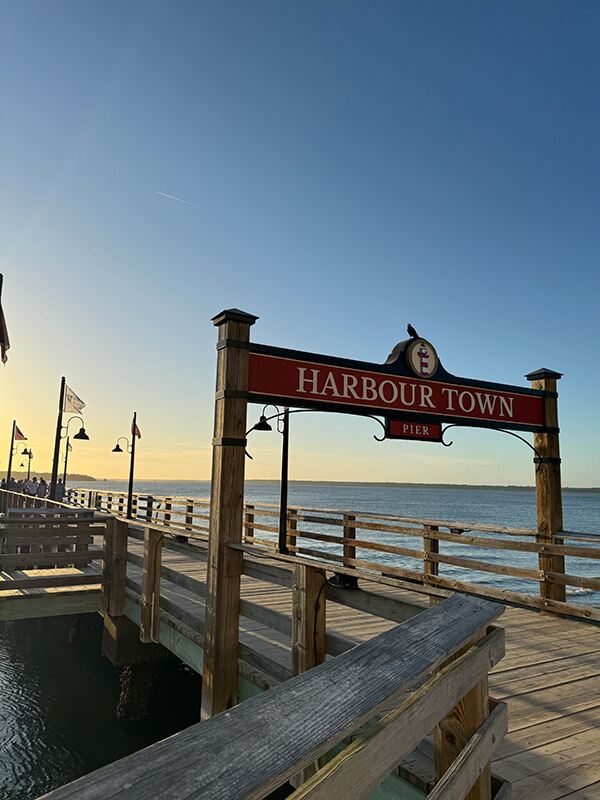
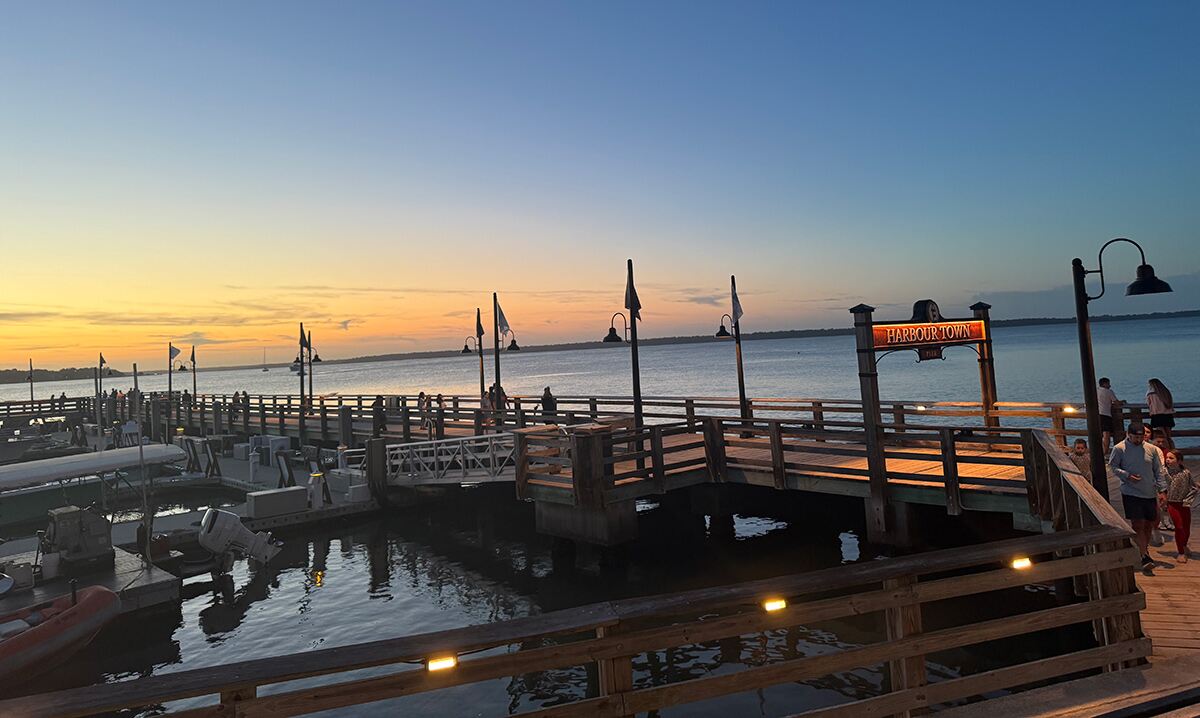
The Inn & Club is around a three-minute walk to the pier. In the evening, the pier is the right place to be. Ice cream, a drink, the option of dipping your feet in the water if you have walked thirty-six holes and the salt does something for them. Live music plays at the pier between four and seven in the evening.
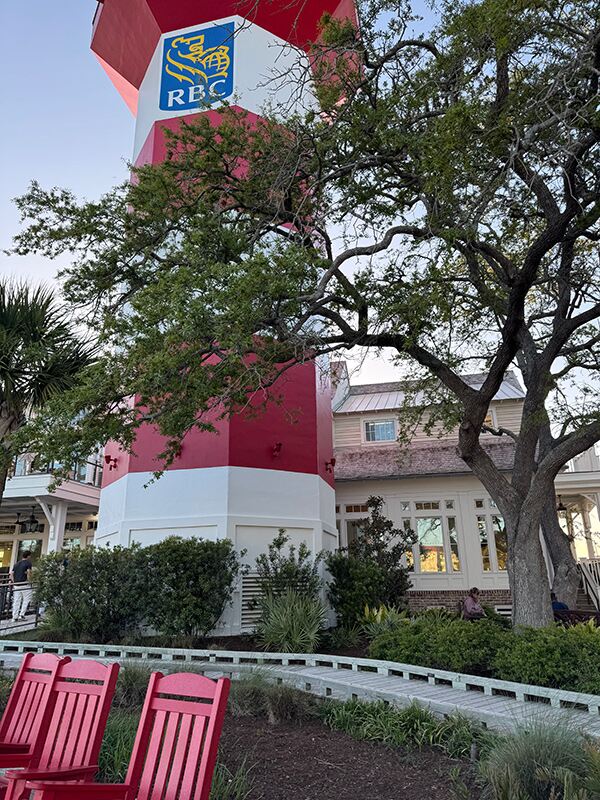
The Harbour Town Lighthouse stands beyond the eighteenth green and you can climb it. The fee is 7.50 US dollars. There is a bookshop inside, a small museum, and the view from the top is best at sunset. For dinner, the Quarter Deck and the Ocean Lounge at the Sea Pines Beach Club both do high-quality food. The cashew-crusted salmon and the jerk chicken are the standout dishes. Ask for your margarita to be made spicy.
 |
 |
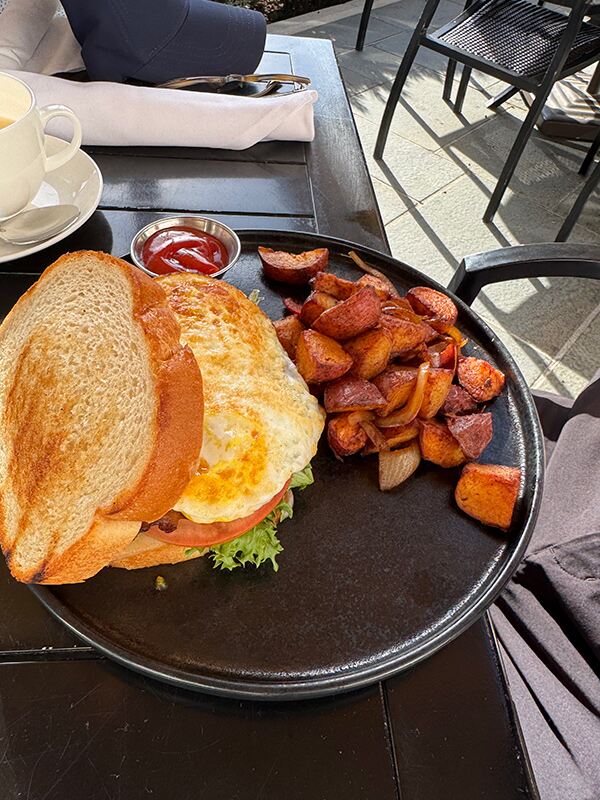
For breakfast at the clubhouse, the porridge is excellent, and the omelettes are well made and generously portioned. You will be asked whether you want home fries, grits or fruit with your eggs. Take the fruit or the home fries. The grits are an acquired taste.
 |
 |
The verdict
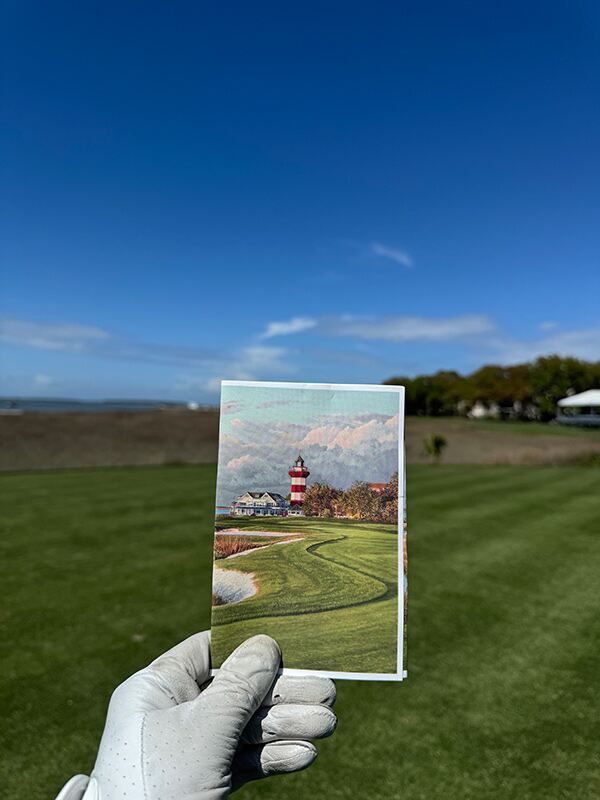
The honest assessment of Harbour Town as a course is mixed in the right way. The practice facilities are excellent. The closing three holes are genuinely memorable, particularly the eighteenth with the lighthouse in view, a hole that came about by happy accident when sand removed during the construction of the harbour was dumped along the coastline and broadened the shore enough for Pete Dye to lay both the par-three seventeenth and the par-four eighteenth right against the water. The four par threes are interesting. The middle of the round is good golf, but it is good golf rather than great.
Harbour Town is a very good neighbourhood course in the best sense of that phrase, set in a remarkable resort, with a tournament history that elevates the round beyond its individual holes. There are more manicured private clubs around Hilton Head if pure polish is what you want. You need to know somebody to play them. Harbour Town is the public destination, and that openness is part of why it matters.
What to wear
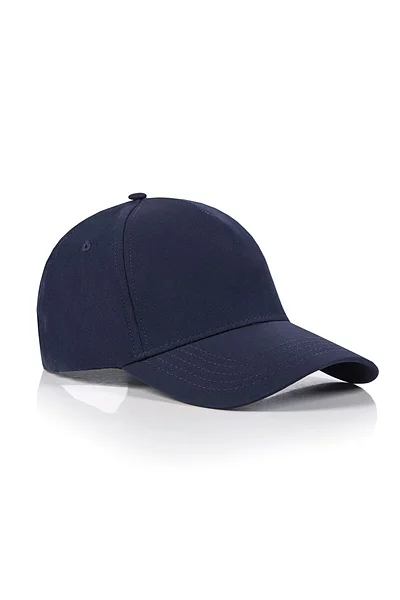
Hilton Head in spring and summer is hot, humid, and windy. The wind is the variable that changes the round, particularly in the afternoon when the breeze picks up off Calibogue Sound. The base is a lightweight performance polo with UV protection. The g.Deacon pique in Light Blue or Tahiti is the right call for the sun. A lightweight performance midlayer for the back nine when the wind is steady is worth the bag space. The g.Wick is built for exactly this. A performance slipover such as the g.Dunnet handles the cooler early tee times without adding heat under a polo. The hat needs to fit snug. The wind here is the same wind that lifts the Spanish moss.