 2026 Platinum
Table of Contents
- What the water-repellent finish actually does
- How to tell the finish needs attention
- Wash it first, and wash it correctly
- Drying, and the mistake nearly everyone makes
- When a full reproof is due
- The rest of the bag
- Looking after the guarantee
Halfway down the tenth, in steady rain, the sleeve stops beading. Water that had been running off the forearm now spreads across the fabric and darkens it. Twenty minutes later the shell feels cold and heavy against the arm, even though nothing has leaked and the golfer underneath is still perfectly dry.
That is the point at which most people decide the jacket has given up. Usually, the membrane is doing precisely what it did on the first wet round. The change has happened on the outside, on a surface finish measured in microns, and restoring it is an afternoon at home rather than a reason to start shopping.
What the water-repellent finish actually does
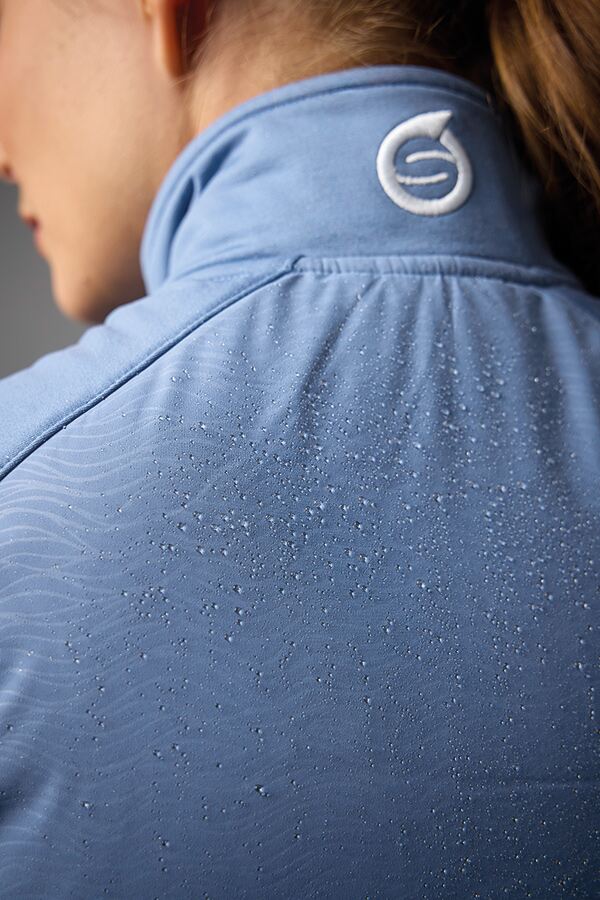
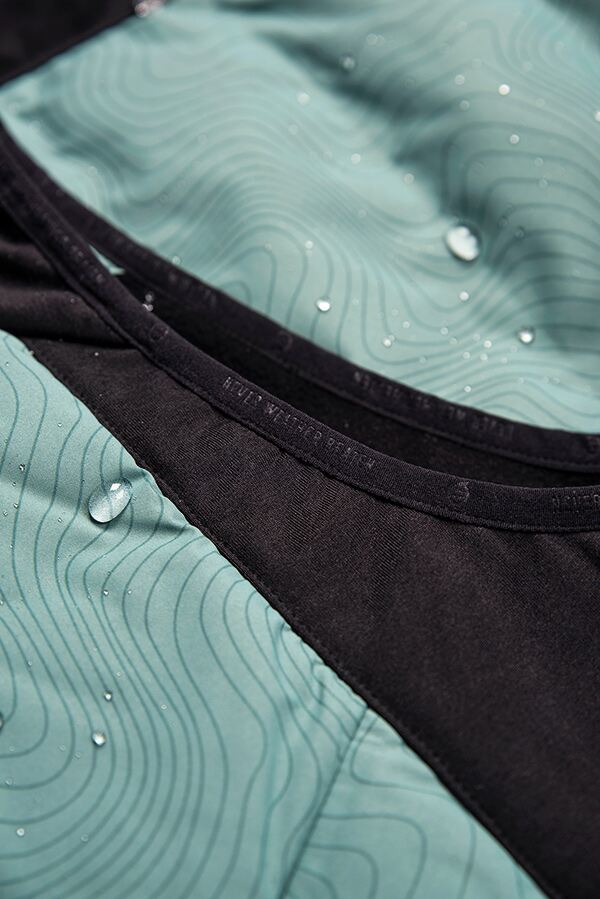
A modern golf waterproof works in two parts. Underneath sits the laminate backing, which stops water passing through and is the reason sealed seams matter as much as the fabric itself. On the outer face sits the water-repellent finish (or DWR which stands for durable water repellent finish , which makes rain gather into beads and roll away before it can soak into the shell.
Sunderland’s outer layer is an ultra-lightweight recycled fabric treated with Bionic Finish ECO, a fluorine-free, plant-based finish that repels water, wind, soil and stains. It contains no PFAS. A technology developed from nature, the way lily pads repel water.
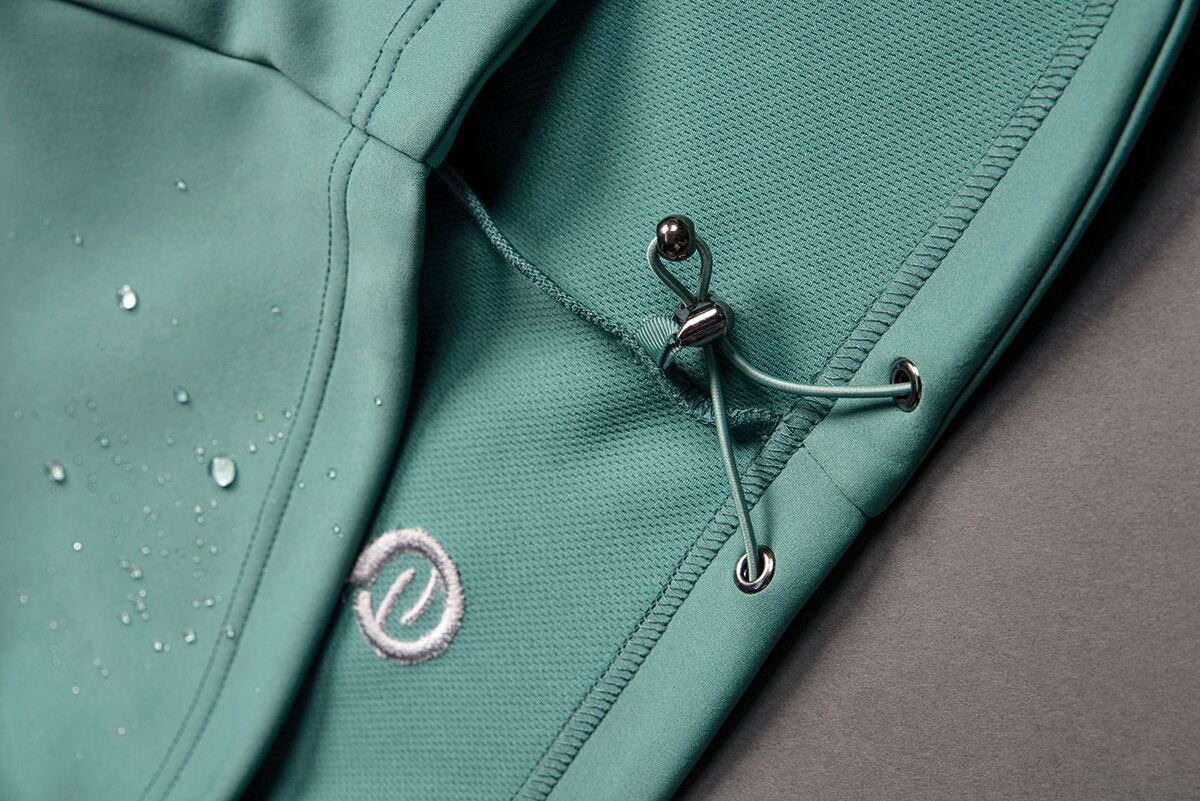
The fabric is backed by a poly urethane backing which not only keeps the water out, but also has microscopic perforations, and as sweat molecules are smaller than water molecules, the jacket is able to breathe sweat out whilst not allowing the rain in.
This is further reinforced with mesh lining moves vapour from the inside out by diffusion, which is what stops a golfer boiling inside a sealed jacket on a mild wet morning.
The finish sits on the surface, which is exactly why it needs attention. Body oils from the neck and wrists, sun cream, dried sweat, grass and the slow grind of a bag strap across one shoulder can all compromise the water-repellent finish. It is the same reason a car stops shedding rain a few months after its last coat of wax.
 |
 |
How to tell the finish needs attention
Watch the fabric, not the feeling of dryness underneath. That is the whole test.
Wetting out is the term for what happens when the water-repellent finish has been contaminated or worn down. Rather than forming beads, rain spreads across the outer face and darkens it in patches, usually starting at the shoulders and forearms where wear and weather concentrate. The membrane can still be keeping the wearer completely dry while this is happening, which is why so many golfers miss the warning until the following season.
The later sign is weight. A shell that feels cold and heavy after twenty minutes of steady rain is holding water it ought to be shedding, and a jacket carrying water breathes far less efficiently too, because saturated fabric blocks the vapour transfer.
Wash it first, and wash it correctly
The most expensive myth in wet-weather kit is that a waterproof should be washed as rarely as possible. Dirt and body oils are precisely what block the finish, so leaving them in place guarantees the jacket keeps wetting out.
Washing is the first step of reproofing rather than a separate job, and how it is done matters as much as whether it is done at all. Sunderland’s care instructions are printed on the sewn-in label of every garment, and they are specific:
- Machine wash cool, at 30 degrees
- Minimum agitation and a short spin
- Never hand wring
- No bleach and no biological detergents
- No fabric softener or conditioner
- No dry cleaning
- Wash with like colours
Fabric softener is the worst offender on that list. It is designed to coat fibres and leave them feeling soft, which is the precise opposite of what a repellent surface needs, and one wash with softener can undo a jacket that was otherwise performing well. Biological detergents are ruled out for a related reason. The enzymes that make them effective on ordinary laundry are not what a laminated technical shell wants sitting against it.
Use a technical, non-detergent cleaner made for waterproof and breathable fabrics. Before the garment goes anywhere near the drum, empty the pockets, close every zip and fasten the velcro cuffs, since open velcro will rub up against the face fabric for the length of the cycle. Run a second rinse if the machine allows it.
Drying, and the mistake nearly everyone makes
This is where general advice found online goes wrong for Sunderland garments in particular. Most reproofing guides tell golfers to reactivate the finish with a warm tumble dry. Sunderland waterproofs must not be tumble dried, and the care label is unambiguous on the point.
Nor should they go on a radiator, which is the standard clubhouse solution and does more harm than any wet weekend. Dry flat, away from direct heat. Reshape the garment while it is still damp, and let it air dry completely before it is folded away, because a jacket packed damp will pick up odour and mildew in the bottom of a bag long before its finish gives out.
Heat still has a part to play, in a gentler form. Even, moderate warmth realigns the molecules of the repellent finish so they stand upright and shed water again rather than lying flat from wear and washing. For Sunderland garments that means a cool iron, always with a cotton pressing cloth between iron and fabric, no steam, and the iron kept moving. A jacket that has stopped beading will often come out of one wash and one careful press performing close to how it did when new, with no reproofing product involved at all.
When a full reproof is due
If cleaning and a cool press do not bring the beading back, some of the finish has worn away rather than merely lying flat, and heat has nothing left to reactivate. That is the signal to reproof.
Two options. A wash-in treatment goes through the machine with the garment and coats every panel and seam evenly, which suits a jacket due a full refresh after several seasons. A spray-on treatment is applied by hand to clean, damp fabric and gives more control over the areas that wear fastest: shoulders, forearms, the back of the collar and the cuffs.
Two things are worth checking on the bottle. Choose a fluorine-free formulation, which keeps the garment consistent with the Bionic Finish ECO it left the factory with. Then check that the treatment does not rely on tumble drying to cure. Nikwax TX.Direct Wash-In and Grangers Performance Repel Plus are both fluorine-free and do not require tumble drying to cure.
Frequency is better judged by the fabric than by a calendar. A golfer playing through a Scottish winter every week will need a full treatment far sooner than one who reaches for waterproofs half a dozen times a year. Beading is the honest measure. Once a wash and a press stop restoring it, the treatment is due.
The rest of the bag
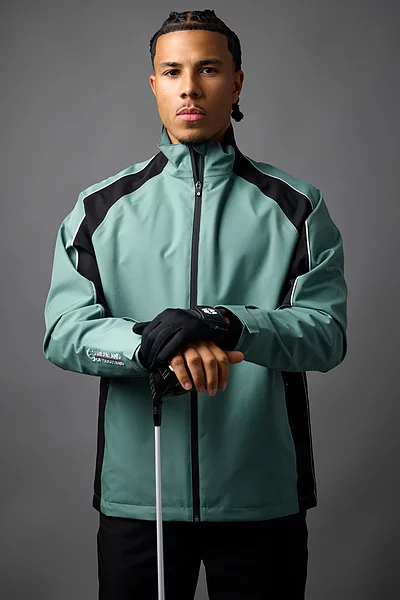
Waterproof trousers wear in different places from a jacket. The knees and the seat take ground moisture, kneeling on wet grass to read a line and constant friction from a buggy seat or a bag strap, so those are the panels to check first when judging whether a reproof is due. The construction is the same technology, which is why the wash, dry and press routine is identical for a Quebec trouser and a Typhoon jacket.
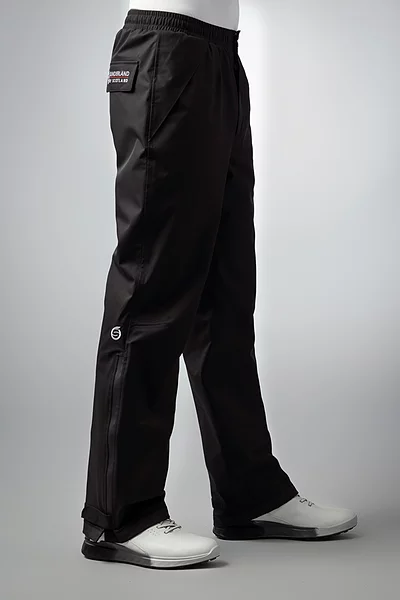
Sort your golf outerwear into two piles before anything goes in the machine. Waterproof jackets on one side, performance midlayers and padded jackets and gilets on the other. A wash-in waterproofing treatment does nothing useful for a midlayer and will interfere with its breathability.
One habit is worth adopting after a round in particular: rinse the zips. Salt and fine sand work their way into the teeth of a waterproof zip, and a zip that has seized or lost its seal will let rain in long before the fabric does. The same applies to the velcro cuffs, which collect grass and jumper fibres and stop gripping properly. Pick them clean with tweezers.
Looking after the guarantee
Sunderland garments carry a lifetime waterproof guarantee, which is a claim a maker can only put its name to when it knows the fabric will keep performing if it is looked after. The guarantee sits behind proper care rather than in place of it.
Think of the routine the way one thinks of regripping a set of clubs. It is maintenance on kit already paid for, and golfers who skip it tend to buy a replacement years earlier than they needed to.
A Typhoon washed cool, dried flat and pressed through a tea towel twice a winter will still be beading rain in its eighth season. One left balled at the bottom of a golf bag since the spring medal will be lucky to see its third.