 2026 Platinum
Table of Contents
- The short answer
- What golf clubs check, and what they turn away
- Golf shirts
- Trousers, skorts and golf dresses
- Knitwear
- Layering for a British golf year
- Shoes, gloves and the finishing pieces
- Dressing for a first round
The short answer
A women's golf outfit at a UK club comes down to three things: a collared or smart technical top, tailored bottoms (golf trousers, a skort or a golf dress) and golf shoes with soft spikes or a spikeless sole. Colour, cut and pattern are a matter of personal taste. Denim, gym wear and beachwear are the items most likely to be sent back to the car.
Beyond those essentials, what separates a comfortable round from a miserable one is layering. British weather can run through three seasons before the turn, and the golfer who has thought about the midlayer and the shell will be enjoying the back nine while others are counting down the holes.
What golf clubs check, and what they turn away
Dress codes exist for two reasons: to protect the course and to keep a certain atmosphere in the clubhouse. The first explains the rule on shoes, since metal spikes and flat trainers both damage greens in different ways. The second explains the rest. There is no single national code, and the finer points vary from club to club, but the pattern across the UK is consistent enough to summarise.
|
Accepted almost everywhere |
Accepted at many clubs (check first) |
Refused at most clubs |
|
Collared polo shirts |
Roll-neck and mock-neck performance tops |
Round-neck T-shirts |
|
Tailored golf trousers and pedal pushers |
Sleeveless shirts with a collar |
Denim of any colour or cut |
|
Golf skorts and golf dresses |
Leggings worn under a skort |
Leggings worn on their own |
|
Tailored shorts to around knee length |
Plain trainers at a driving range or pay-and-play course |
Gym, running or beachwear |
|
Soft-spike or spikeless golf shoes |
Hoods on midlayers and jackets |
Metal spikes |
Two things catch visitors out more than anything in that table. The first is that many clubs run a second, stricter code for the clubhouse itself. Golf shoes are often banned beyond the changing room, and a handful of older clubs still expect smart dress in the dining room after a round. The second is that a club's code is usually published on its website, and a two-minute look before a first visit saves an awkward conversation at the pro shop. When in doubt, ring the professional. They answer the question every week and would far rather do it by phone than on the first tee.
Golf shirts
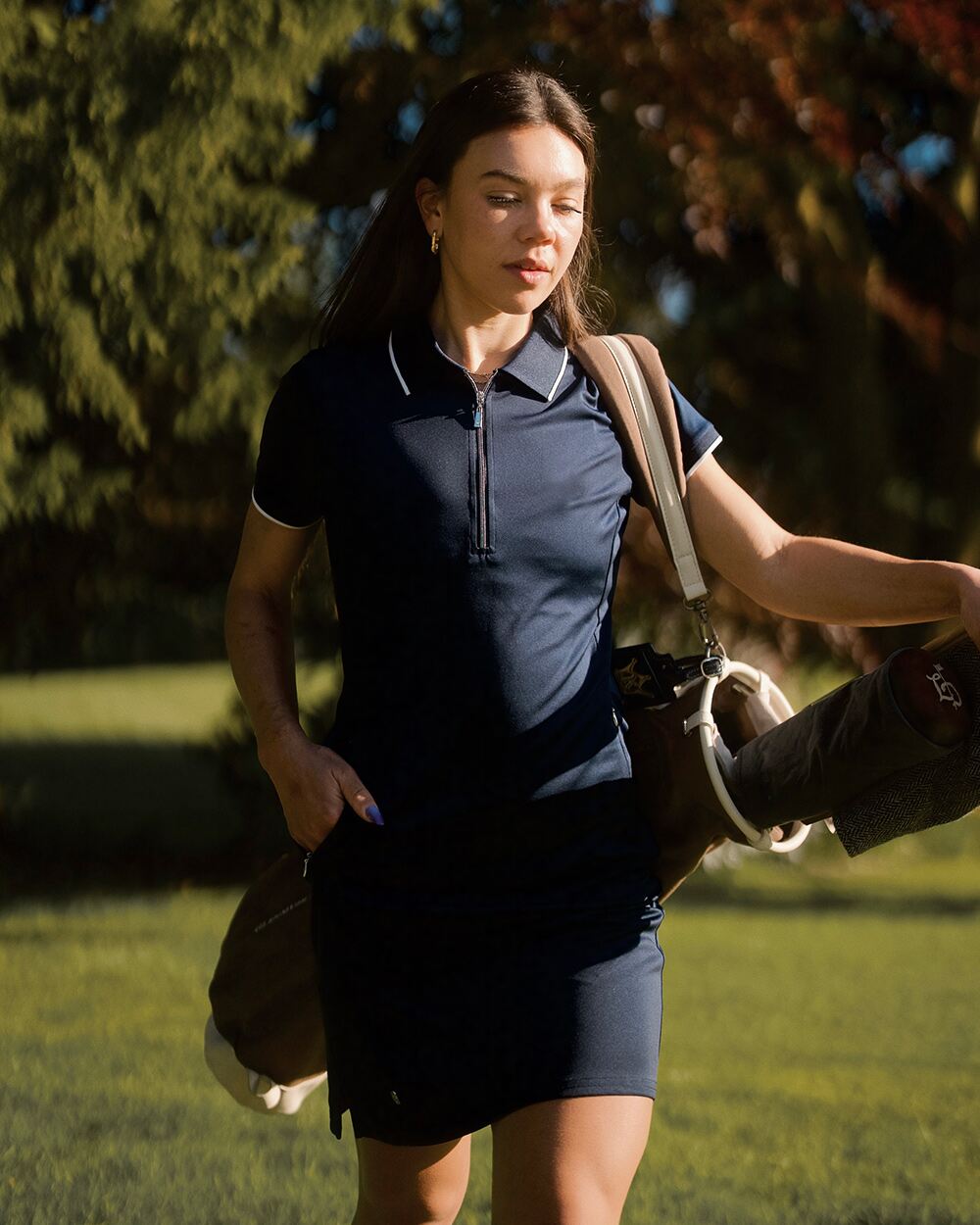
The collared polo remains the safest choice in golf, and the fabric matters more than it first appears. Performance pique wicks moisture away from the skin and dries quickly; cotton pique feels softer and breathes well but holds on to damp for longer. On a warm summer day, performance fabric earns its place by the fourth hole. On a cool morning, cotton is the more comfortable option under a sweater.
The g.Paloma performance pique polo is the standard bearer in Glenmuir's ladies' range, with the g.Sophie offering the same shape in cotton pique. For cooler starts, the long-sleeve g.Misha adds cover without adding bulk, while the g.Fern roll neck is a sensible winter base under knitwear. Roll necks are accepted at a growing number of clubs, though not yet all of them, so check before relying on one. The same applies to sleeveless shirts such as the g.Jenna: welcomed at many clubs and still frowned upon at a few.
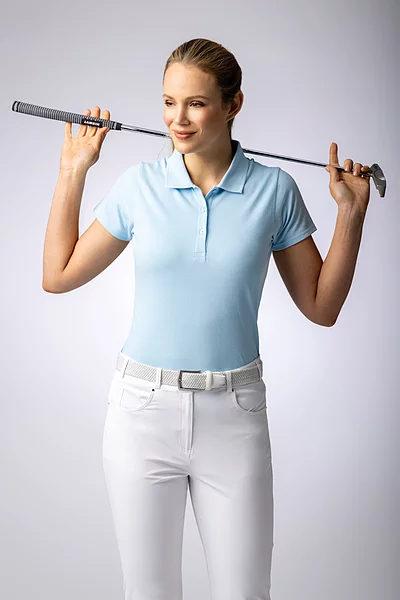
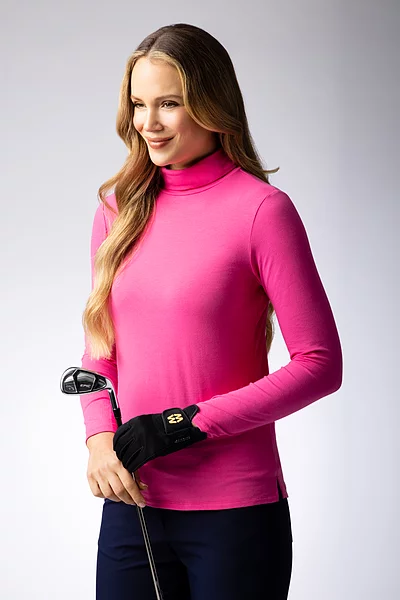
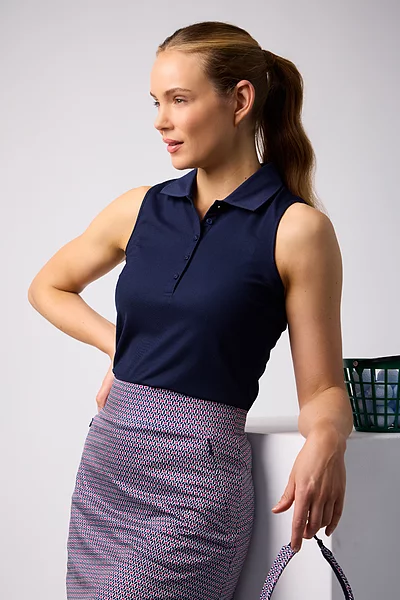
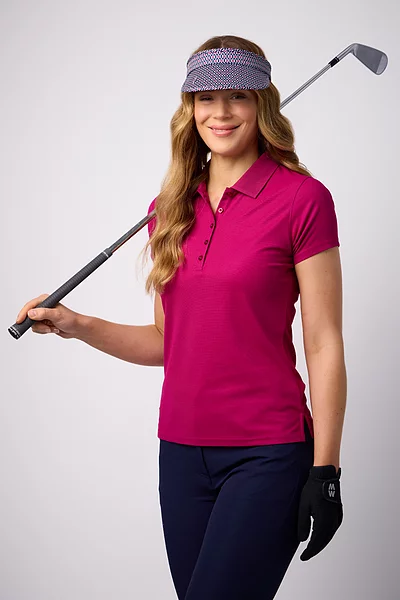
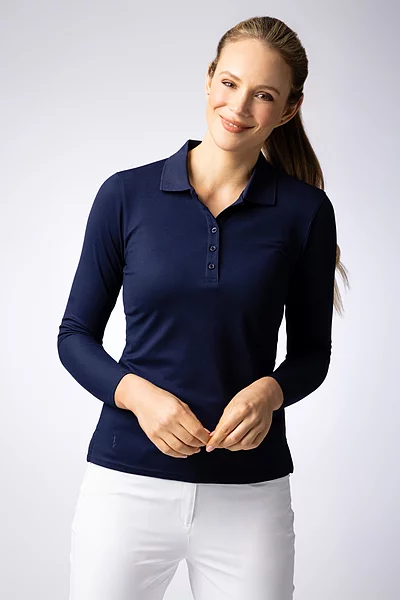
Whatever the shirt, look at the collar and the hem. A collar that curls after three washes looks untidy by midsummer, and a hem that rides up during a full shoulder turn is a nuisance for eighteen holes.
Trousers, skorts and golf dresses
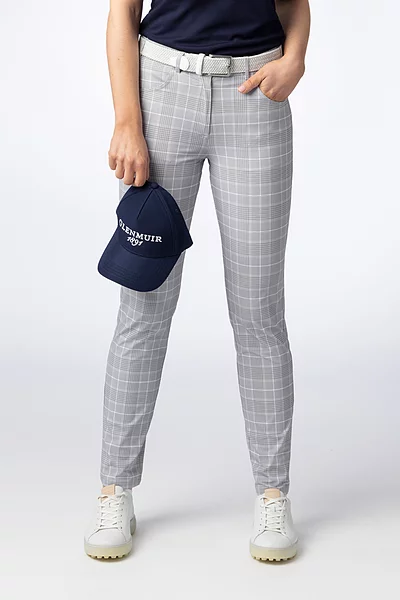
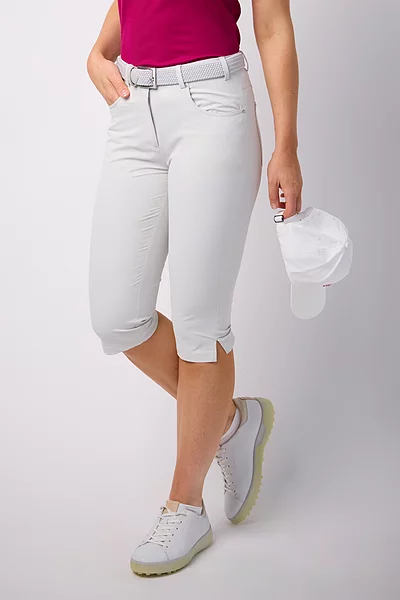
Tailored golf trousers are accepted at every level of the game, and for many players they are the default rather than the alternative. Look for a flat front, a proper waistband and stretch in the fabric. An elasticated, jogger-style waist reads as gym wear and will draw attention at a traditional club. The g.Kaley is the best seller in the range for good reason: lightweight, stretch, and cut with a slight taper that sits well over a golf shoe. The g.Phoebe pedal pushers do the same job in a cropped length for warmer months.
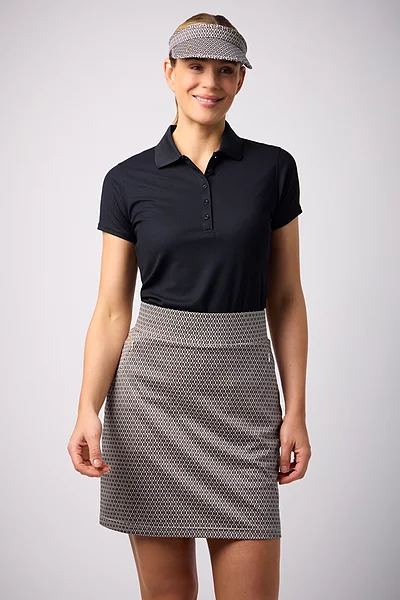
Skorts and golf dresses are accepted at the large majority of UK clubs and are among the most popular choices for summer golf. The difference between a golf skort and a fashion skirt is the built-in short beneath the outer panel, which keeps things practical at the top of the backswing and when crouching to read a putt. The g.Emeli skort has two hidden zipped pockets, which matters more than it sounds for anyone who keeps a ball marker and tees on their person. The g.Victoria zip golf dress comes with detachable shorts, which solves the same problem in a single piece.
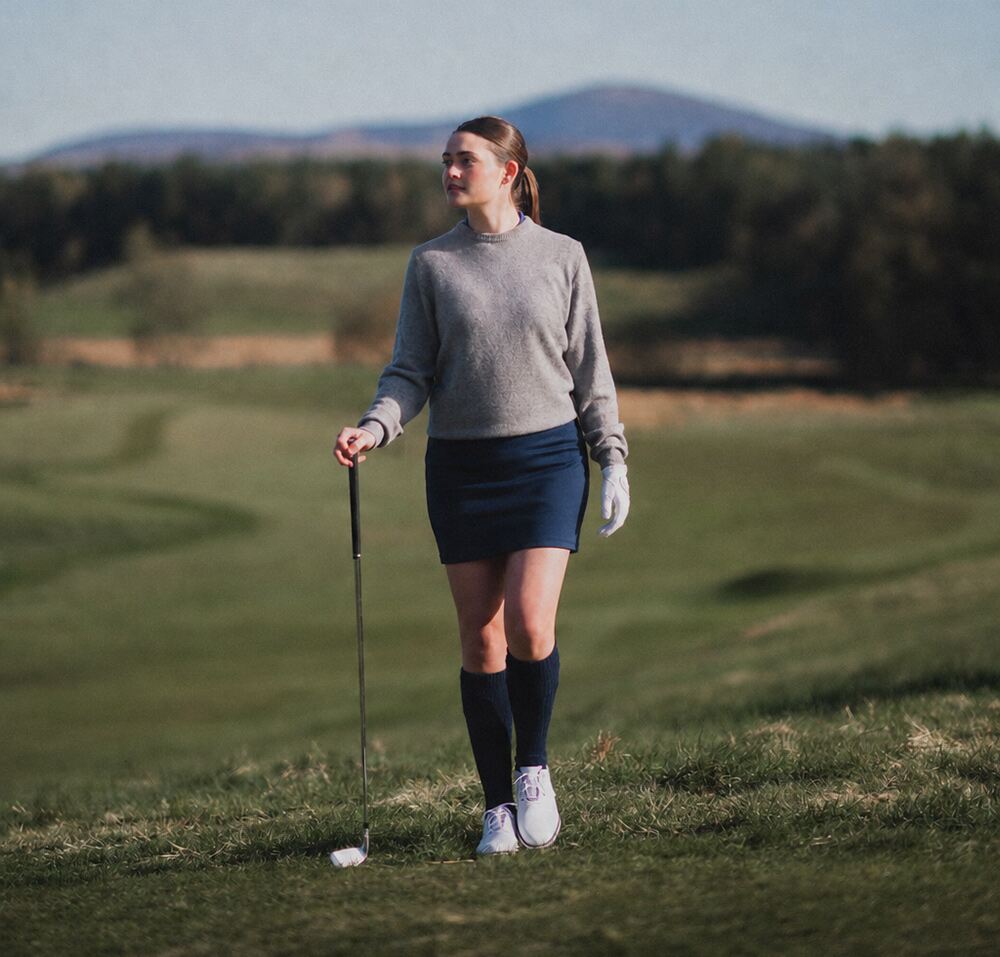
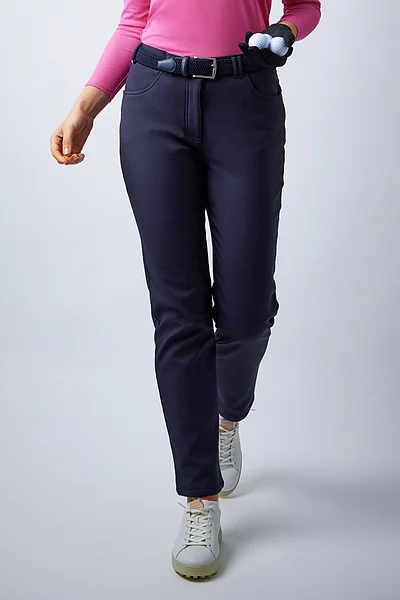
From October onwards, a winter trouser earns its place. The g.Jade is thermal and water-repellent, which makes a real difference on the first few holes of a damp morning when the long grass soaks everything from the knee down.
Knitwear
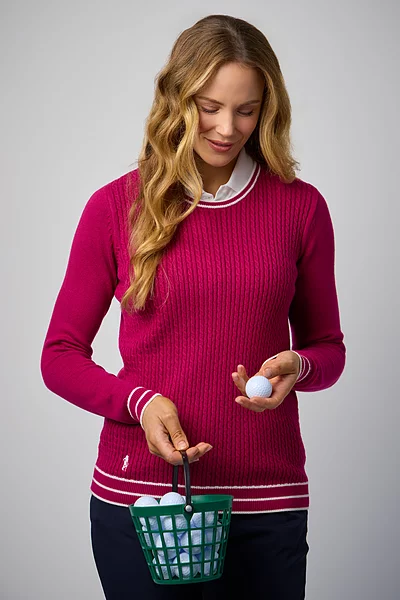
A good golf sweater is the piece most players keep longest, and the one that does the most work across the year. Merino wool regulates temperature well, stays warm when damp and resists holding odour, which is why it has been a golf staple for generations. It is also light enough under a jacket that it does not restrict the swing.
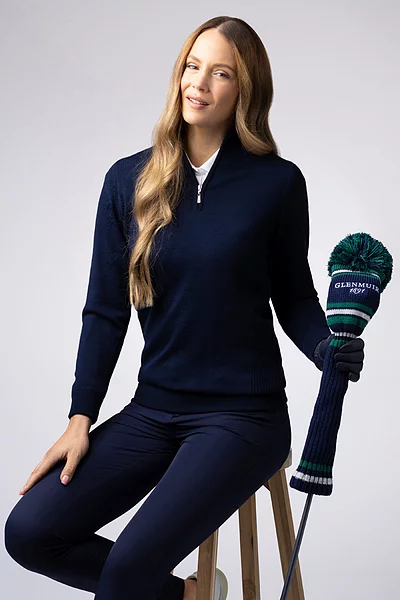
The g.Asha crew neck in a micro cable and the g.Sienna quarter zip in a chevron rib are both midweight merino, suited to spring and autumn over a polo. For colder or blustery days, the g.Penelope is a quarter-zip merino blend with a water-repellent lining, which turns an ordinary sweater into something closer to a midlayer. A lined sweater of this kind is often the single most useful piece in a British golfer's wardrobe between October and April.
Layering for a British golf year
The principle is three layers: a shirt, a warm midlayer and an outer shell. Each can come on or off as the day changes, and the aim is never to be too hot on the fifth or too cold on the fifteenth.
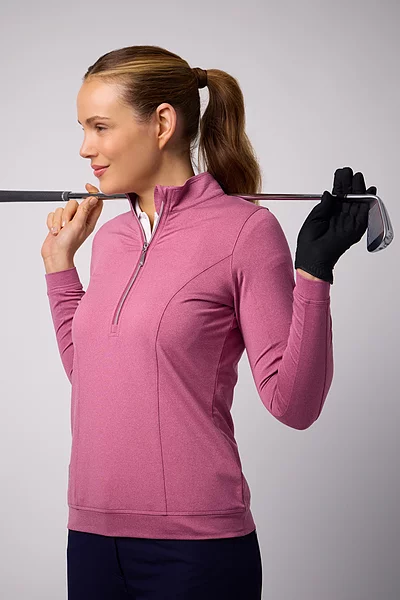
Midlayers do most of the practical work. The g.Carina quarter zip is the long-standing best seller, shaped with panels so it moves through a full shoulder turn without bunching. The new g.Miren and the g.Indy are full-zip alternatives, easier to take off mid-round without removing a cap or visor.
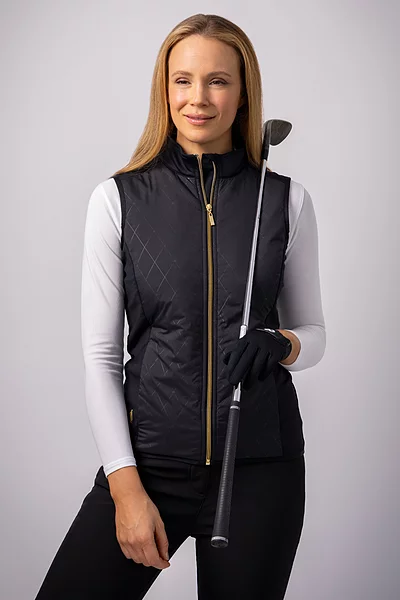
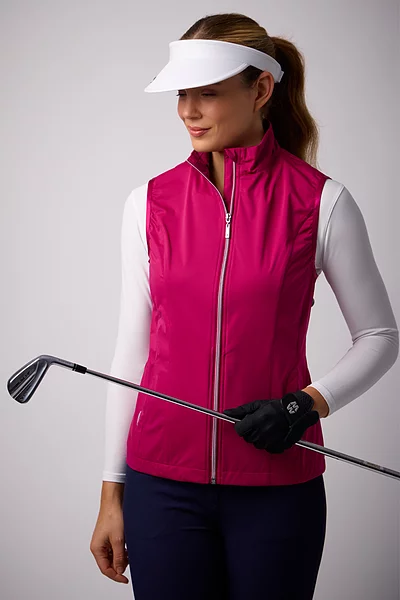
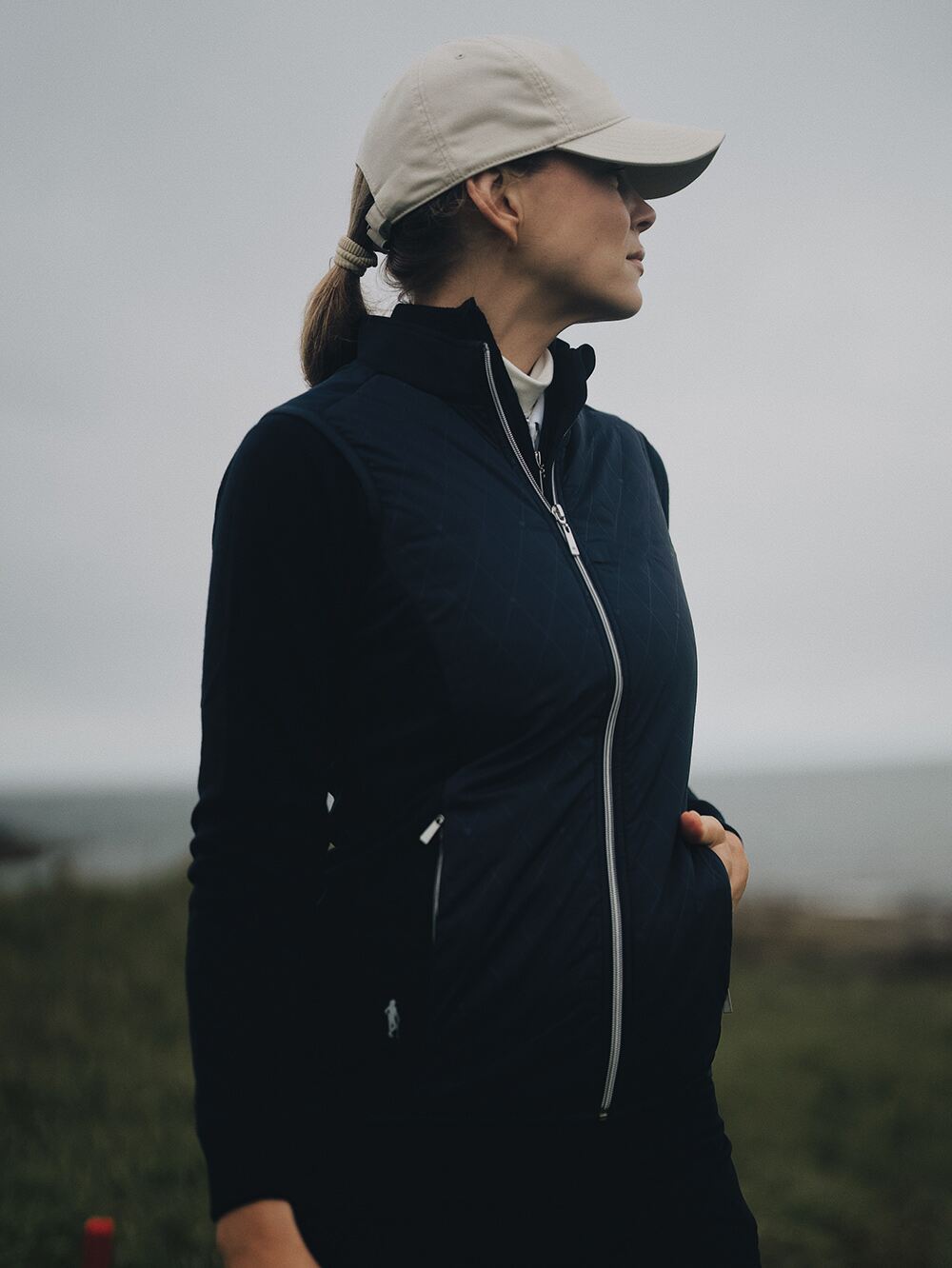
Gilets keep the core warm while leaving the arms entirely free, which is why so many golfers prefer them to a jacket. The g.Rebecca is a lightweight, stretch showerproof gilet for breezy spring and autumn days. The g.Calla is padded and faux fur lined for proper cold.
Jackets split the same way. The g.Tillie is a lightweight stretch showerproof jacket, and the g.Iris is a padded thermal jacket for winter golf.
One distinction is worth knowing before buying anything. Showerproof and water-repellent garments shed light rain; they are not waterproof. For a proper downpour, a golfer needs a fully waterproof jacket and trousers with taped seams. Glenmuir's sister brand, Sunderland of Scotland, has made golf waterproofs since 1911, and its ladies' range includes the fleece-lined s.Whisperdry Whistler jacket and the s.Montana waterproof trousers, both backed by a lifetime waterproof guarantee. Packed in the bag, a waterproof set weighs very little and rescues more rounds than any other item a golfer owns.
|
Season |
Typical conditions |
A sensible outfit |
|
Spring (March to May) |
Cold starts, bright spells, passing showers |
Long-sleeve polo, quarter-zip midlayer, showerproof gilet, golf trousers |
|
Summer (June to August) |
Warm, often breezy on links courses |
Short-sleeve performance polo, skort, pedal pushers or golf dress, visor; a light midlayer in the bag |
|
Autumn (September to November) |
Damp mornings, heavy dew, rising wind |
Polo under a lined merino sweater, water-repellent winter trousers, rain gloves |
|
Winter (December to February) |
Cold, frost delays, rain |
Roll-neck base, padded jacket or gilet, thermal trousers, thermal socks, bobble hat; full waterproofs in the bag |
Shoes, gloves and the finishing pieces
Metal spikes are now banned at almost every UK club, so the choice is between soft spikes and a spikeless sole. Soft spikes grip better on wet, sloping ground and are the safer choice for winter golf. Spikeless shoes are more comfortable off the course and perfectly adequate on firm summer turf. In the colder months, a waterproof shoe is worth far more than a fashionable one.
Gloves matter more in Britain than in drier climates, because so much golf here is played on damp grass with damp grips. MacWet rain gloves, worn as a pair, are designed to hold their grip when wet; the Micromesh version is lighter, while the Climatec has a thermal back for winter. For socks, the g.Pompom pack sits low inside a golf shoe for skorts and pedal pushers, while the g.Ariana thermal socks are built for frost-delay mornings.
On headwear, the g.Lexi soft-peak visor keeps glare off the eyes without trapping heat on a summer day. In winter, the g.Kiruna faux fur bobble hat does what no amount of midlayer can manage, since a surprising amount of warmth is lost through the head.
Dressing for a first round
There is no need to buy a full golf wardrobe before discovering whether the game sticks. A single collared polo, a pair of tailored trousers and golf shoes will pass the dress code at almost any club. For a first lesson at a driving range or a round at a pay-and-play course, a pair of trainers with a flat, grippy sole is usually fine. Spend the money on shoes first. They are the item most likely to be checked, and the one that makes the biggest difference to balance through the swing.