 2026 Platinum
Table of Contents
- Following in their footsteps
- Why patrons, not spectators
- Getting in: tickets, security and the airport-style entry
- The first hour: skip the merchandise pavillion
- The Masters foldable chair system (and why it works)
- What to wear to The Masters
- Concessions: the food, the prices, the pimento cheese
- The merchandise queue (do it at the end of the day)
- The course in real life: smaller, quieter, more dramatic
- The people of Augusta: marshals, caddies, volunteers
- Inside the ropes: just players and caddies
- The phones rule (and why it changes the day)
- How to watch The Masters from home
- Where to play golf nearby
- How to apply for 2027 Masters tickets
Following in their footsteps
There is always a sense of mystery around The Masters. Something you do not quite see or fully understand from the outside. Perhaps it is because it marks the start of the season, or because so little of it is truly shared. It just feels different.
Through Glenmuir and Sunderland of Scotland, I have had the privilege of working behind the scenes at some of golf’s finest events. The Ryder Cup. The Open. But this one felt more personal. This one was about family.
My late grandparents travelled the world through golf. They spoke often about Kiawah Island, Harbour Town, and of course Augusta, always with a sense of awe. In 1997, they were invited with my father and uncles to watch a young man named Tiger. They would recount stories of that week, even hearing taxi drivers say, “they won’t let no coloured man win.” And then, at just 21, he did.
Golf has come a long way since then. Nearly 30 years on, I followed in their footsteps, travelling with my brother Abhishek Ruia and two uncles Sunil Ruia and Amit Ruia to Kiawah Island Golf Resort, Harbour Town Golf Links, and of course Augusta National Golf Club. After 15 years in the golf industry, I went as a Masters first-timer. And the first thing I learned is that nobody is ever fully prepared for what The Masters actually is.

Why patrons, not spectators
The first piece of language to learn is that you are not a fan, and you are not a spectator. You are a patron. Augusta National coined the term in the early days of the tournament to emphasise that those attending were guests of the club for the day, not customers at a sporting event. The word matters because it sets the tone for everything that follows. Patrons are expected to behave differently from spectators. No shouting. No running. No phones. The course is not a stadium and the players are not a show. You are visiting a club, and you are invited.
The marshals remind you of this gently if you forget. We were told plainly that running, even briefly, would be your last time at The Masters. Nobody was joking. Nobody runs.
The philosophy is best expressed in Bobby Jones’ own words, written in April 1967 and still printed in the Masters spectator guide today:
“In golf, customs of etiquette and decorum are just as important as rules governing play. It is appropriate for spectators to applaud successful strokes in proportion to difficulty but excessive demonstrations by a player or his partisans are not proper because of the possible effect upon other competitors.
“Most distressing to those who love the game of golf is the applauding or cheering of misplays or misfortunes of a player. Such occurrences have been rare at the Masters but we must eliminate them entirely if our patrons are to continue to merit their reputation as the most knowledgeable and considerate in the world.”
Robert Tyre Jones, Jr. (1902-1971), President in Perpetuity, Augusta National Golf Club
What makes this work, decade after decade, is that the atmosphere is genuinely self-policing. Tickets to The Masters are not available for general sale. They come through the official ballot or through existing patrons. The result is a crowd of golfers who already understand the etiquette and pass it down. Anyone who falls short of the standard is gently corrected by the patrons standing next to them, long before any marshal has to intervene.
One specific rule worth knowing before you go: there is a strict no-autograph policy on the golf course itself. Autographs are only permitted in the areas adjacent to the Tournament Practice Area. This is for player safety and protection, and it is firmly enforced. If you are hoping to have a glove, cap or programme signed by a favourite player, head to the Tournament Practice Area and stay there, or, not recommended, position yourself on the course where you are likely to get hit and you will most likely score a signed glove. Approaching a player anywhere else on the property will not end well.
 |
 |
Getting in: tickets, security and the airport-style entry
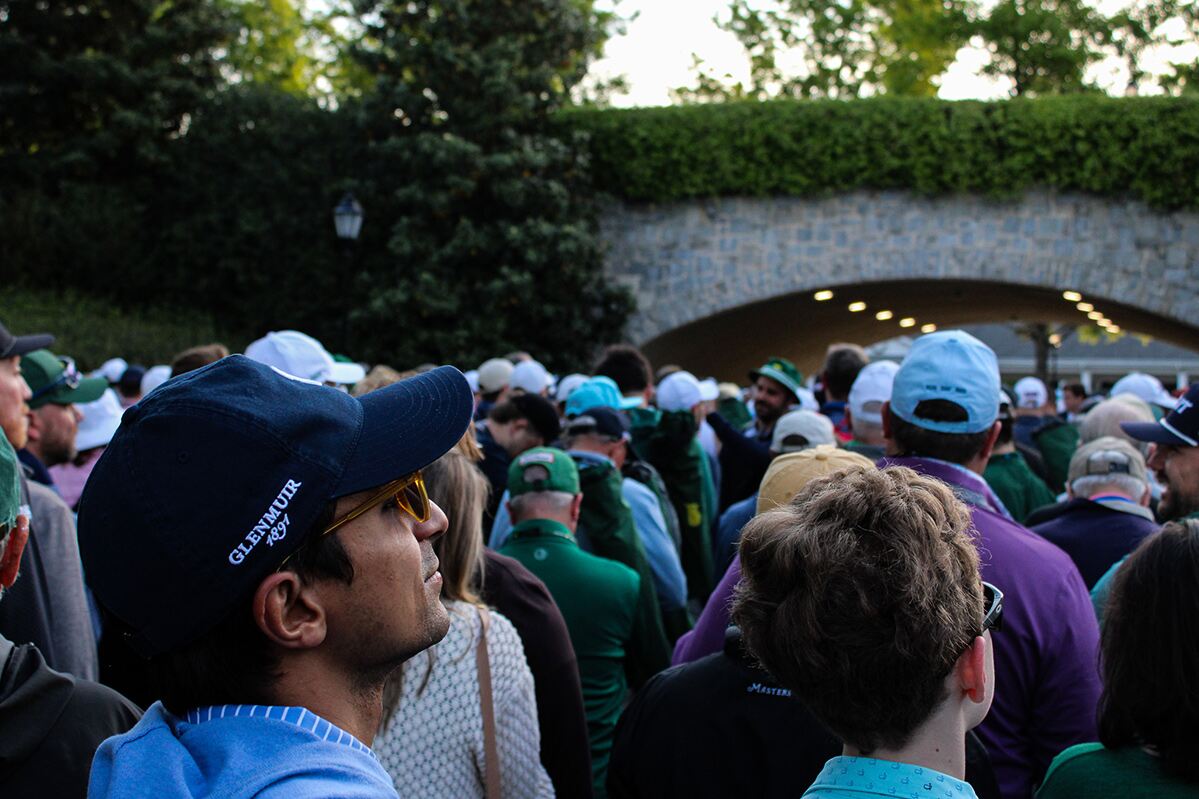
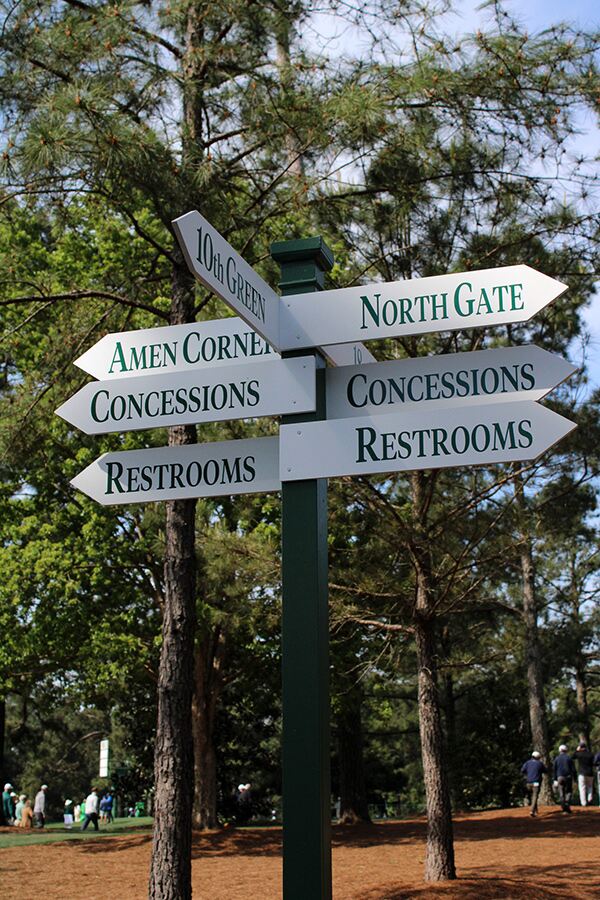
We arrived at the North Gate at around 7am, having been dropped off at the Arby’s across the road, which becomes one of Augusta’s unlikely landmarks during Masters week. There is also free parking at The Masters if you drive yourself. The whole entry process took about 20 minutes.
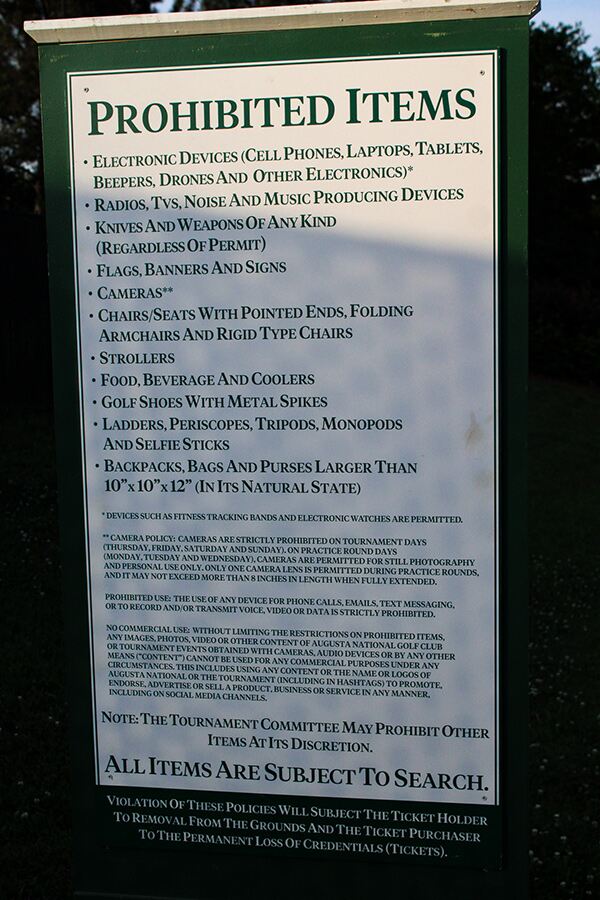
Security is airport-style. Bags are screened. Pockets emptied. The electronic devices rule is absolute, and worth understanding before you arrive. Augusta National prohibits all of the following inside the gates: mobile phones, laptops, tablets, beepers and drones. Any device capable of recording or transmitting voice, video or data is banned. The penalty for violating this policy is removal from the grounds and the permanent loss of your patron’s credentials. Your tickets are gone, and so is any future opportunity to attend.
Small lockers are available outside the gates where mobile phones can be stored for the day. Cameras are permitted on practice days only (Monday, Tuesday and Wednesday) and only if they do not extend more than 8 inches when fully extended. Cameras are strictly prohibited on tournament days (Thursday to Sunday). Selfie sticks are not permitted at any time.
Then come the words you will remember: “Welcome to The Masters, sir,” delivered in a warm Southern accent by the gentleman scanning your ticket. It is the one place in the world every single golfer wants to be during this April week.
The first hour: skip the merchandise pavillion
Conventional wisdom says queue for the main merchandise pavilion first thing. Conventional wisdom is wrong. The wait is around 90 minutes at the start of the day. The exception is if you specifically want a Masters gnome which sell out by 8.15am, which is in its final year and has become the hot-selling item. Many are bought for around USD $50 and resold on eBay for $500 to $1,000. We saw and heard of patrons paying runners to enter early with a separate ticket, buy gnomes, place foldable chairs out on the course for the real patron, and have everything set up by 10am. Not very patron-like, if you ask me.
Augusta National itself officially recommends walking the course in the morning and shopping in the afternoon, and the recommendation is sound. The two main merchandise stores are the North Golf Shop and the South Village Golf Shop, both of which carry the full assortment and stay open until the gates close. The smaller on-course shops on select holes sell patron essentials such as chairs, headwear and sunscreen, and are far less busy than the main shops.
Pick up a couple of Masters foldable chairs at USD $40 and a Masters cap at USD $35 from one of the on-course shops first thing. Then head out onto the course and enjoy the morning. Save the main merchandise visit for the afternoon. They restock everything.
The Masters foldable chair system (and why it works)
This is the single most important piece of practical information for any first-time patron, and it is uniquely Masters.
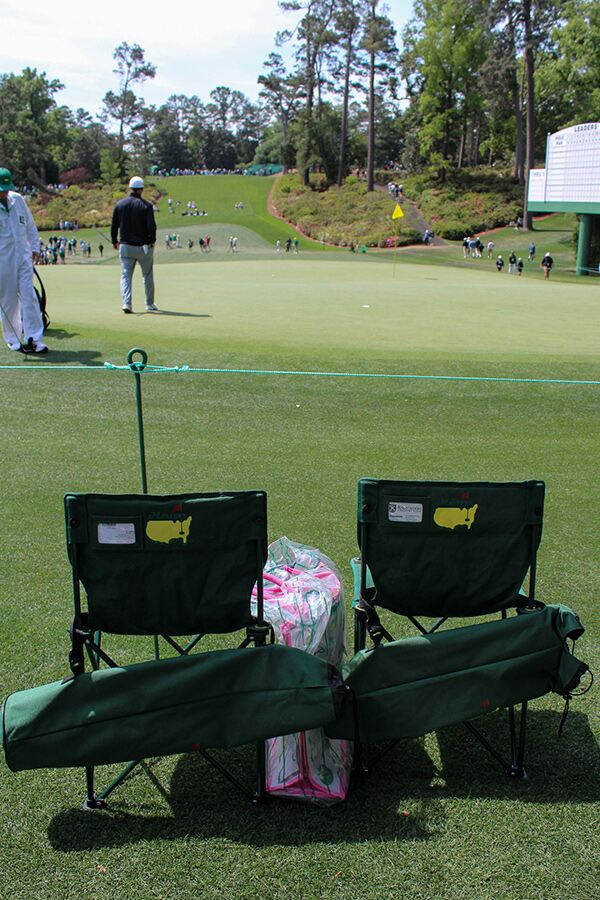
You can place your Masters foldable chair anywhere on the course. Slip your business card in the back, or just a slip of paper with your name. That spot is yours for the entire day. You can leave the chair, walk anywhere on the course, and return to find it exactly as you left it.
Two rules govern the system. First: any patron may sit in your chair when you are not there. They simply get up and find another spot when you return. Second: if you have a chair, you must be seated when viewing a putt or drive. This protects the sightlines for everyone behind.
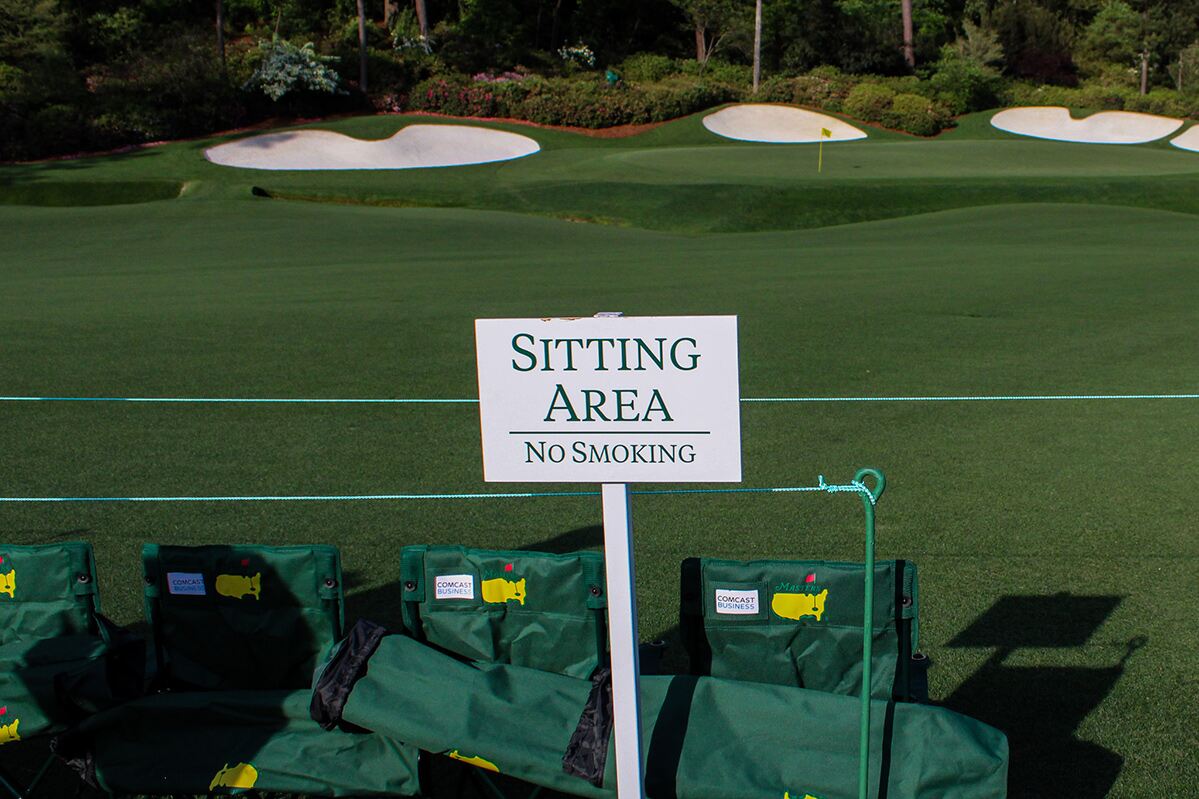
It is worth tying a ribbon to the back of your chair, just something to help you identify it later. You can buy more than one chair to take home as souvenirs, but you can only enter the grounds with one chair. This makes the system fair: nobody can plot seats everywhere.
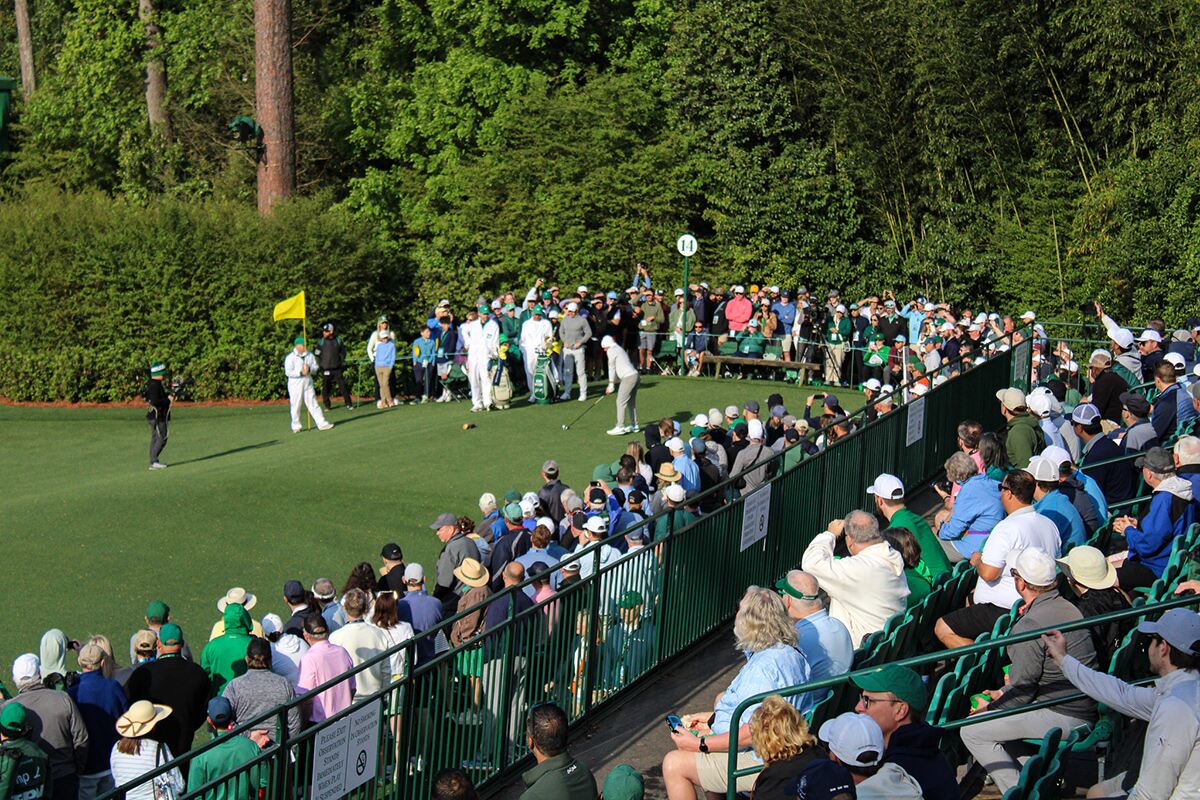
The system genuinely works. We placed our chairs first thing in the morning on the front line at the 12th tee and watched Hovland, Hatton, Morikawa and Scheffler fire 9-irons at the green. We sat on the front row at the back of the 2nd 10th and 18th watching Rory finish and no one came to claim their seats. People left their bought merchandise under their chairs all day, untouched. This respect for the rules and etiquette of The Masters is unique in sport.
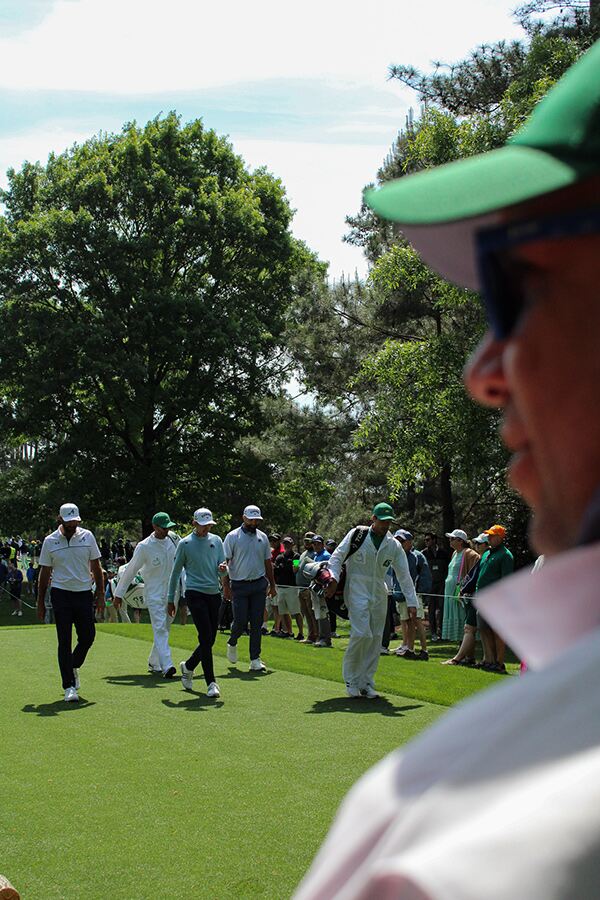 |
 |
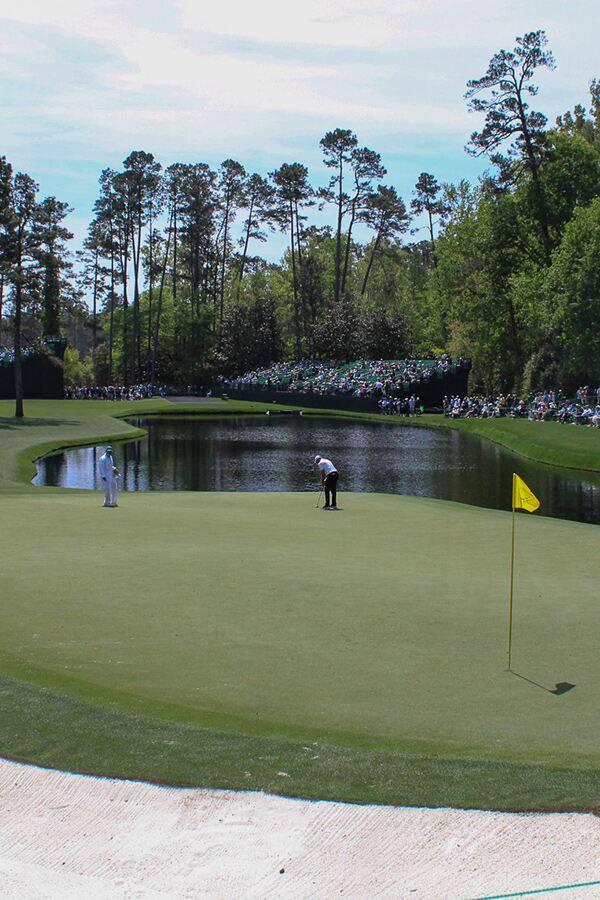
All chairs left at the end of the day are cleared out. Nothing stays overnight. I would say from a watching point of view, The Masters is by far the most superior just with how close you can get to the players, the chair system and also how connected and intertwined the course layout is. The Masters Par 3 tournament on the Wednesday, although it’s a fantastic family event and will inspire junior golfers, it is a little difficult from a watching experience. The banks were full with fellow patrons and you couldn’t really get that close. I would rather pitch up on a chair on the 16th green and watch players and caddies alike skimming balls across the water on the Wednesday practice day. Just my personal opinion.
What to wear to The Masters
Augusta in early April is a transitional season. Lows of around 4-8°C (low 40s°F) in the morning. Highs of around 24°C (mid 70s°F) in the afternoon. Spring showers are possible. Plenty of sunshine. And a chilly breeze that swirls around the property all day, even on warm afternoons, it’s amazing how man time you see the flags flying in differing directions. The forecast can shift dramatically within a single round, which is why layering is essential.
The dress code at The Masters is smart-casual. Polo shirts, tailored trousers, smart shorts in warm weather. Patrons are expected to look the part. There are no T-shirts, no vests, no athletic wear. Most patrons we saw were dressed beautifully, from country club gentlemen proudly wearing their home course logo on their chest, to vintage silhouettes and plenty of thick-rib Masters green sweaters. The atmosphere had something of Wimbledon about it.
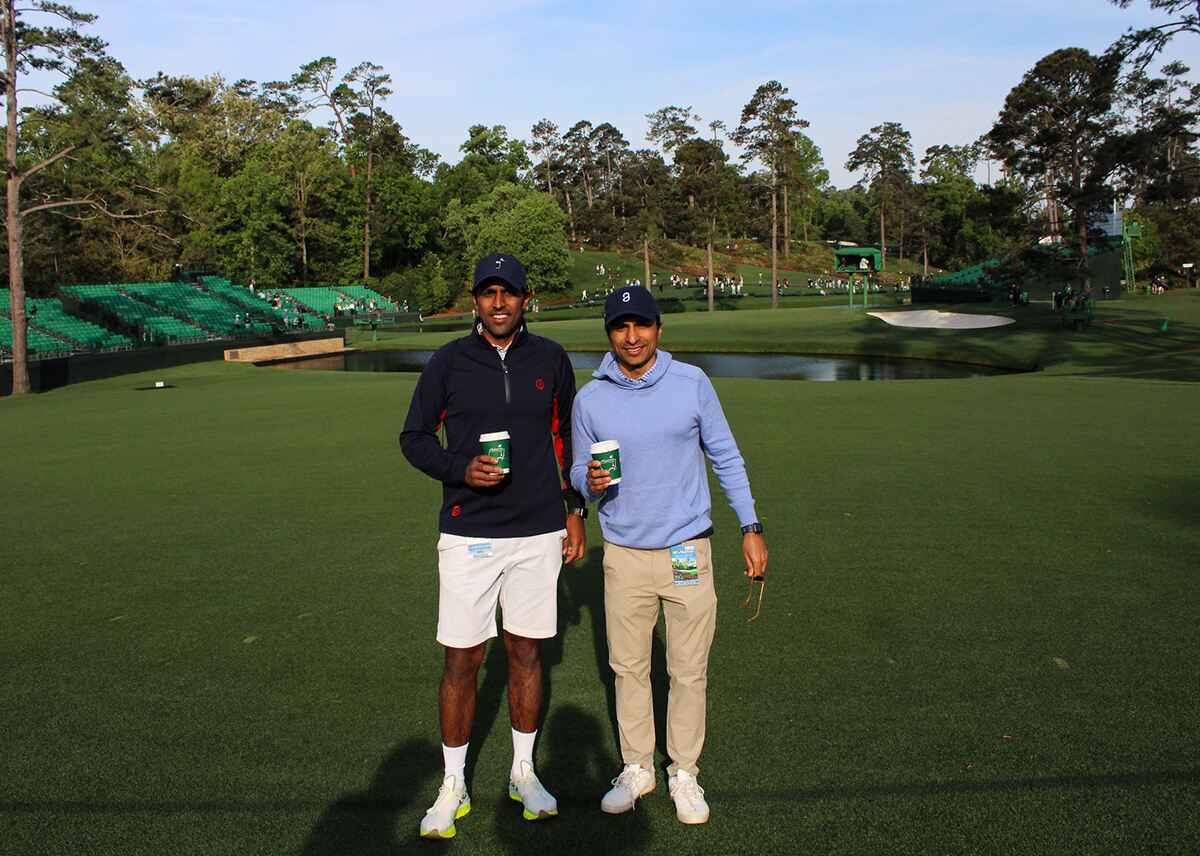
What I wore
For my four days at Augusta, I wore:
- g.Ross trousers (lightweight stretch, smart enough for the clubhouse evenings, comfortable for 25,000 steps a day)
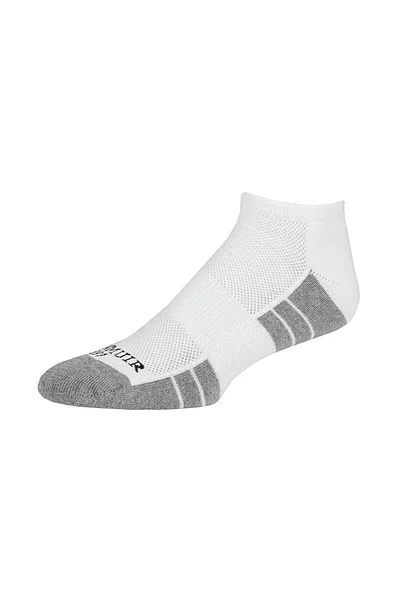
- g.Dryburgh socks (cotton-wool blend, kept the wind off the ankles, which matters more than people expect)
- g.Muirhead shirt (performance pique, anti-curl collar, breathable when the temperature climbed)
- g.Crossford hooded midlayer (the hood was welcome in the morning to keep the ears warm)
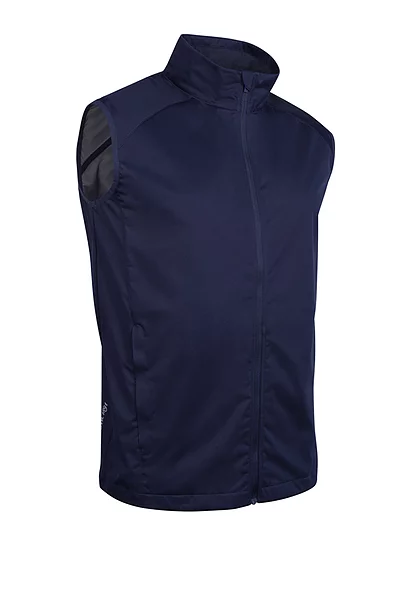
- g.Johnstone gilet (kept the wind off the core while leaving the arms free to hold all my sandwiches and Masters guide)
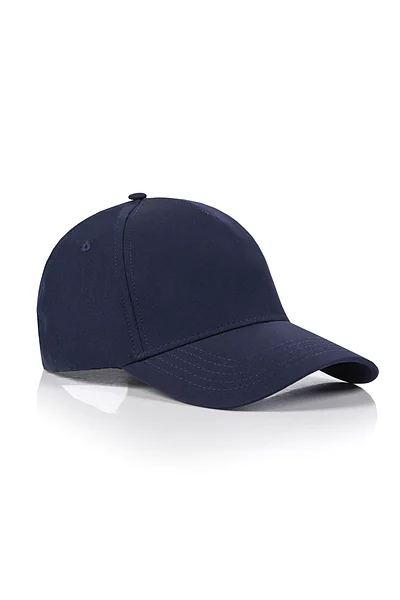
- g.Cowan cap (the sun is stronger in Georgia than people expect, even in April)
Men’s recommendations
Shirts. Polo shirts in neutral colours (white, black, beige, olive, light blue) are the safest choice. Bottle green, hot pink and tartan also work well within the Masters aesthetic. Avoid anything too casual. The g.Silloth tailored collar performance polo is a strong all-rounder. The g.Tain double mercerised cotton polo is the slightly smarter option for evenings or under a jacket.

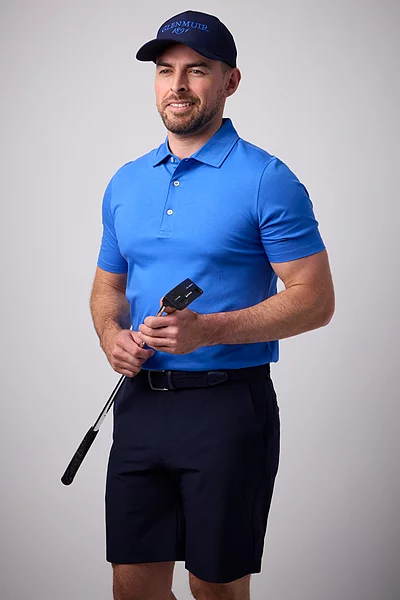
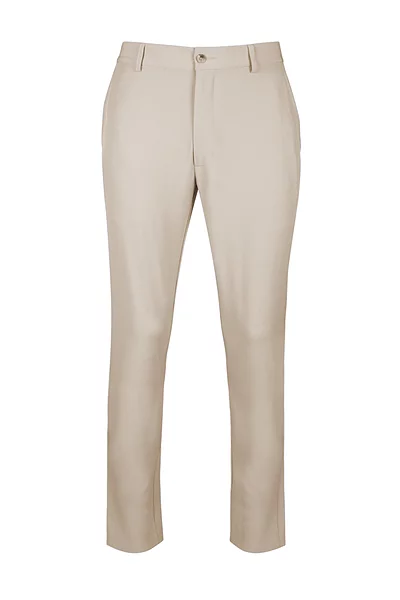
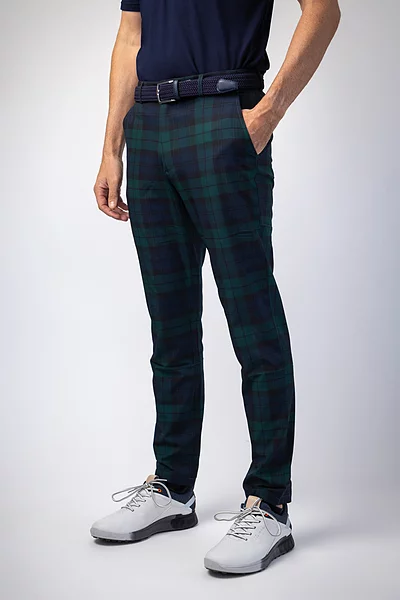
Trousers. Lightweight stretch trousers with a clean silhouette. The g.Ross is one of our best-sellers for exactly this kind of all-day, multi-context wear. Pair with a belt (ideally same colour as the trousers) to finish the look properly.
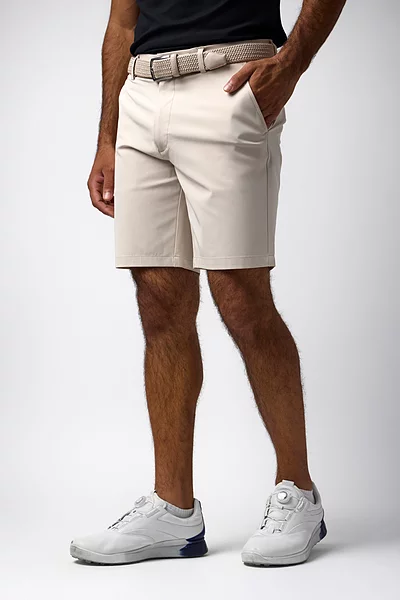
Shorts. For warm afternoons, lightweight tailored golf shorts work well. The g.Jackson is a good option. That said, the persistent chilly breeze means most patrons stick to trousers regardless of forecast. I would not advise shorts unless you are confident in the conditions.
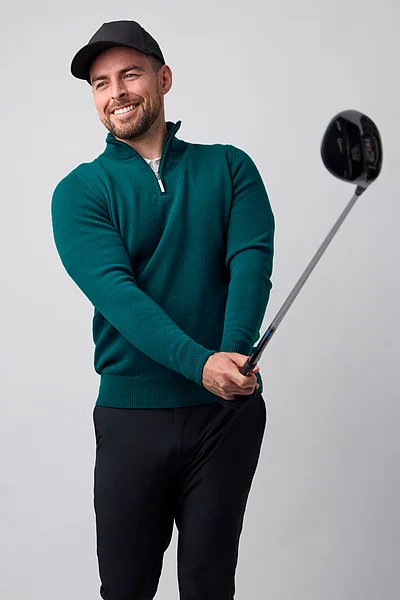
Midlayer. A hooded mid-layer like the g.Crossford or a quarter-zip like the g.Coll or g.Jasper covers you for the chilly mornings and air-conditioned indoor spaces. The hood or zip up is genuinely useful in the early hours.


Outer layer. A gilet is the smart choice. Core warmth, arms free, packs down small. The g.Johnstone is what I wore. Alternatively, the g.Kyle zip-front jacket if rain is forecast.


Ladies' recommendations
Shirts. Performance polos in lighter colours work beautifully in the Masters context. The g.Stella, g.Misha or g.Paloma are all good choices, think White, Linen, Bottle Green, Navy or Hot Pink. For mornings, the long-sleeve g.Misha provides extra warmth.
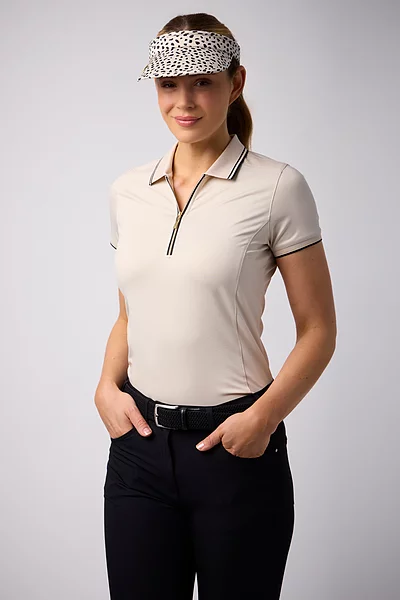

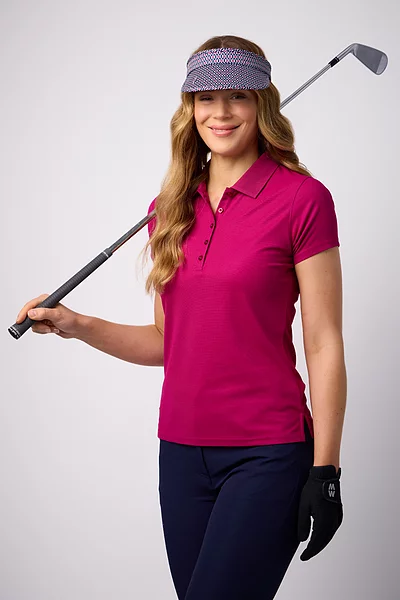
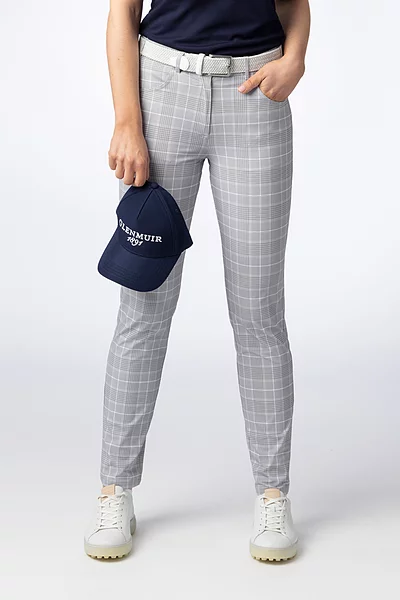
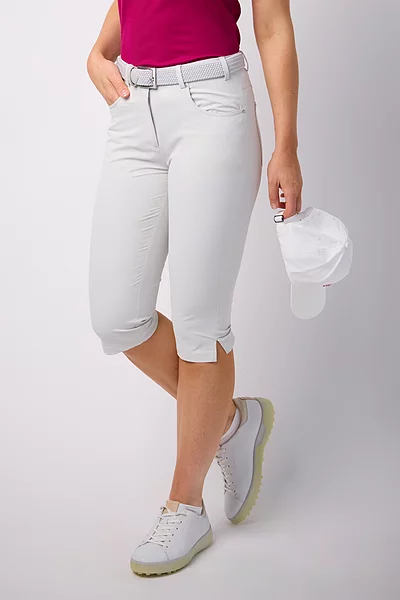
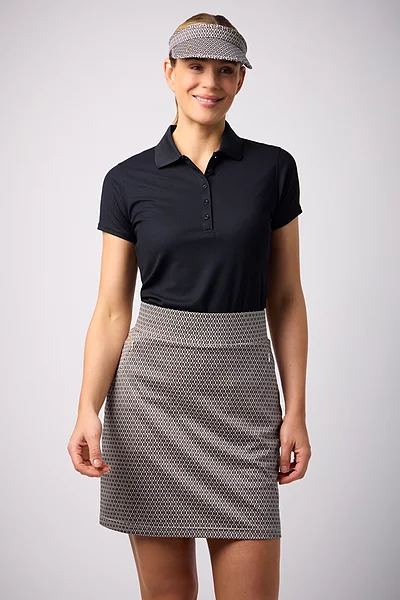
Trousers and skorts. The g.Kaley stretch trousers are the year-round workhorse. For warmer afternoons, the g.Phoebe pedal pushers or the g.Emeli skort as long as you are OK with a chilly breeze at your shins.
Midlayer. The g.Carina panel performance mid-layer or the g.Indy panelled performance mid-layer jacket. Both work as standalone pieces and under a gilet.
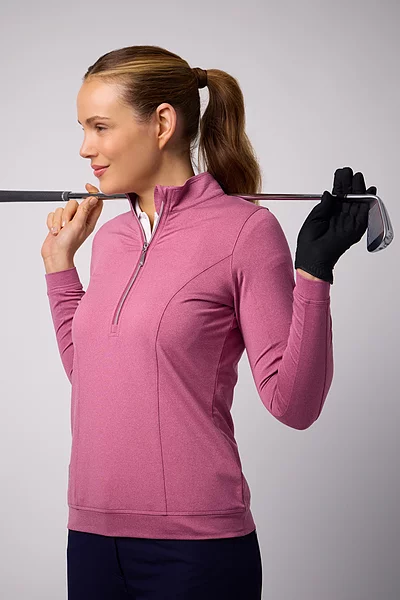
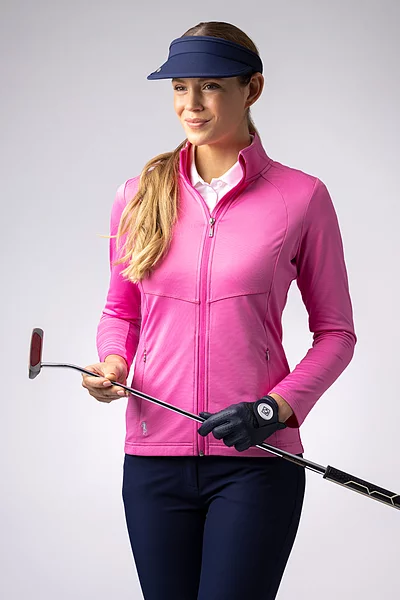
Outer layer. The g.Calla padded gilet for core warmth without sleeve restriction. The s.Whisperdry Whistler if a heavier waterproof is needed. Both garments have a faux fur lining which would be perfect for the morning.


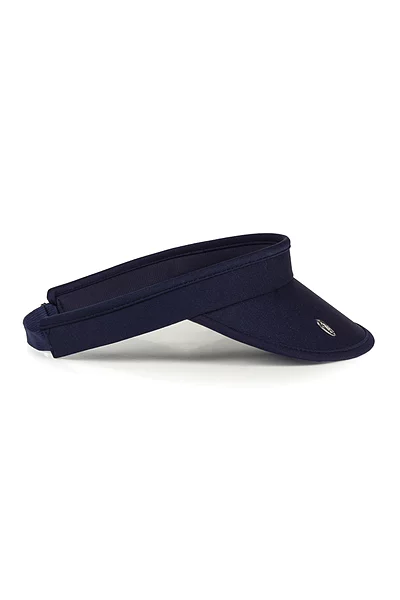
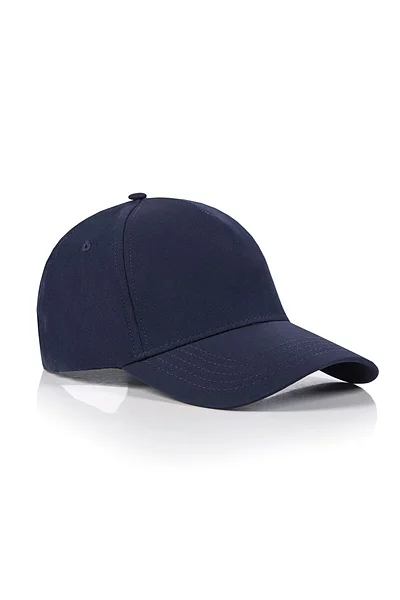
Headwear. The g.Lexi visor for sun protection without compromising hair, or the g.Cowan cap for fuller coverage.
Accessories and footwear
You will walk between 8 and 12 miles a day at Augusta. Comfortable shoes are non-negotiable as the terrain is a lot more undulating than the TV shows. Trainers are acceptable, though smart leather sneakers or proper walking shoes look more in keeping with the Masters aesthetic. Avoid anything visibly sporty. Worn-in shoes only. New footwear at The Masters is a recipe for blisters by the second hole.
Other essentials: - Sunblock (the Georgia sun is stronger than UK sun in April) - Sunglasses - A small backpack or shoulder bag for layers (within Augusta’s bag policy: soft-sided, under 8 inches in any direction) – Cards are taken everywhere are The Masters and no tips are accepted. Maybe just keep around $100 cash in case you need to get a taxi or are stranded without your phone. Remember to write down your hotel or accommodation address on a piece of paper.
 |
 |
Concessions: the food, the prices, the pimento cheese
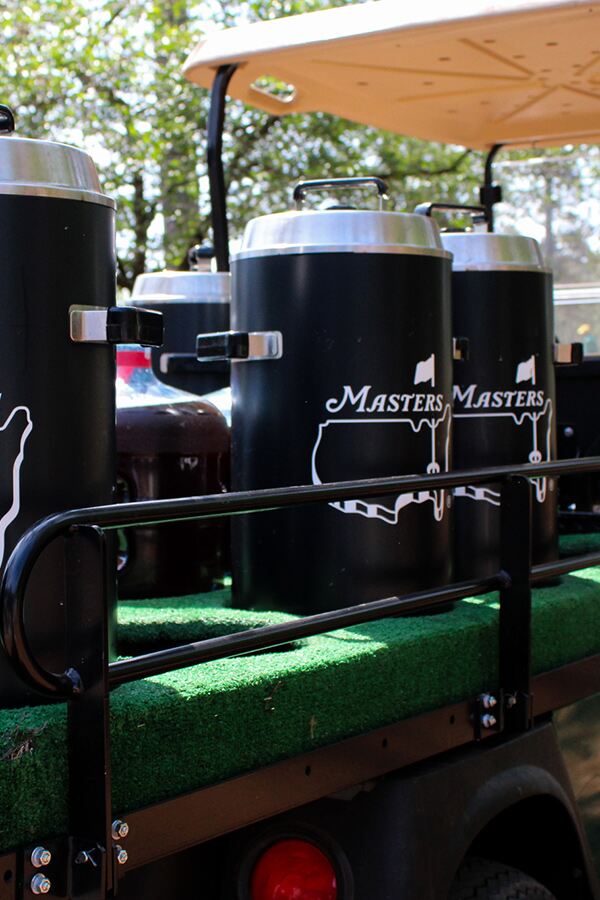
The food at The Masters (concessions as its called, i.e. Augusta National has granted the right to a vendor to sell food and beverages) is part of the experience, and it is a story worth telling.
At the origination of the tournament in the 1930s, Augusta National co-founder Clifford Roberts realised that feeding the masses who attended would be a necessary customer service attribute. Most patrons were attending on a day trip because there was a shortage of hotel rooms in Augusta, and they often came from cities within a four-hour drive. Providing a simple menu of sandwiches, snacks and drinks allowed for the low prices and meant the food could be prepared in resident Augustans’ kitchens and churches in the early days. Today the iconic sandwiches are mass-produced off-property and arrive sheathed in green plastic wrapping. That spartan packaging was originally designed to not be visible on TV if dropped onto the grass at Augusta National. Everything is designed not to disrupt the visual perfection of the course.
 |
 |
There are more than 30 items on the concession menu, including breakfast items served until 10am, sandwiches, beverages and snacks. Prices are extraordinarily low for a major sporting event:
- Pimento cheese sandwich: $1.50
- Egg salad sandwich: $1.50
- Chicken salad sandwich: $3 (less salad, more chicken, very good)
- Masters Club (Deli turkey, ham, cheese, mustard) $3
- Pulled pork BBQ: $3 hot option, excellent
- Tomato pie: $3 hot option
- Georgia Peach ice cream sandwich: $3 an absolute must
- Cookies, crisps (go for BBQ), Popcorn (very good), Cookies (a little under cooked for our UK palette), Apple Slices (to absorb some guilt), Candy Bar (make sure you don’t have braces in, it’s a tough chew) $2
- White wine, beer (go for the imported), Crow’s Nest (Belgian white cloudy craft beer equivalent): $6
- Beer, iced tea, water, black coffee $2
My insider tip: take the Classic Chicken and layer the fried chicken patty into a pimento cheese. It is a great combination. The peach ice cream sandwich is non-negotiable.
Each food stand has five separate lanes, all serving the exact same items, designed to move people through quickly so they can get back on the course. One thing that felt slightly wasteful is that although patrons were rinsing out their Masters cups in the bathroom to keep as souvenirs, none of them were reused. I assume it would slow down the process. Same for water bottles: there were not enough water fountains for refilling.
Bins are everywhere across the course, all in green of course. Everything is green at Augusta. The camera boxes, the pylons, the bins. All to show off the course in its best light to television and patrons. The scoreboards and television towers are removed entirely after the tournament. Members would not want it any other way, and many say the place feels “wide open” and some say unrecognisable without them, which I find hard to believe given the iconic holes.
The merchandise queue (do it at the end of the day)
By mid-afternoon, the queue for the main merchandise pavilion drops to around 20 minutes and flows quickly. The queueing system itself is beautifully engineered. As you enter the queue, a subtle mat with sensors counts you in. A gentleman with an iPad constantly monitors the number of people in the shop and in the queue to ensure both optimum experience and safety.
Inside, the merchandise is organised by men’s, ladies’ and juniors. Items are displayed on tall mannequins with numbers on them. Caps are the same. Underneath the displays, all sizes are stacked and folded behind a long table with helpful sales assistants, mostly eager and energetic students. You simply say the number and the size you want. The choice is not too wide, it’s just stocked deeply within the styles they offer which makes things easier from an operational point of view, but also reduces the tyranny of choice from a patrons’ point of view. Two staff at the cash register: one bagging, the other scanning, all very polite and efficient and finished off with their signature “Have a great day at The Masters”.
Prices are not extortionate by sporting event standards. Caps at USD $35, polos at USD $70 to $90, flags at USD $30. Delivery options are available, but it is generally easier to do your shopping at the end of the day so you can carry it home. Delivery to the UK can be expensive and there is a tax to pay on arrival.
The course in real life: smaller, quieter, more dramatic
Augusta looks significantly smaller in real life than on television. The fairways are slimmer. The greens smaller. The bunkers deeper and wider. On our first day we walked from green to tee from the 18th backwards just to appreciate how good these professionals really are.
Many fairways are cut into the grain for players hitting off the tee, which makes them look even more daunting visually. The ball just falls away if slightly off line, rather than bouncing forward.
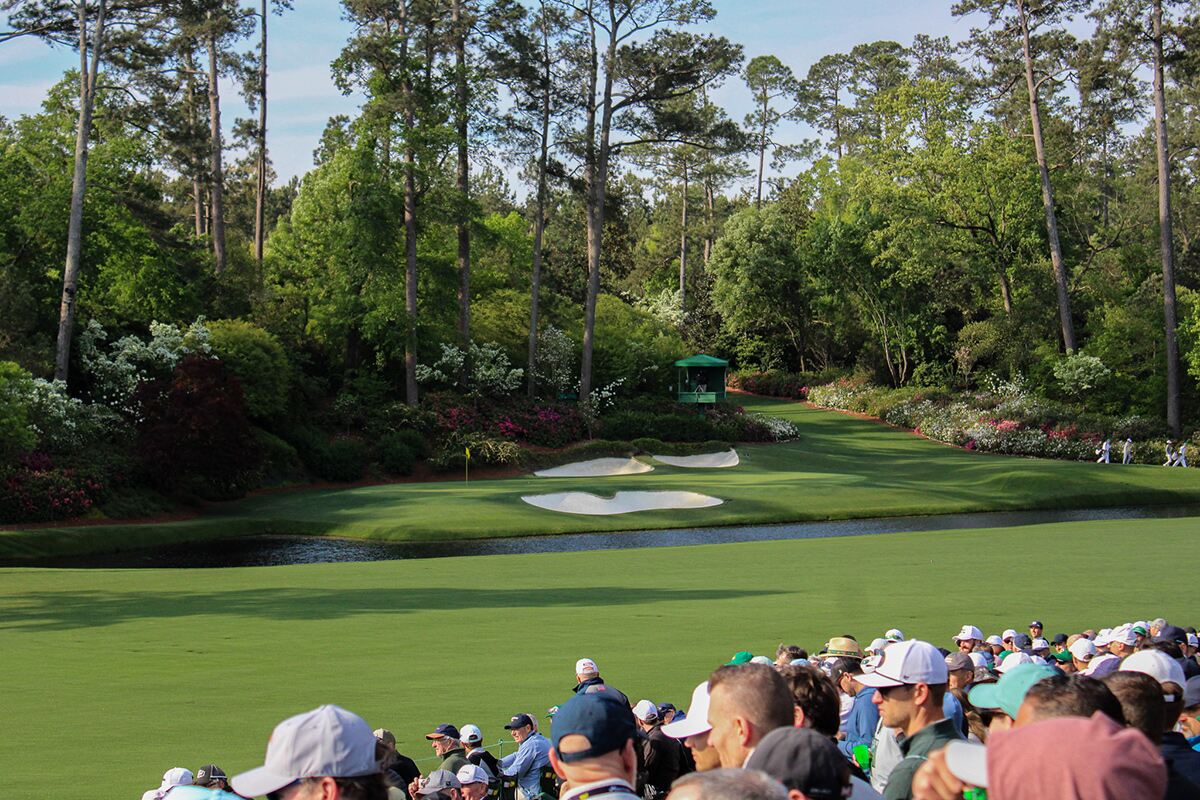
The pin-drop silence on the course is something else entirely. Patrons can hear everything. We frequently caught ourselves holding sneezes and coughs. The only exception is when someone hits an outstanding shot, at which point the course erupts. Cheers and roars reverberate across the property in a way that is impossible to describe until you hear it. Players know exactly what has happened on every other hole, just from the volume of the cheer. Despite reports saying that the bird sounds at Augusta is all enhanced and artificial, you can indeed hear bird song from native Georgia birds such as Norther Cardinals, Mockingbirds and Bluebirds, this is probably due to how quiet, silent and respectful the atmosphere is.
Take your sunglasses off and absorb the bunkering, the fringe and the finest players in the world. Look at the immaculate conditioning. Listen to the silence. Feel the difference between the fairway and the half-cut rough underfoot. Smell the pine. Your senses are heightened when your head is not buried in your phone.
A small change worth knowing for the 2027 tournament: Augusta National has added 10 yards to the 17th hole, taking it to a length the world’s best will need to recalibrate for. The 17th, named Nandina, is also the site of the famous Eisenhower Tree story. President Eisenhower, an Augusta member, repeatedly hit the tall loblolly pine on his tee shots and proposed at 1956 governors meeting that the tree be removed. The membership refused. The tree stood for another 58 years until February 2014, when a severe ice storm finally brought it down. Mother Nature, it seems, agreed with Eisenhower in the end.
The people of Augusta: marshals, caddies, volunteers
The people make The Masters. From the security guards welcoming you in to the volunteers managing the foldable chair system, the human element is what lifts the tournament above any other.
Many volunteers earn the right to play Augusta National themselves on a designated appreciation day in May. We met one marshal whose job was to wave a yellow flag at the 15th tee, signalling left or right depending on where the ball had gone, helping the marshals further down the fairway shout fore and spot the ball. It was his 24th year volunteering, and he had played Augusta 23 times. There are very few people in the world who can say that. The continuity of the people at The Masters, year after year, decade after decade, is part of what makes the place run as smoothly as it does.
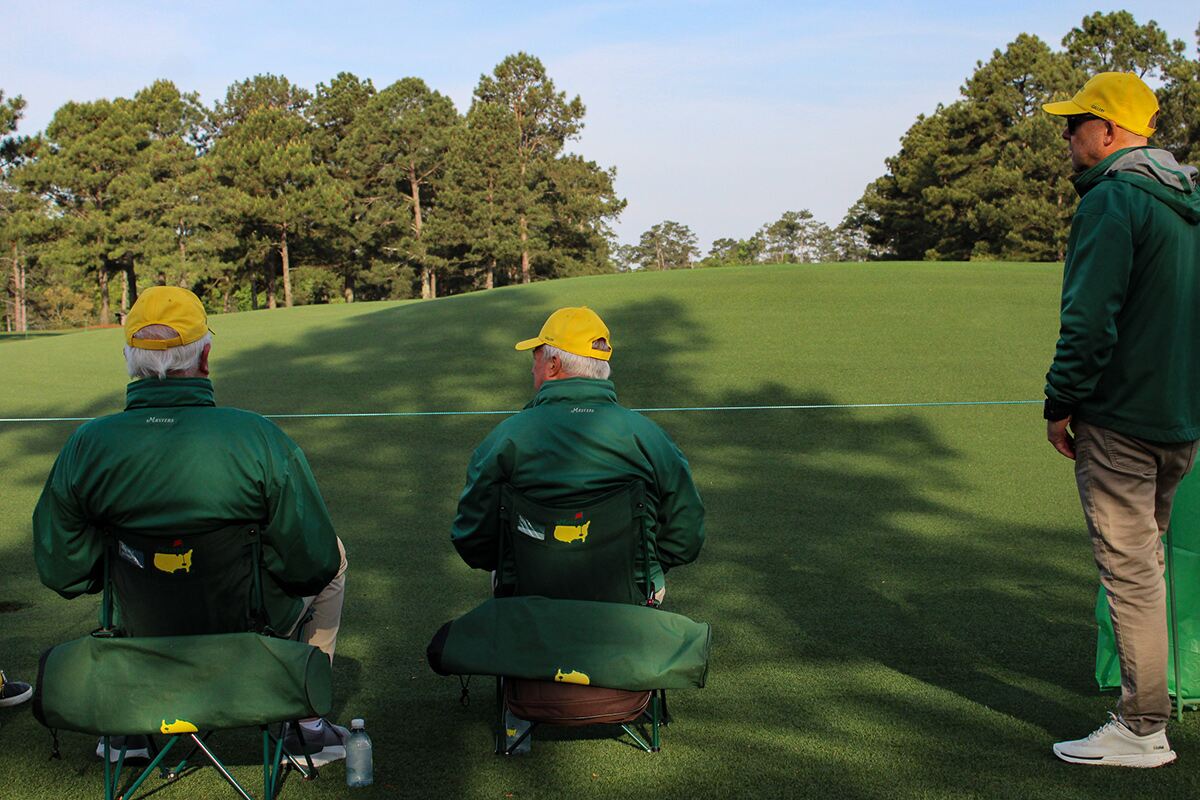
The volunteers themselves are looked after properly. On appreciation day, the club provides caddies on each green to look after them as they play the course. These small touches reflect a culture where the people who make the tournament happen are valued as much as the patrons who attend.
There is a third route onto Augusta National that very few people know about. Each year, 25 of the roughly 800 accredited media members covering The Masters are drawn at random on Sunday to play the course on the Monday after the tournament. Combined with the volunteer appreciation day, it means a small but meaningful number of people who are not members get to walk those fairways every year.
Every toilet has around six staff ensuring a constant flow, refilled soap dispensers, spotless conditions, and a fresh-smelling environment. The driving range is worth a visit, though it is also a sun trap, so plenty of water and sunscreen are essential. There are always seats and standing room at the back, with a standing bar table that is ideal for finishing your sandwich.
For the full guide to volunteering, see our Volunteering at The Masters article.
Inside the ropes: just players and caddies
One of the most striking things at Augusta is what you do not see inside the ropes. No entourages. No scoreboard runners. No wives or families. No officials. No celebrity VIPs. No camera operators visible.
All the cameras are hidden in trees where they cannot be seen, or on television towers wrapped in green sheeting. The result is that the only people inside the ropes are players and caddies. Nothing breaks the visual focus of the course.
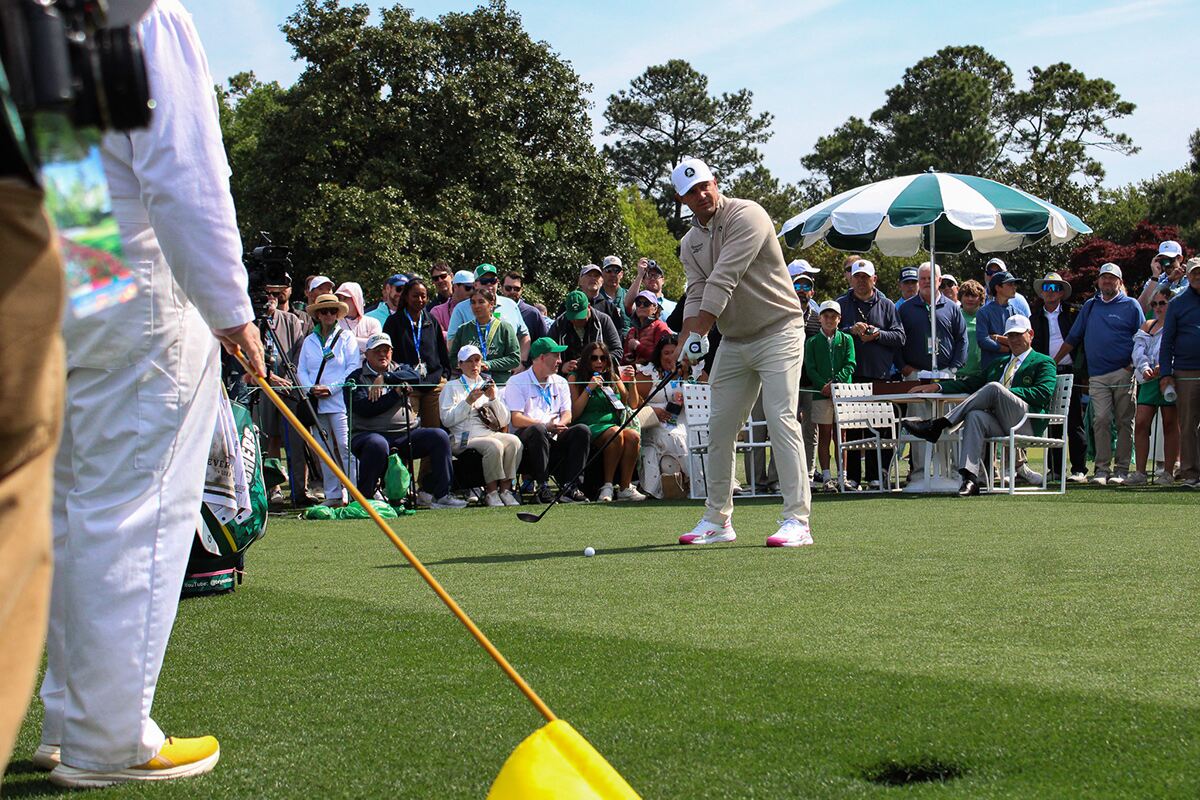
We saw tennis legend Rafael Nadal walking with the patrons. We saw European Ryder Cup captain Luke Donald doing the same. Everybody is a patron at Augusta.
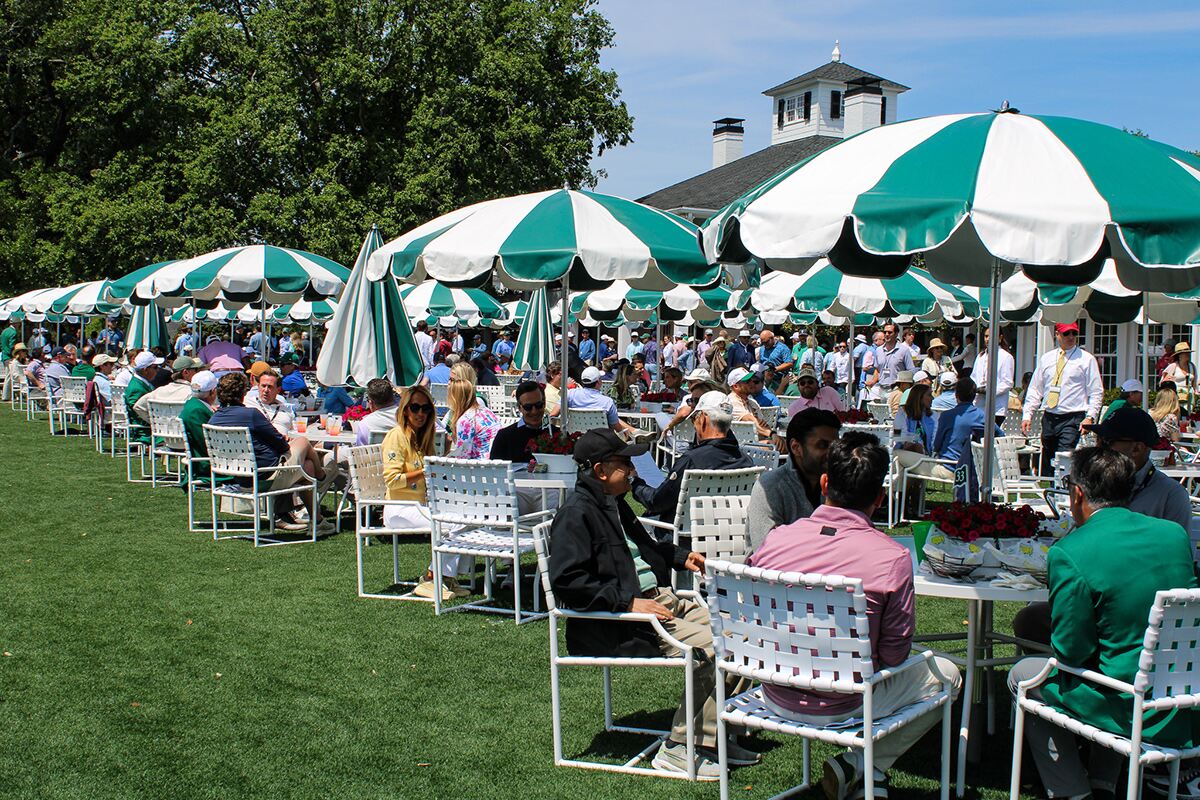
There is no corporate sponsorship visible inside the gates. No chanting. No big hospitality tents with groups of mainly men having beers on terraces. Just small groups, families and couples, all enjoying a day out in the Georgian sun watching the world’s best play one of the finest courses in the world. Sitting and watching and taking it all in is genuinely special.
The phones rule (and why it changes the day)
The no-phones rule is the most underrated part of the entire Masters experience.
Without a phone, the weight of the real world lifts off your shoulders. All that matters is the moment, the course, the people you are with. You are forced to chat to fellow patrons in the merchandise queue, in the chairs, picking out which sandwich to eat at the concessions. This is how golf used to be watched, before phones existed.
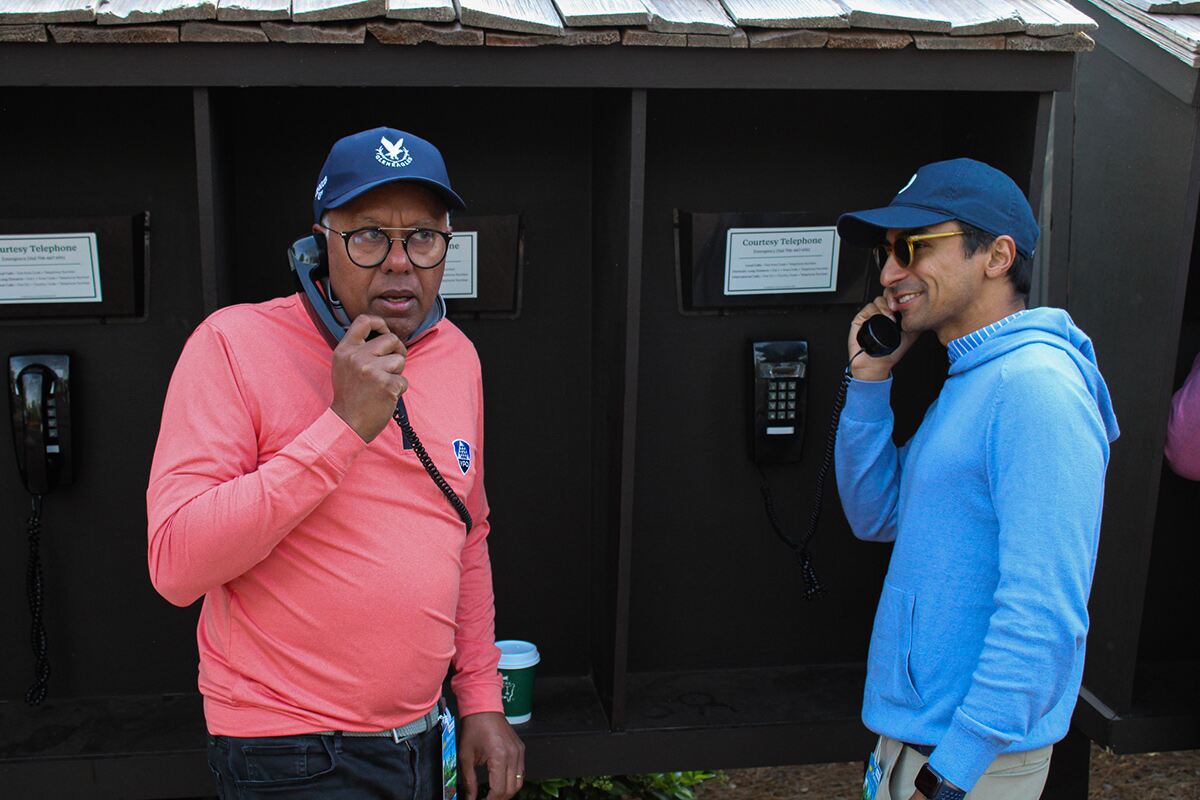
There are phone banks across the course where you can call anyone internationally, courtesy of AT&T. If you do not remember important numbers by heart, write them down on paper before you go in. We had arranged with our driver to meet at Arby’s at a fixed 5:30pm and without fail he was there. Make a meeting point with anyone in your party for the end of the day, in case anyone gets separated. Although it would be a shame to experience Augusta without your family, the security, volunteers, staff and fellow patrons would all make a lost guest feel completely at home.
How to watch The Masters from home
For those who cannot make it to Augusta, the good news is that television and streaming coverage of The Masters is now better than ever. The atmosphere does not translate completely, but the production quality is world-class.
UK television
Sky Sports holds the UK broadcast rights for The Masters. Live coverage is shown on Sky Sports Main Event and on a dedicated Sky Sports The Masters channel during tournament week. Subscribers can also access live coverage through the Sky Sports app, which includes a live blog, rolling highlights, dedicated live coverage of Amen Corner (the famous stretch of holes from the 11th to 13th) and featured group coverage.
BBC Two shows daily highlights of the tournament, typically broadcast late at night after the day’s play has concluded, and sometimes again the following afternoon. The BBC coverage is free to air and a good option for those without Sky Sports.
Streaming
Sky Sports subscribers can stream all live coverage through the Sky Go app. Now TV passes are available for those who want to watch a single tournament without committing to a full Sky subscription. Masters.com offers free live streams of selected coverage, including featured groups, featured holes, and the Amen Corner stretch. The Masters app on iOS and Android provides similar access on mobile devices.
Daily schedule (UK time)
Live coverage typically runs in the afternoon and evening UK time, given the time difference with Georgia. Approximate schedule based on previous years:
- Practice rounds (Monday to Wednesday): Coverage from approximately 5pm UK time
- Par 3 Contest (Wednesday): Late afternoon UK time
- Tournament Round 1 (Thursday): Live coverage from approximately 2pm to 12.30am UK time
- Tournament Round 2 (Friday): Live coverage from approximately 2pm to 12.30am UK time
- Tournament Round 3 (Saturday): Live coverage from approximately 8pm to 12.30am UK time
- Tournament Round 4 (Sunday): Live coverage from approximately 7pm to 12.30am UK time
Final round Sunday is the highlight. The leaders typically tee off between 7pm and 8pm UK time, with the green jacket presentation around 11pm to midnight.
Watching with friends
The Masters has become a social viewing event in the UK. Many golf clubs host Sunday evening viewings in their clubhouses, often with food and drink available throughout. Most members’ clubs welcome visitors for these evenings, and it is worth phoning your local club to ask. There is something about watching the back nine on Sunday with other golfers that captures a small fraction of the Augusta atmosphere.
Where to play golf nearby
If you have time to play golf in the area, these are well worth the trip:
- The River Club (15 minutes from Augusta)
- Champions Retreat (30 minutes from Augusta)
- Palmetto Golf Club (40 minutes from Augusta)
- Tree Farm (40 minutes from Augusta)
- Old Barnwell (50 minutes from Augusta)
The town of Augusta itself has improved significantly compared to my grandparents’ visit in 1997. The roads, restaurants and general amenities are better than I had expected, and the people of the town are remarkably welcoming.
How to apply for 2027 Masters tickets
The 2027 Masters Tournament will take place from Monday 5 April to Sunday 11 April 2027 at Augusta National Golf Club. Tournament rounds are Thursday 8 April to Sunday 11 April, with practice rounds Monday to Wednesday and the Par 3 Contest on Wednesday 7 April.
The official ticket lottery for 2027 Masters tickets opens 1 June and closes 20 June 2026. This is the only legitimate way to purchase tickets directly from Augusta National at face value. You can create an account on masters.com/tickets in advance and set a calendar reminder. Up to four tickets can be requested per application, but you can only win tickets for one day.
Holders of tickets purchased from third-party resellers are subject to exclusion from the tournament. Augusta National is the only authorised ticket source. Georgia’s scalping law also prohibits the sale of tickets within 2,700 feet of the venue.
For those who prefer to attend through volunteering, see our Volunteering at The Masters guide for full details on the application process.
The Masters stays with you. What stands out is not just the condition of the course, though that is exceptional, but the atmosphere. The pace feels different. Unhurried. Considered. There is a quiet respect for the game and for the place itself.
Everything is deliberate. From where patrons stand, to how the course reveals itself as you walk it, Augusta is designed to be experienced gradually. You begin to understand angles, elevation changes, and the subtle movement of the greens in a way that television never quite captures. It is immersive.
The lesson my late grandparents would have nodded at, three decades after their own pilgrimage: the best golf experiences are not defined by spectacle alone, but by how they make you, and your fellow patrons, feel.