 2026 Platinum
Table of Contents
- The question that comes round every Open week
- The short answer
- Start with the shoes
- Why a golf polo outlasts a T-shirt
- One outfit, four settings
- Nobody thinks they are getting a tee time
- The logo on the chest
- What to actually wear
The question that comes round every Open week
The observation always arrives in the same tone. Thousands of people have travelled to a links course to watch the finest players in the world, and a good proportion of them have turned up in golf shoes, a collared polo and a cap. They are not playing. They will not hit a shot all day. So why dress as though they might?
It is a fair thing to notice, and the people making the point are not being unkind about it. It is simply a question that answers itself the moment one has actually spent a full day on foot at a championship.
The short answer
Golf clothing is not a costume. It is clothing built for standing, walking and being outdoors for a long stretch, in weather that changes its mind, while still looking presentable at the end of it.
That description fits a golfer. It fits a spectator rather more thoroughly, because the spectator is out there for longer.
Start with the shoes
This is the argument that settles it, and it is the one the critics never make.
Spectators cover more rough ground than the players do. The field walks fairways that have been mown, rolled and prepared to championship standard. The gallery walks everything else: the thick stuff between holes, the banks, the dune paths, the churned ground behind a grandstand where four thousand people have already passed. Eight or nine hours of it, often on a slope.
Golf shoes are built for exactly that. They hold the ankle, they grip on wet grass and loose sand, and most are waterproof as standard. There is little in a July day at a links course worse than walking the back nine in wet socks because a pair of trainers gave up at the sixth.
None of that is dressing up. It is the same reasoning that puts walking boots on a hillwalker.

Why a golf polo outlasts a T-shirt
A golf polo is cut to hang properly. The collar sits where it should rather than curling after an hour, the shoulder seam sits on the shoulder, and the whole thing reads as tailored rather than casual without anyone having to think about it.
More to the point for a long day, performance or cotton pique polo fabrics are built to be lived in. They breathe, they move, they do not cling when the temperature climbs, and they come out of a wash ready to go again the following morning, which matters a great deal when the trip runs from Thursday to Sunday and the suitcase is small.
Anyone who has worn a cotton T-shirt through a hot afternoon at a championship, and then had to sit in it through the evening, will recognise the difference.
One outfit, four settings
Here is the part that rarely gets acknowledged. A day at a tournament is not one occasion. It is four.
There is the course itself, exposed and on foot. There is the hospitality tent, where smart casual is the expectation and a collared shirt is effectively required. There is the clubhouse, which is more formal again. And there is dinner afterwards, wherever the party ends up.
Golf clothing is one of very few categories that carries a person through all four without a change and without feeling wrong in any of them. A collared polo and a pair of tailored golf trousers are correct on a dune path at eight in the morning and correct across a dinner table at nine in the evening. Very little else in a wardrobe does that.
That is not vanity. It is packing sensibly.
Nobody thinks they are getting a tee time
The idea underneath the criticism is that spectators are dressing as though they might be called up to play, which nobody has ever believed for a moment.
The reality is much duller and much more sensible. People are dressing for the conditions and the venue in the clothing they already own that suits both. A golfer’s wardrobe is, by definition, full of garments designed for long days outdoors at golf courses. Wearing them to a long day outdoors at a golf course is not an affectation. It is the wardrobe working as intended.
 |
 |
The logo on the chest
And then there is the best reason, which has nothing to do with fabric at all.
Golfers wear the crest of the club they belong to. Or a course they played once on a trip they still talk about. Or something picked up from a week that meant something. These are not brand statements. They are the closest thing golf has to a shared language.
Sit on a train to Southport, or in an airport queue, or on a shuttle bus to a car park three miles from the course, and the person opposite is wearing the crest of somewhere you have played. That is a conversation, immediately and without effort. The tee shot on the fifth. The approach nobody could hold. The view from the ninth that made the whole trip worthwhile. Two strangers, ten minutes, and a shared memory of a piece of ground neither of them owns.
In a world where most connection now happens through a screen, that kind of thing has become rare. If an embroidered club crest on a chest is what starts it, that seems a good deal more valuable than whether a spectator technically needed spikes.
It is also the reason club embroidery is taken as seriously as it is. A crest that has been properly digitised and stitched, rather than printed on and left to crack, is a piece of a golfer’s history that lasts for years. Glenmuir has done that work in-house at Lanark for a long time, and it is rarely the garment people are attached to. It is the badge on it.
What to actually wear
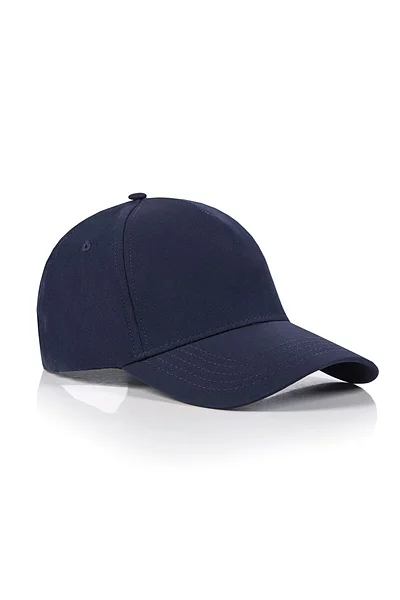
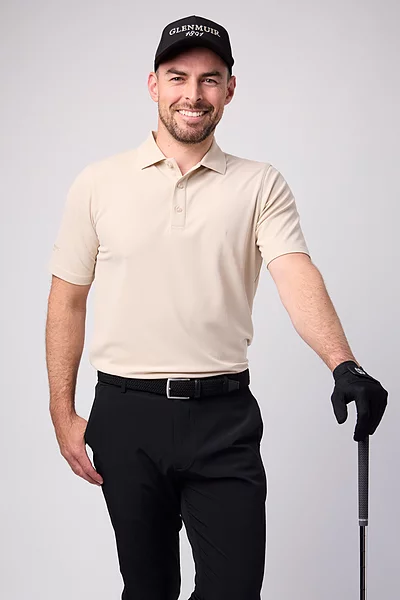
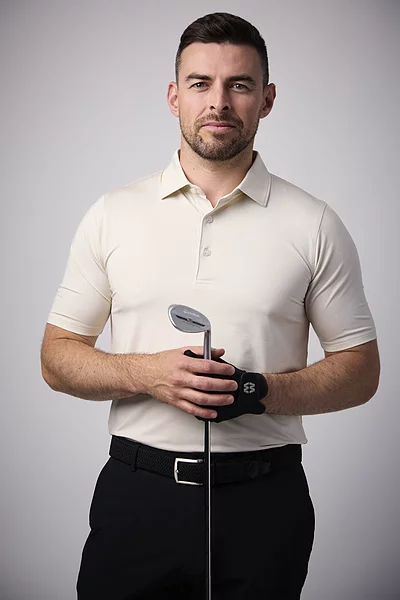
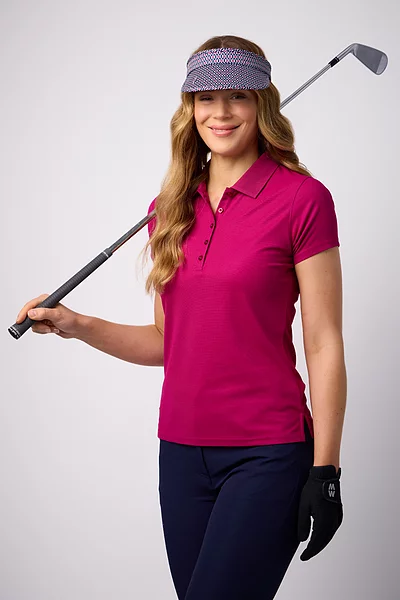
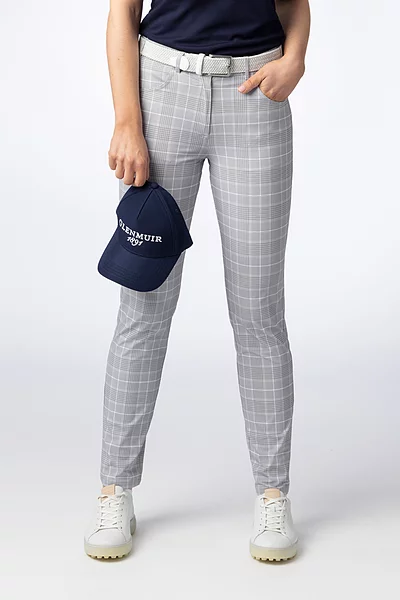
For a summer championship, the sensible kit list is short. A breathable performance polo as the main layer, since it will be worn for the full day and needs to work in sun, wind and a hospitality tent. Tailored golf trousers rather than jeans, which get heavy and hold water. Waterproof golf shoes, worn in beforehand. A cap and sun cream, because a links course offers no shade at all.
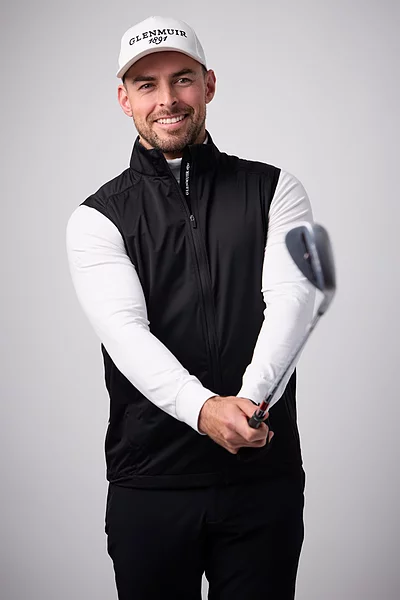
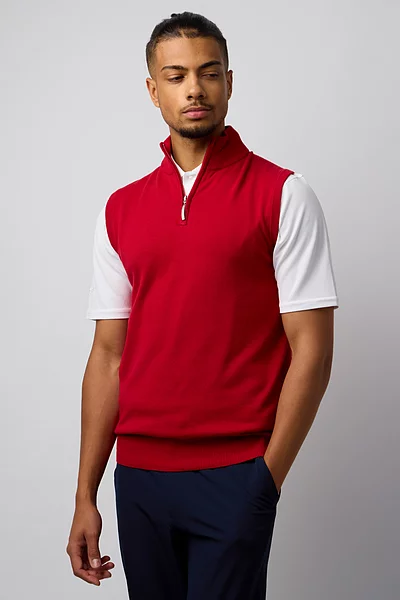
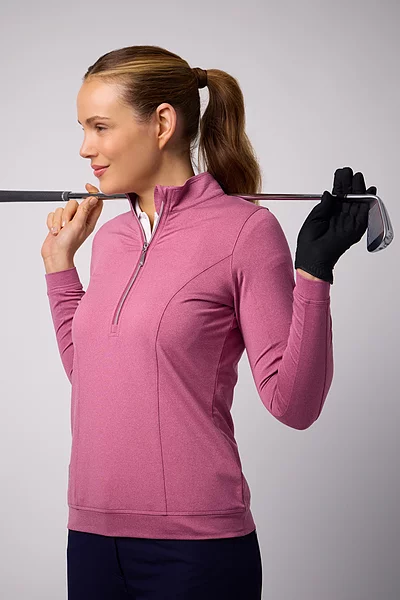
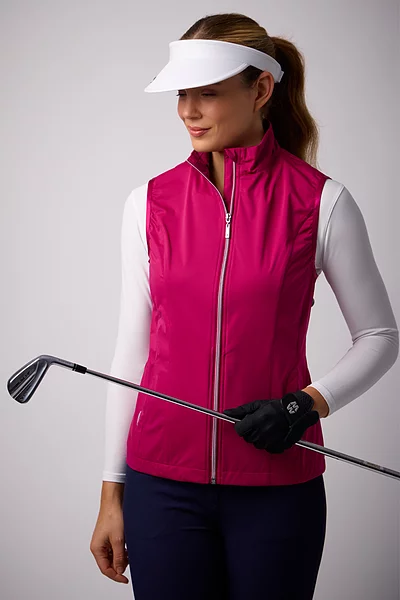
A performance pique polo covers the day on its own, with a light slipover or quarter zip midlayer in the bag for the early tee times and the long evening once the sun drops. A gilet is helpful with many pockets to put tickets and phones in.

The only real mistake is the one people make in the other direction: turning up in something that looked fine in the car park and is miserable by the twelfth.