 2026 Platinum
Table of Contents
- The short answer
- What merino wool actually is
- Why fineness matters
- Golf is a stop-go sport, and that changes everything
- What the latest research found
- Temperature regulation across a Scottish round
- Odour resistance and multi-day golf
- Sun protection
- Where merino falls short
- What happens at the end
- Merino in the Glenmuir range
- Caring for merino knitwear
The short answer
Yes. Merino wool suits golf better than almost any other fibre, and for a specific reason rather than a general one. Golf is played in bursts, a few seconds of effort followed by several minutes of walking or standing still, over four or five hours during which the weather often changes twice. Merino handles that pattern better than cotton or polyester because it buffers moisture and temperature rather than reacting to them.
The trade-offs are real and worth knowing. Merino costs more than synthetic alternatives, dries slowly once fully saturated, and needs a little care in storage. For most golfers, on most days, those are acceptable prices.
What merino wool actually is
Merino wool comes from Merino sheep, a breed developed in Spain and now farmed principally in Australia and New Zealand. What separates it from ordinary wool is fibre diameter. Superfine merino fibres measure roughly a quarter the width of a human hair, which is why merino feels closer to cashmere than to the coarse wool of a fisherman’s jumper.
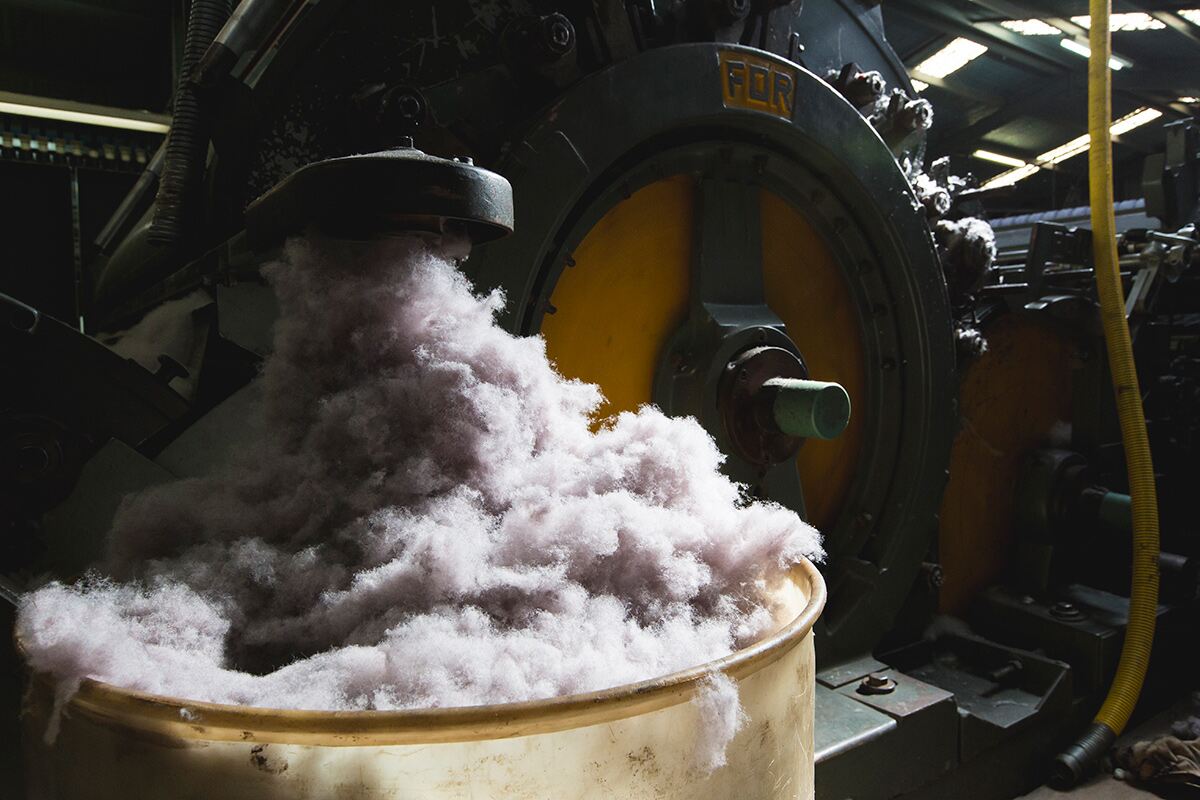
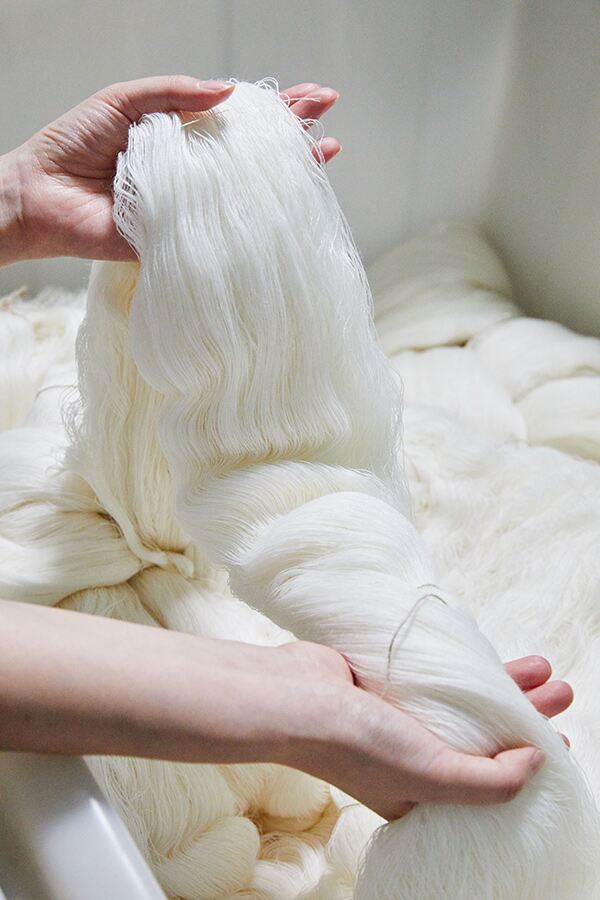
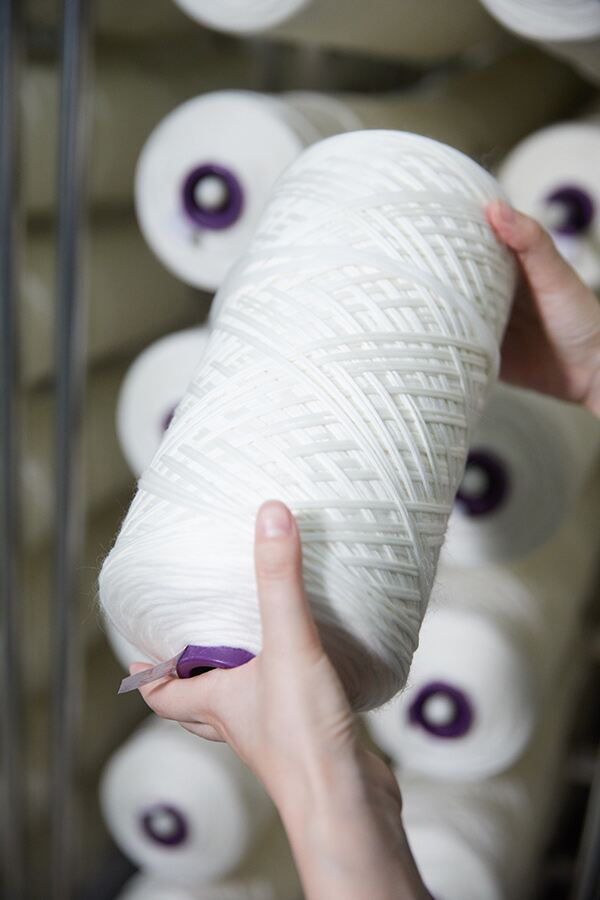
Glenmuir knitwear uses 100% extra fine Italian-spun merino, with yarn spun and garments knitted in Italy before coming to Lanark for embroidery. The pieces are fully fashioned, meaning each panel is knitted to shape and the stitches hand-linked, which produces flat seams and a garment that holds its shape rather than stretching out at the shoulders after a season.
Why fineness matters
Fine fibres bend without pushing back against the skin, which is the whole of the itch problem solved. They also flex an extraordinary number of times before failing. Woolmark’s testing puts merino at upwards of 20,000 bends against roughly 3,000 for cotton, which is a useful proxy for how a sweater behaves after five years in the boot of a car and forty rounds a season.
That durability is the argument that matters most for the Glenmuir customer. A merino sweater is not a seasonal purchase. Plenty of players are still wearing pieces bought a decade ago.
Golf is a stop-go sport, and that changes everything
Sports scientists use the term stop-go for activities built on surges of effort followed by rest: hiking, cycling, rock climbing. Golf belongs in that category too. A player walks, stops, waits on the tee, swings hard, walks again, stands over a putt in the wind. Body heat rises and falls repeatedly.
The problem this creates is after-chill. During the active phase you perspire. During the rest phase that moisture evaporates from your clothing, and evaporation cools. In a polyester shirt on an exposed links green, that cooling arrives late, arrives all at once, and feels unpleasant precisely when you are trying to hold a putter still.
The body works continuously to maintain a skin temperature of around 35°C. Every unnecessary swing between too warm and too cold is energy spent on thermoregulation rather than on the round.
What the latest research found
A four-year study at North Carolina State University, published across several peer-reviewed papers and summarised by The Woolmark Company, compared 100% wool, cotton, viscose and polyester garments of matched weight and thickness. Researchers used sweating manikins cycled through humidity chambers to replicate the rapid environmental shifts of stop-go activity, then confirmed the findings with human trials.
Three results stand out for golfers.
Wool buffers moisture far better than the alternatives. The research recorded 96% greater moisture buffering than polyester, 45% greater than cotton and 25% greater than viscose. Wool absorbs up to 35% of its own weight in moisture before feeling wet. Cotton absorbs around 20% and feels damp long before that.
The difference appears in the rest phase, not the active one. During exercise, all four fabrics performed similarly on perceived comfort. It was during rest that they separated, and only wool maintained comfort throughout. Polyester’s peak cooling arrived almost fifteen minutes into the rest phase, which is roughly the gap between a drive and a second putt.
Wool is more energy efficient to wear. Measured across three cycles of activity and rest, wool required the least energy to maintain thermal comfort, with polyester needing an additional 20%.
 |
 |
The work also produced a new test method, ASTM F3628, using a modified sweating guarded hotplate with the semi-permeable membrane removed so that liquid sweat can actually pass into the fabric. Conventional testing under ISO 11092 measures fabrics in steady-state conditions, which is why it has never been able to distinguish between fibres in the way golfers experience them.
The caveat is worth stating plainly. The study examined base layers in hiking, cycling and climbing, not golf specifically. Golf is a lower-intensity activity, so the effects will be less pronounced than on a mountain descent. The mechanism, however, is the same one, and anyone who has stood on the eighteenth at Carnoustie in a wet synthetic shirt will recognise the problem being described.
Temperature regulation across a Scottish round
In cold conditions merino fibres crimp and trap air, creating insulation. In warm conditions the fibre moves vapour away from the skin, where it evaporates and cools. The same garment does both, which is why a merino sweater is the piece most often left in the bag from March to October while everything else gets swapped.
Wool also generates a small amount of heat as it absorbs moisture, a property called heat of sorption. It is not dramatic, but it is the reason wool feels warm rather than clammy when a shower catches you on the ninth.
Odour resistance and multi-day golf
Merino is naturally resistant to odour. The fibre structure traps odour molecules rather than allowing bacteria to feed on sweat sitting on the fabric surface, which is what produces the smell in synthetics.
For golfers this has a practical consequence: fewer garments needed for a golf trip. A merino sweater can be worn across several days of a four-ball tour to Ayrshire or the East Neuk without the wash bag becoming a problem. It also means fewer washes, which is the single largest factor in how long any knitwear lasts.
Sun protection
Wool fibres are densely packed and their natural pigments absorb ultraviolet radiation rather than transmitting it. Glenmuir merino carries a +40 UPF rating, meaning under 2.5% of UV radiation passes through the fabric. That is classed as excellent protection, and it is worth remembering that a light cotton shirt offers considerably less.
None of which replaces sun cream on the forearms and the back of the neck, particularly on a links course where reflected light off sand and water adds to the exposure.
Where merino falls short
Cost. Merino is a premium fibre and priced accordingly. It is materially cheaper than cashmere for comparable softness, but more expensive than synthetics.
Slow drying when saturated. The property that keeps merino comfortable in light rain works against it once the garment is soaked through. If heavy weather is forecast, the answer is a waterproof layer over the top, not a wool sweater doing a job it was never designed for.
Snags and pilling. Fine fibres catch. Glenmuir applies an anti-pill treatment, which addresses bobbling, but a merino sweater will not survive a gorse bush the way a synthetic shell will.
Moths. They feed on the keratin in natural fibres. Cedar, lavender and clove in a wardrobe are effective deterrents, and clean storage matters more than most people assume, since moths are drawn to residue rather than the wool itself.
Skin sensitivity. Rare with extra fine merino, but not impossible.
What happens at the end
Merino biodegrades. A Woolmark trial buried a 100% wool jumper in soil and recorded the stages: microbes colonising the surface in the first fifty days, moss-like growth feeding on the released nutrients through to day 150, fungi drawing energy from the decomposing fabric, and by day 219 the structure had collapsed into loose fibres mineralising back into soil nutrients.
Synthetic garments do not do this. They fragment into microplastics. It is not the reason to buy a merino sweater, but it is a reasonable thing to know about the one you already own.
Merino in the Glenmuir range
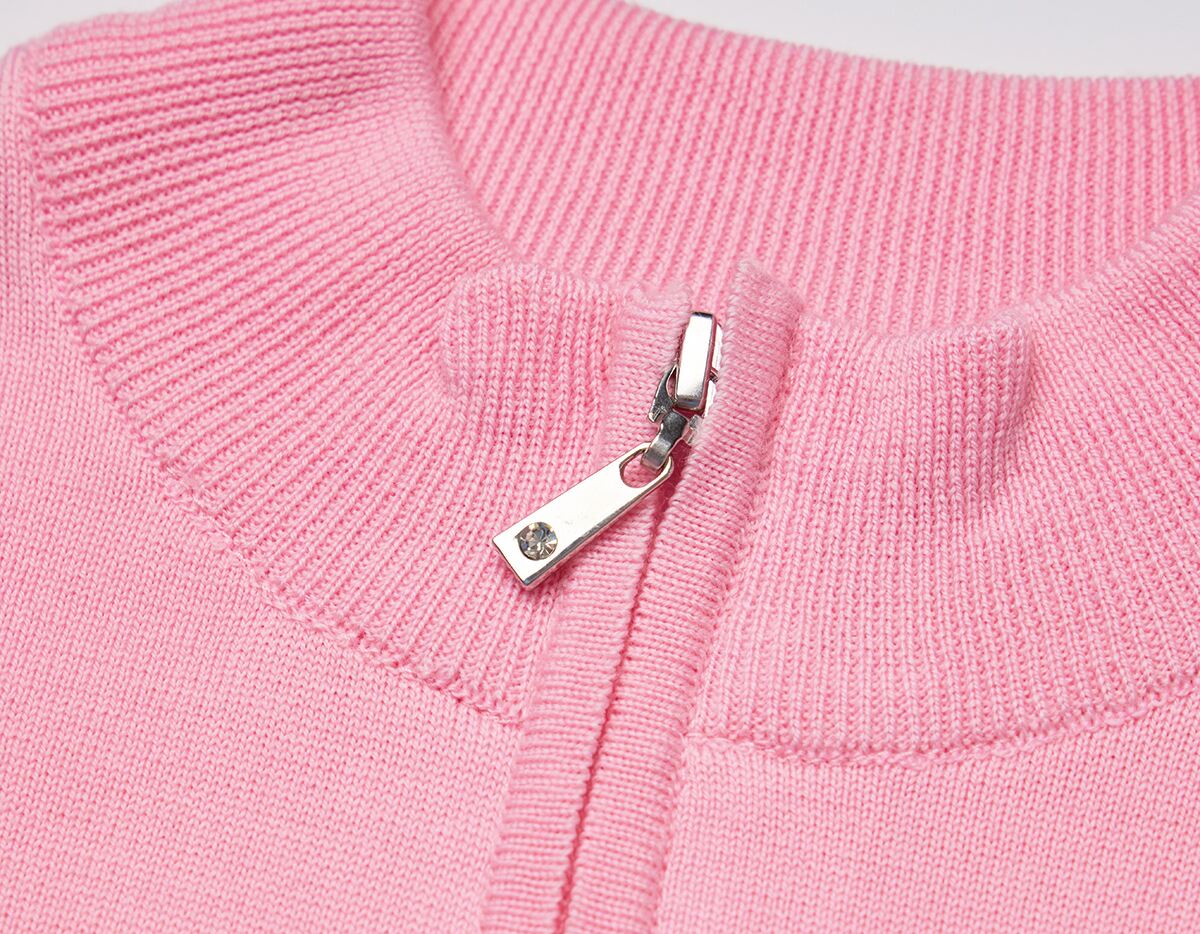
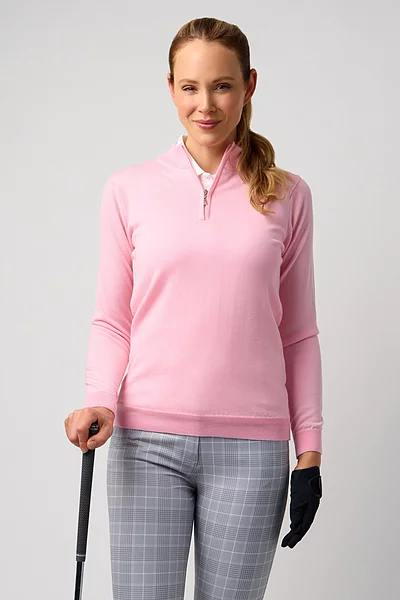
For men, g.Knox is the crew neck that most players end up reaching for by default, with g.Jasper offering the same 100% extra fine merino in a quarter zip and g.Wilkie in a v neck for those who prefer a collar showing. g.Rankin is the sleeveless slipover, useful in shoulder-season conditions where a full sleeve restricts the swing. For ladies, g.Amira is the quarter zip and g.Leona the v neck slipover, both cut with a flattering drape that works over a polo.
If rain is a genuine prospect, g.Samuel blends merino with a water-repellent lined construction and sits between a sweater and a light jacket.



Caring for merino knitwear
Most Glenmuir merino is machine washable on a wool cycle, and the yarn is treated to resist shrinkage. Always check the individual care label. Wash less often than instinct suggests, since the odour resistance means a sweater rarely needs it after a single round. Dry flat rather than hanging, which prevents the shoulders stretching. Store folded, with a cedar block nearby.